The Real Origin of Black Friday
Most people think Black Friday is about bargain hunting, doorbusters, and cyber deals. Cute story. The real origin is darker, messier, and a little more American: financial panic, urban chaos, and corporate sleight-of-hand. This is the history retailers conveniently forgot. From ruined fortunes to police nightmares to marketing spin, Black Friday’s story reads like a cautionary tale disguised as a shopping holiday. Let’s look at The Real Origin of Black Friday: From Financial Panic to Consumer Frenzy
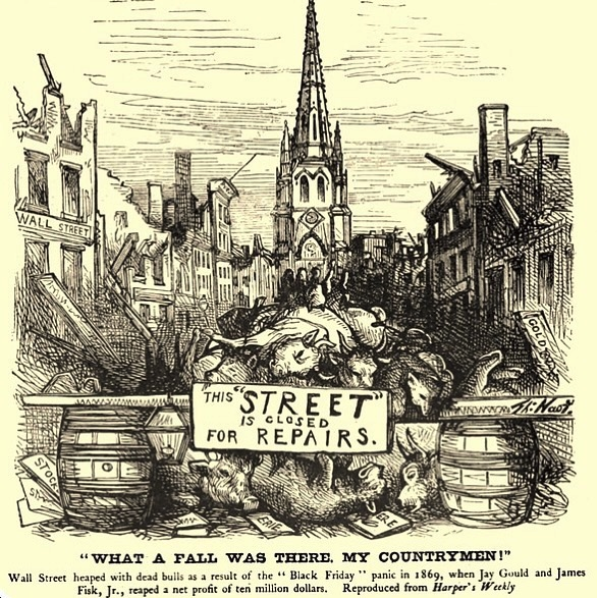
Wall Street financiers Jay Gould and James Fisk tried to monopolize the U.S. gold market, triggering a financial collapse that coined the original “Black Friday.”
The First Black Friday: Gold Panic of 1869
On September 24, 1869, two Wall Street gamblers—Jay Gould and James Fisk—decided to corner the U.S. gold market. Their plan was elegant in its cruelty: inflate gold prices artificially, sell at the apex, retire with millions. Simple, if not for one thing: the President of the United States was awake that day.
Ulysses S. Grant dumped a huge reserve of federal gold onto the market. Prices plummeted, fortunes evaporated, and panic rippled through the economy. Newspapers called it “Black Friday,” not because it was fun, but because it left a nation reeling. Banks wobbled, investors screamed, and the word “profit” lost all meaning for the average American. The day became a template: financial ambition + catastrophic oversight = national nightmare.
Black Friday started as a financial apocalypse, not a shopping spree. #History #BlackFriday #FinancialCrisis share this
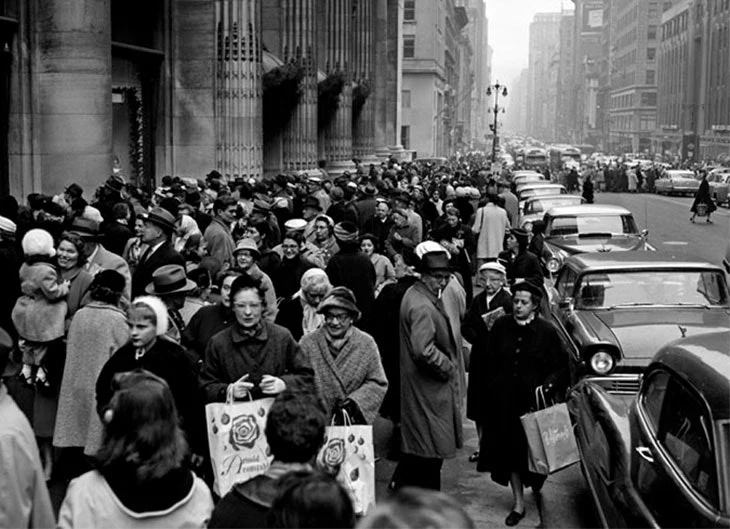
Philadelphia streets overrun with holiday shoppers and football fans—police dubbed it “Black Friday” and immediately regretted it.
Philadelphia Chaos: Police Coin the Term (1950s–1960s)
Almost a century later, “Black Friday” returned with a slightly less apocalyptic, but no less miserable, flavor. Post-Thanksgiving Philadelphia was a pedestrian hellscape. Streets were clogged with shoppers, tourists, and Army–Navy football fans, all converging downtown.
The cops called it Black Friday because the day was hellish. Think: traffic gridlock, endless shoplifting, shoppers elbowing each other for a toaster, and officers working double shifts with zero gratitude. Retailers tried “Big Friday” as a PR band-aid. Nobody bought it. Black Friday remained a day of sweat, snarls, and civic despair—a far cry from the Instagram-ready holiday frenzy we now endure.
Black Friday in Philly: not a deal, just chaos. Police called it like they saw it. #UrbanHistory #BlackFriday share this

In the 1980s, retailers flipped Black Friday’s meaning from chaos to profit, popularizing the accounting metaphor of moving from “red ink to black ink.”
Retail Rebranding: “In the Black” (1980s)
By the 1980s, marketers realized something: chaos = opportunity. They spun the narrative into something more palatable. “Black Friday” was no longer a curse; it was the magical day businesses finally moved from red ink to black ink, the holy moment when annual losses vanished in a glitter of shopping carts.
This spin was clever: easy to remember, optimistically misleading, and perfectly aligned with consumer culture’s dopamine-driven obsession with discounts. Whether stores actually turned a profit that day didn’t matter—what mattered was the story. Black Friday became a sanctioned cultural event, a day where retailers and consumers colluded in the mass delusion of holiday joy.
From financial ruin to retail profit spin: Black Friday was rebranded before bargain hunters even showed up. #Marketing #ConsumerCulture share this
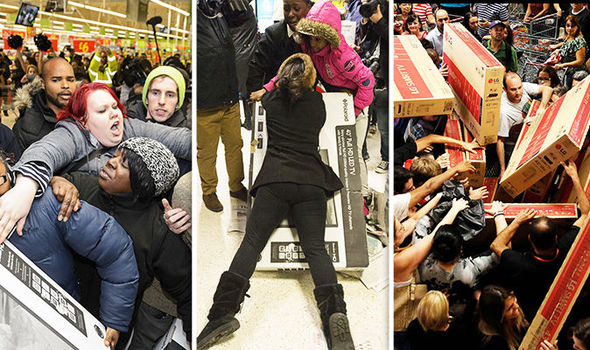
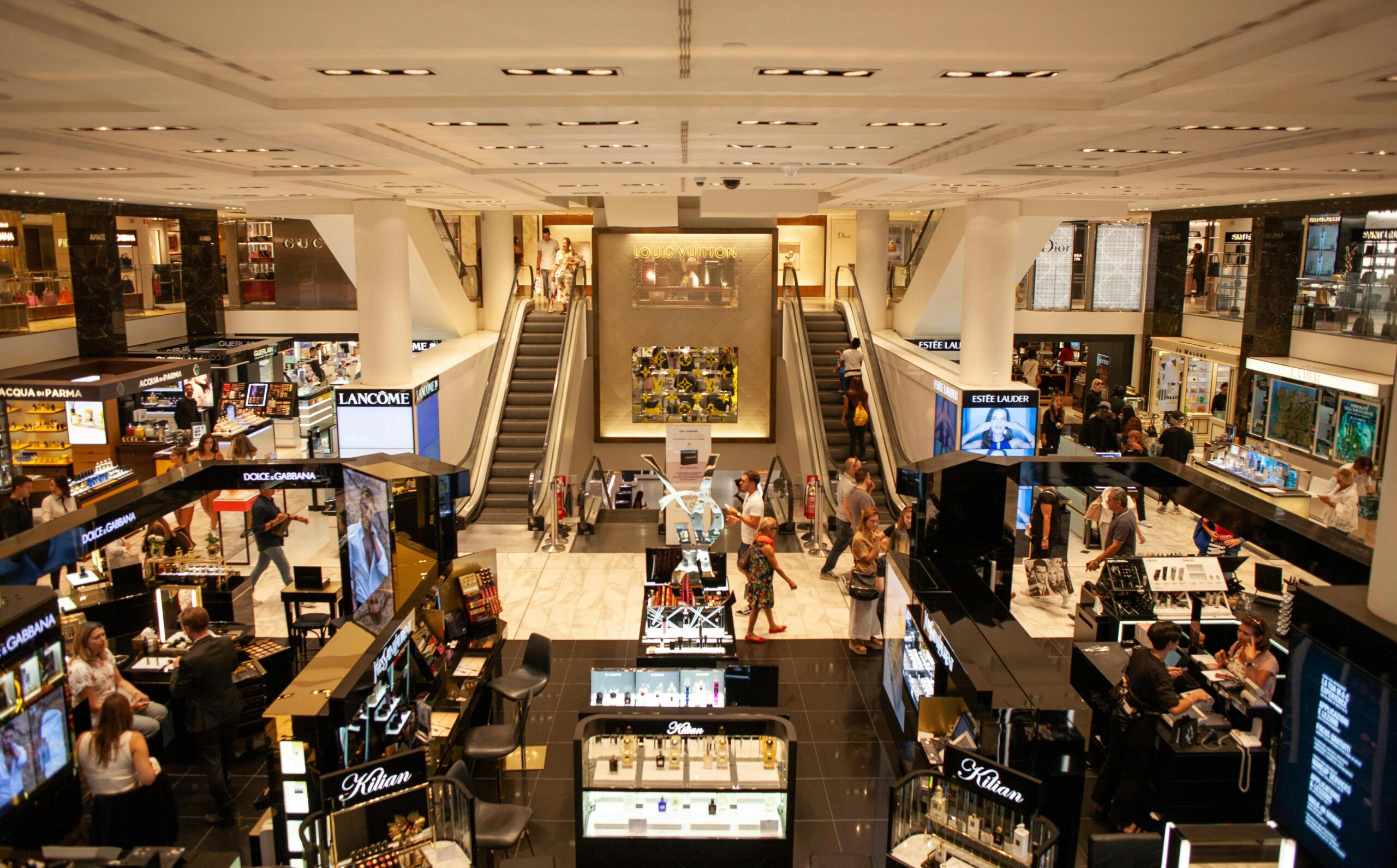
The chaos lives on, now in the form of lines, online carts, and bargain-induced hysteria.
Black Friday Today: Consumer Frenzy Engine
Fast forward to now. Black Friday is a national ritual: long lines, online carts, screaming over a toaster, and the occasional viral fistfight. It has spawned Cyber Monday, Small Business Saturday, and a multi-day consumer ecosystem designed to turn chaos into profit.
But beneath the bargain signs and Instagram stories lies its history: Wall Street greed, police despair, and corporate storytelling. Black Friday’s evolution is a masterclass in narrative manipulation: disaster gets repackaged as delight, chaos as celebration. So the next time you elbow a stranger for a half-off blender, remember: history is watching—and laughing.
Black Friday: once financial panic, now consumer circus. Same chaos, different marketing. #RetailHistory #Consumerism share this
Anno
Sources and Further Reading:
Philadelphia Police and Black Friday
Black Friday started as financial apocalypse, became urban chaos, and is now consumer spectacle. History didn’t disappear—it just got a retail-friendly facelift.

A quick overview of the topics covered in this article.
Latest articles

Scientists Confirm That People Who Say They ‘Don’t Watch TV’ Are Lying and Secretly Bingeing Trash
It turns out the people bragging about “not owning a TV” have been caught red-handed by neuroscience, sleep-tracking apps, and their own guilty pupils [read more...]

Nietzsche Was an Arrogant Nihilist
Philosophers love to argue that human reason is either a cosmic accident or a cosmic inheritance. Nietzsche bet on accident. The older minds—Plato, Socrates—bet [read more...]
The Real Origin of Black Friday
Most people think Black Friday is about bargain hunting, doorbusters, and cyber deals. Cute story. The real origin is darker, messier, and a little [read more...]

Were the Master Renaissance Painter’s Using a Secret Trick?
Were the master's of painting in the Renaissance Era using an optical illusion to guide them along? Is the illusion of their "mastery" just [read more...]

Rene Descartes [1596-1650] The First Conspiracy Theorist
Rene Dscartes was born in France, and at the age of twenty two moved to Holland, spending most of his life there. He studied [read more...]

CERN: Higgs Bosons, Black Holes, and the Matrix Glitch
CERN: where humans smash particles faster than your imagination can keep up, hunt Higgs bosons like Easter eggs, and sometimes accidentally spawn urban legends [read more...]
The Tartaria Problem: When Lost Empires Start Whispering in the Walls
History has blind spots big enough to drive a continent through. Tartaria is one of them - an empire that may never have existed, [read more...]
Sedition: America’s Favorite Ghost With Terrible Timing
Sedition is the political ghost America pretends not to believe in, right up until it starts stomping around the attic and rattling old furniture. [read more...]

Money Backed by Land Worked in Early America
Benjamin Franklin sailed to England expecting refinement, empire, and order. Instead, he found streets crowded with beggars, economic superstition, and a society blaming workers [read more...]

Your Memory is a Narrative Not Fact
How your brain rewrites the past: it just does. You think you remember your past? Cute. Your brain isn’t a filing cabinet—it’s a messy [read more...]