Pneumatic Tube Trains – a Lost Antiquitech
Before electrified rails and billion-dollar transit fantasies, cities flirted with a quieter idea: sealed tunnels, air pressure, and human cargo. Pneumatic tube trains weren’t sci-fi. They ran. Then they vanished—along with the memory of how close we came.
The Air Was the Engine
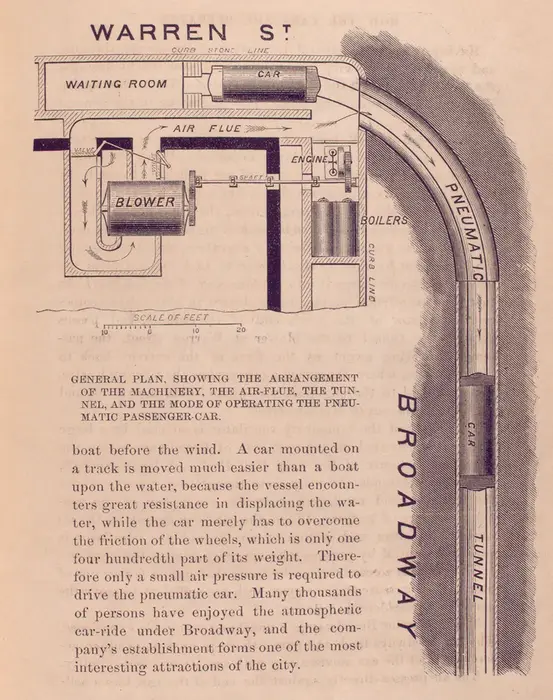
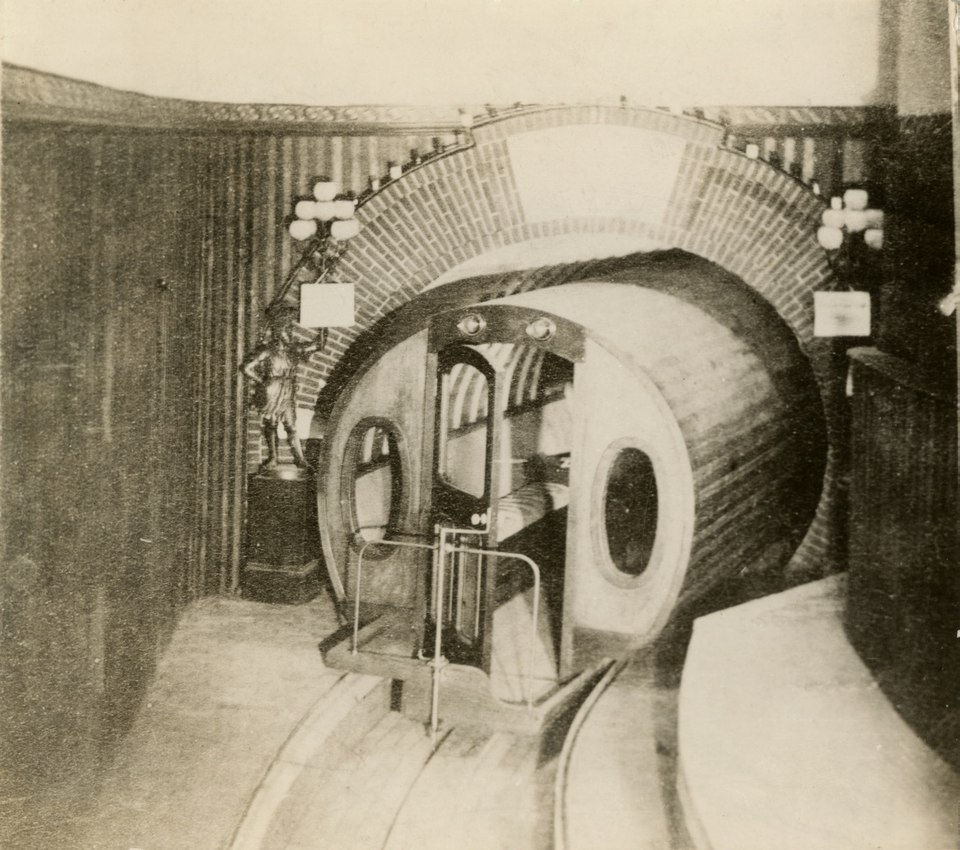
Pneumatic tube railways worked on a bluntly elegant principle: no engine onboard, no combustion, no electricity in the vehicle itself. A perfectly round tunnel, just wider than the capsule, reduced air leakage. Stationary pumps did all the work, either pushing compressed air behind the capsule or pulling it forward via vacuum.
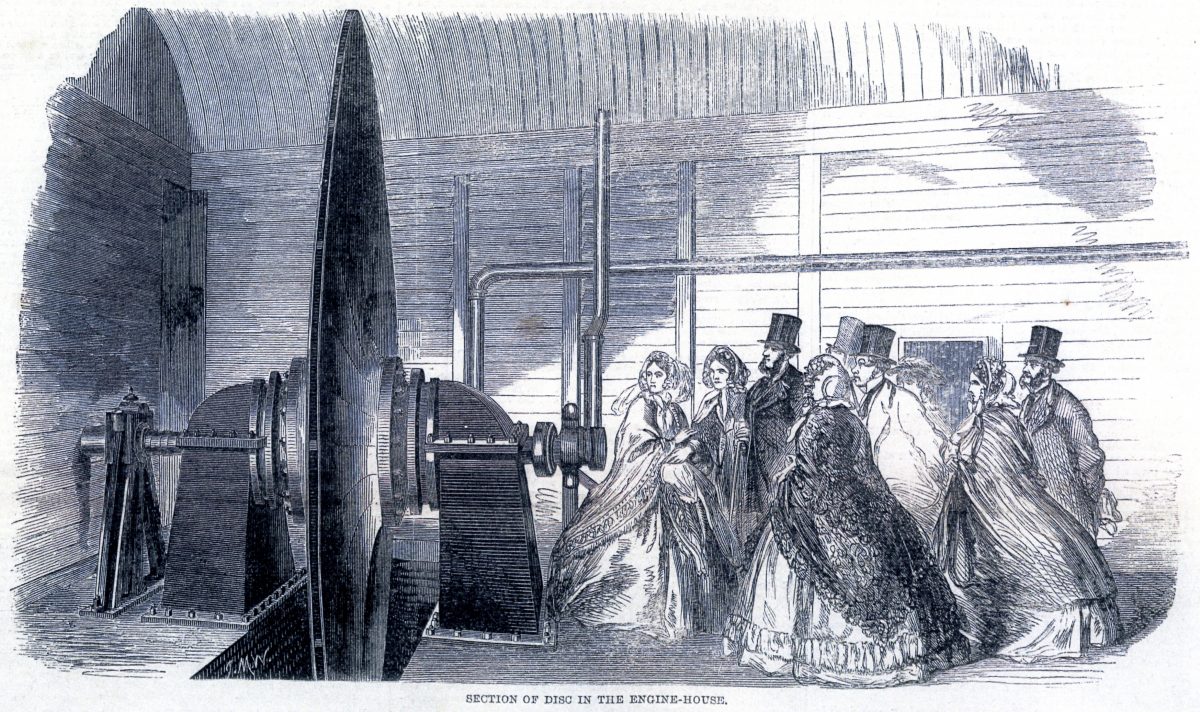
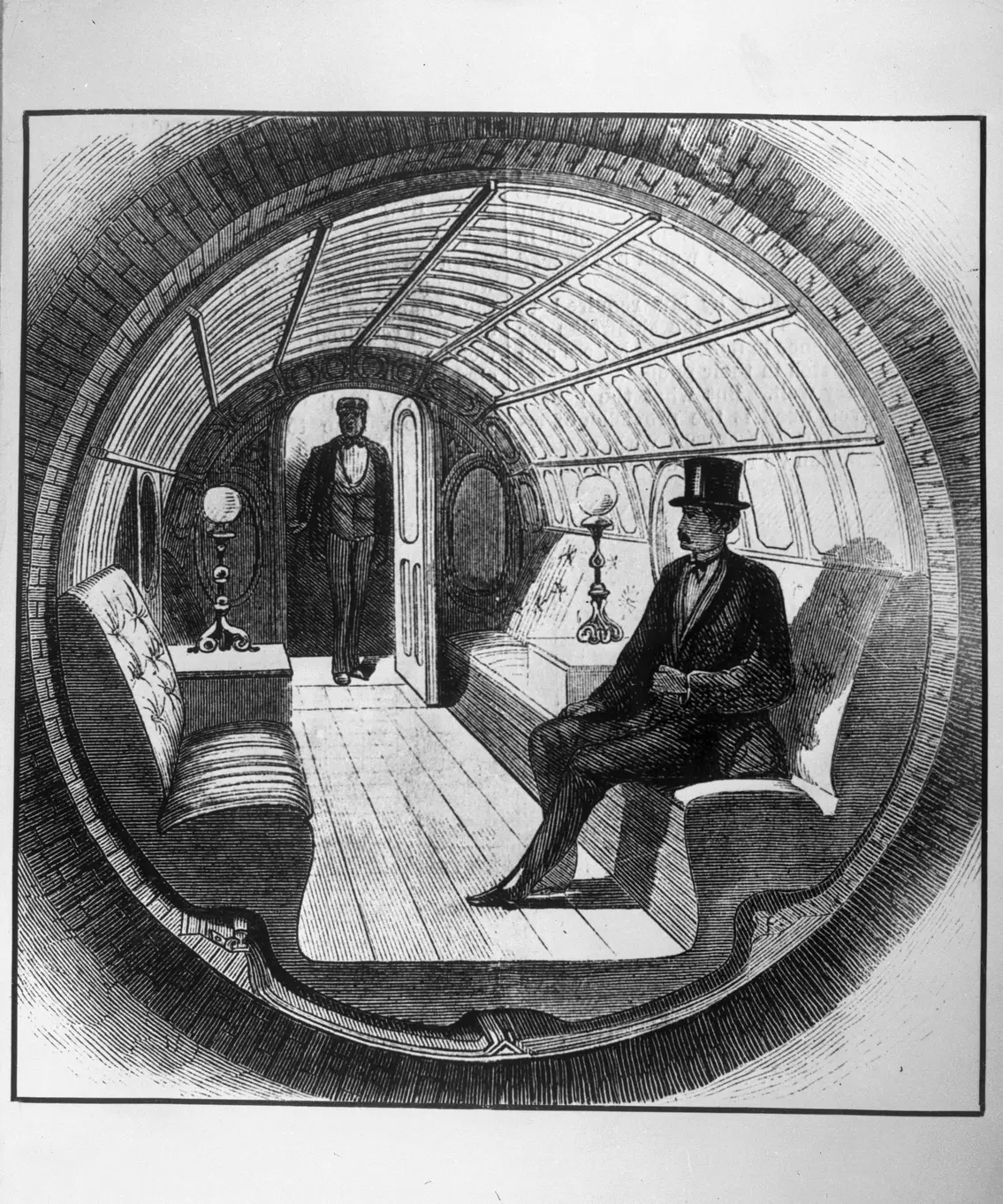
Passenger capsules were not toys. They measured roughly 1.2 to 1.5 meters wide and up to three meters long, capable of carrying one to six people. Lightweight metal frames, airtight skins, and small guide wheels kept the capsule centered. The wheels didn’t propel anything. Air did. Motion without motors. Transport without noise.
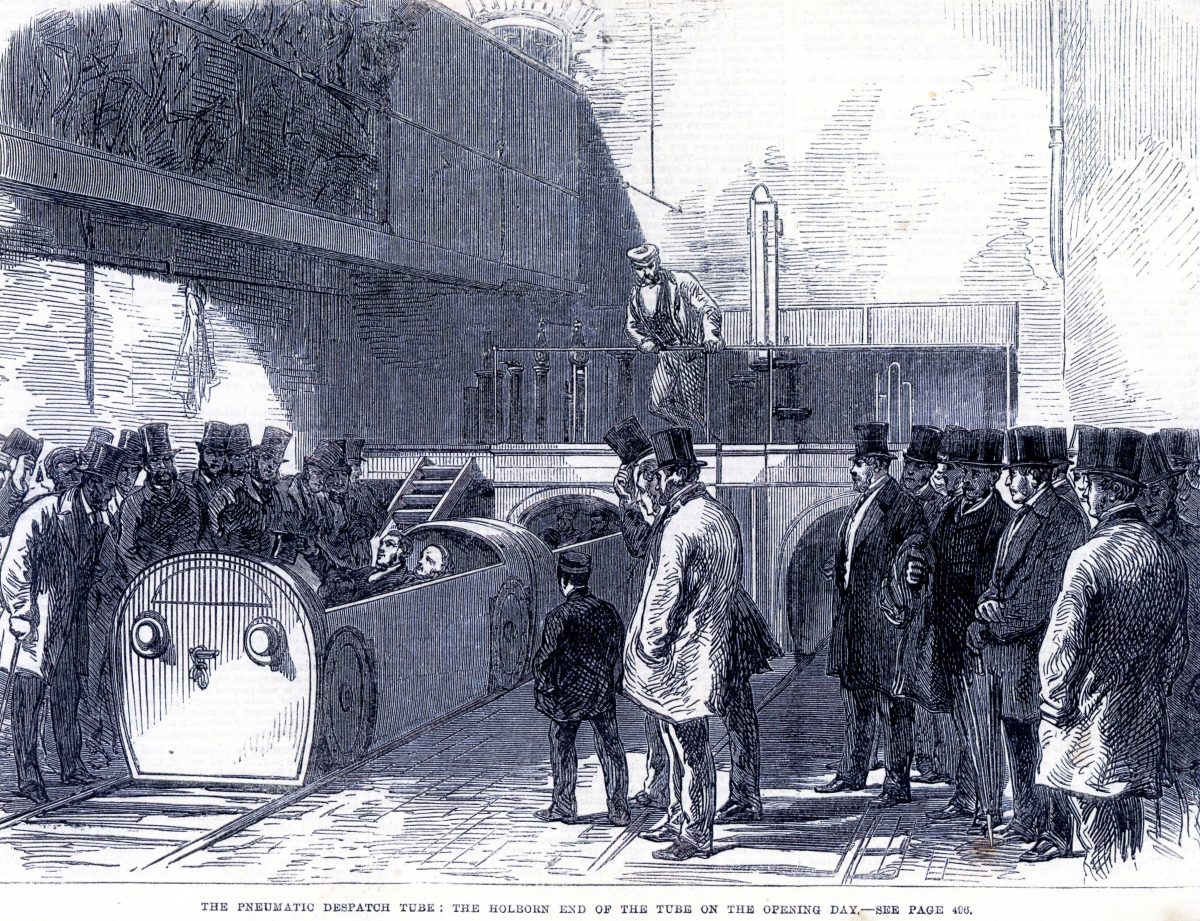
The result was eerie by modern standards. No smoke. No screeching metal. Just a smooth, contained whoosh as the capsule slid through the tube. The sensation was closer to gliding than riding. For 19th-century cities choking on coal and congestion, this felt like a glimpse of the future.
Before engines ruled transit, air itself was the machine. Pneumatic tube trains moved people without smoke, noise, or motors. share this
Cities That Actually Built It
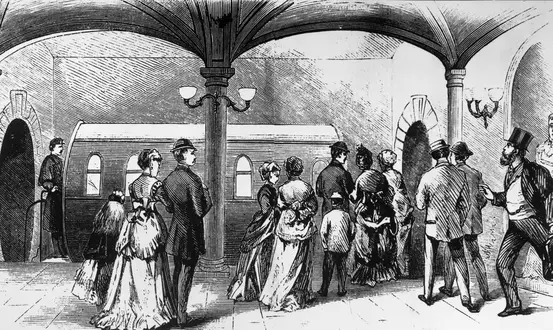
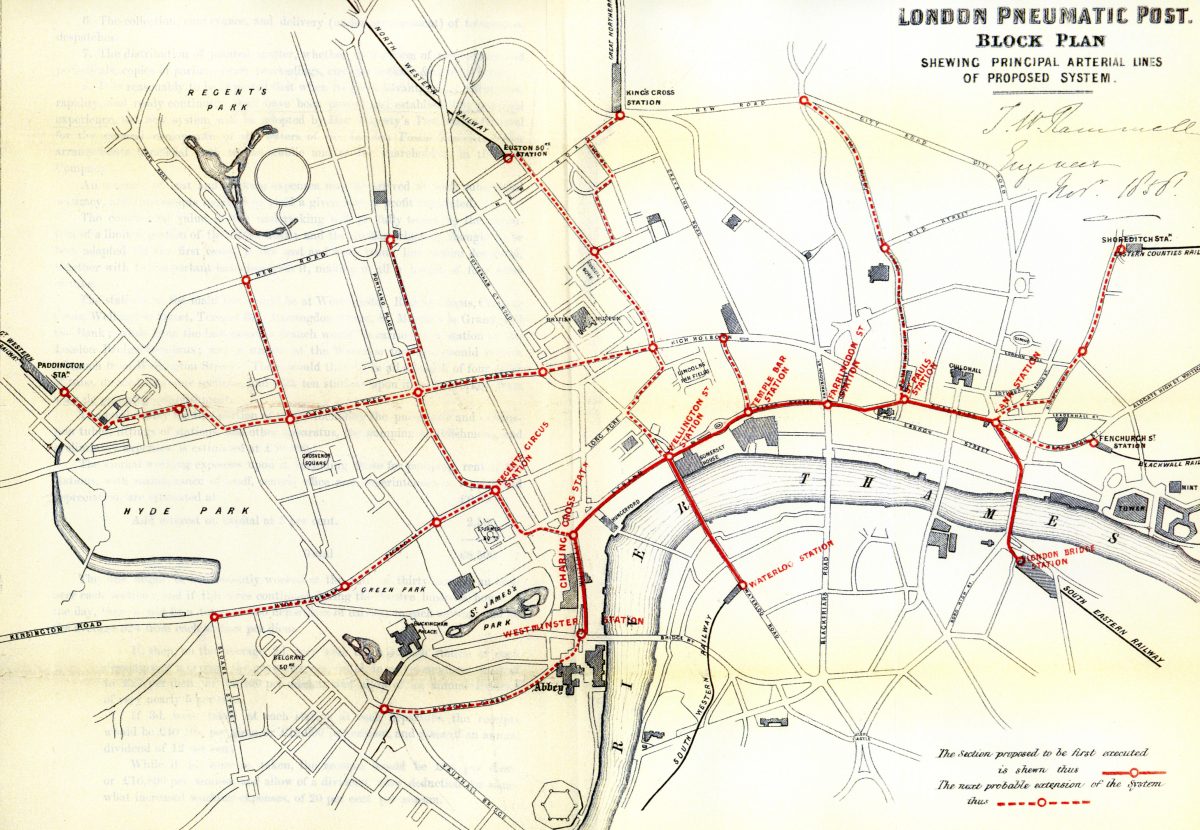
This wasn’t a single mad inventor’s sketch. London, Paris, and New York all experimented with human-scale pneumatic railways in the late 1800s. Some lines carried mail and parcels. Others carried living passengers. Briefly, urban transit split down an alternate path.
Speeds reached 20–40 km/h, impressive given the era and the absence of onboard power. Distances stayed short—hundreds of meters, sometimes approaching a kilometer—because sustaining pressure over longer runs was technically demanding. Still, for dense city cores, the system made sense. Quiet. Clean. Predictable.
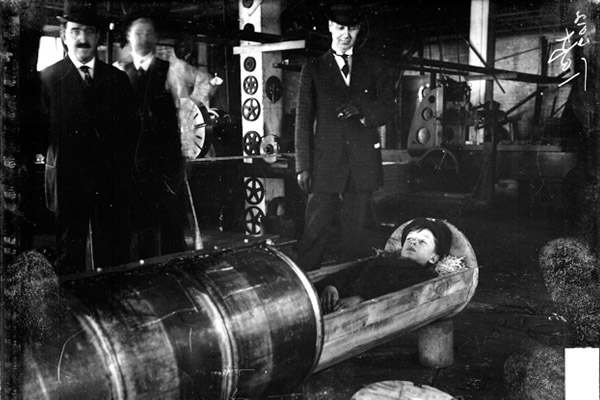
And yes, the historical record contains the strange footnotes no one likes to talk about. Babies were occasionally transported through pneumatic systems, usually in padded capsules, under controlled conditions, often in hospitals. Not reckless spectacle—logistics. When air pressure was reliable, it was trusted with the most fragile cargo imaginable.
Pneumatic tubes didn’t just move mail. They moved people—and in rare cases, babies. That’s how trusted the system was. share this
Why the Tubes Lost
Officially, pneumatic railways were “limited.” Short range. Low capacity. Difficult to scale. Electric trains, by contrast, promised expansion, standardization, and—most importantly—centralized infrastructure investment. Tracks, power stations, rolling stock, unions, supply chains. A full industrial ecosystem.
Pneumatic systems didn’t need much of that. No onboard engines meant fewer proprietary parts, fewer fuel dependencies, and fewer monopolizable chokepoints. The intelligence lived in the tunnel and the station pumps, not the vehicle. From an engineering standpoint, that’s elegant. From an industrial standpoint, that’s inconvenient.
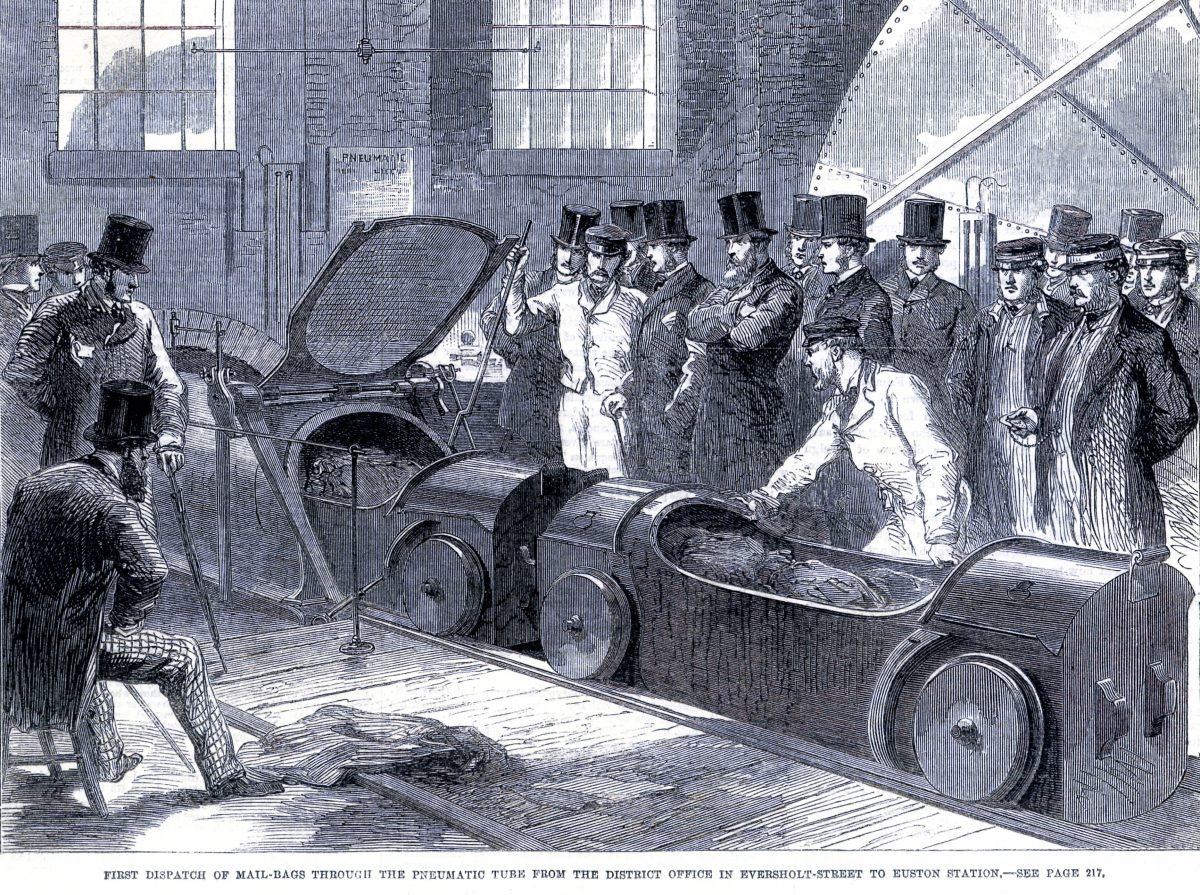
So the narrative hardened. Pneumatics became a “dead end.” A curiosity. A footnote. Meanwhile, electric rail absorbed capital, political will, and public imagination. Once a path is crowned inevitable, alternatives aren’t debated—they’re quietly forgotten.
Some technologies die because they fail. Others die because they don’t need enough infrastructure to control. share this
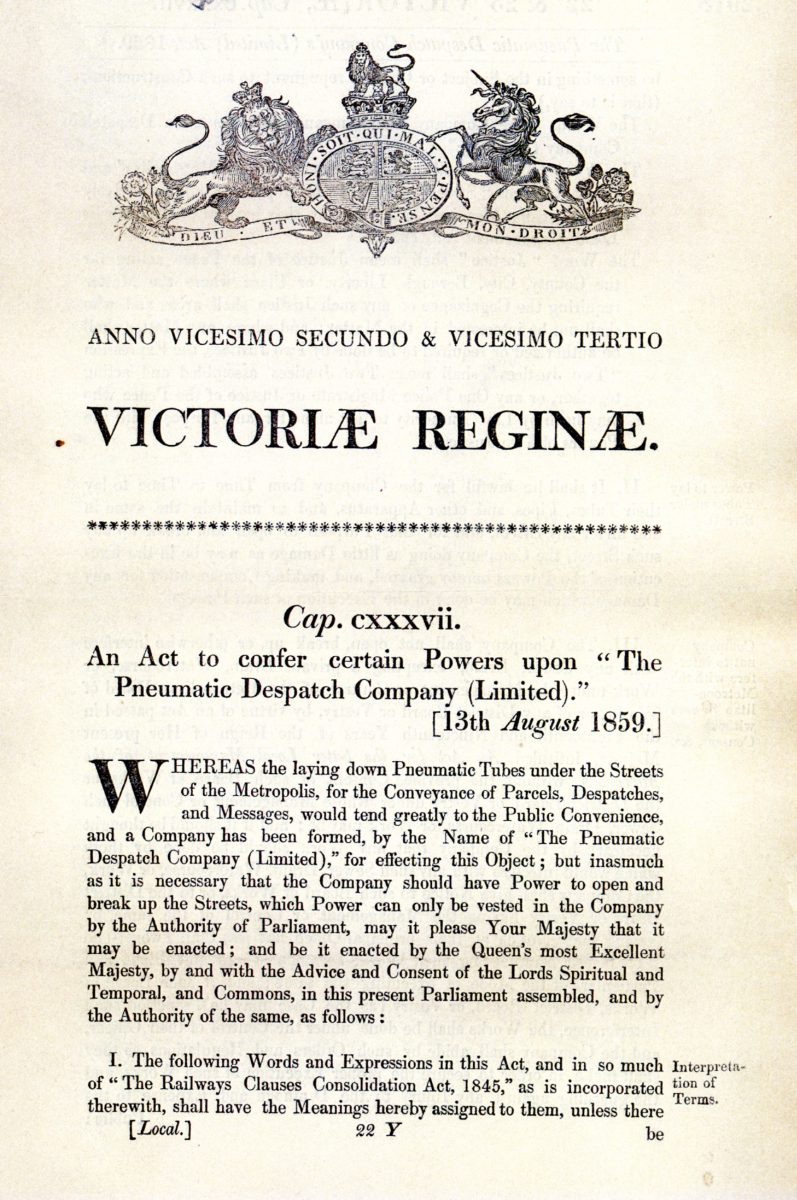
Memory Holed, Not Disproved
What’s striking isn’t that pneumatic tube trains were abandoned. It’s how completely they were erased from public memory. Ask most people today, and they’ll swear humans never rode in air-powered capsules. The idea sounds absurd—until you realize it already happened.
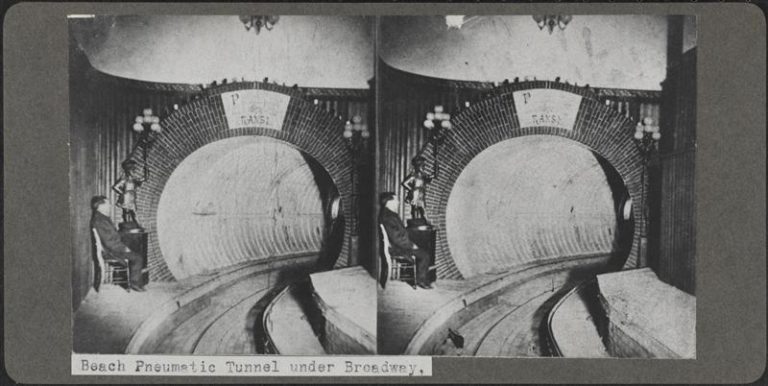
Modern transit discourse rarely revisits old solutions with new materials, better seals, smarter controls. Instead, we chase louder, heavier, more complex systems that demand constant energy input and endless maintenance. Progress, apparently, must look expensive to be taken seriously.
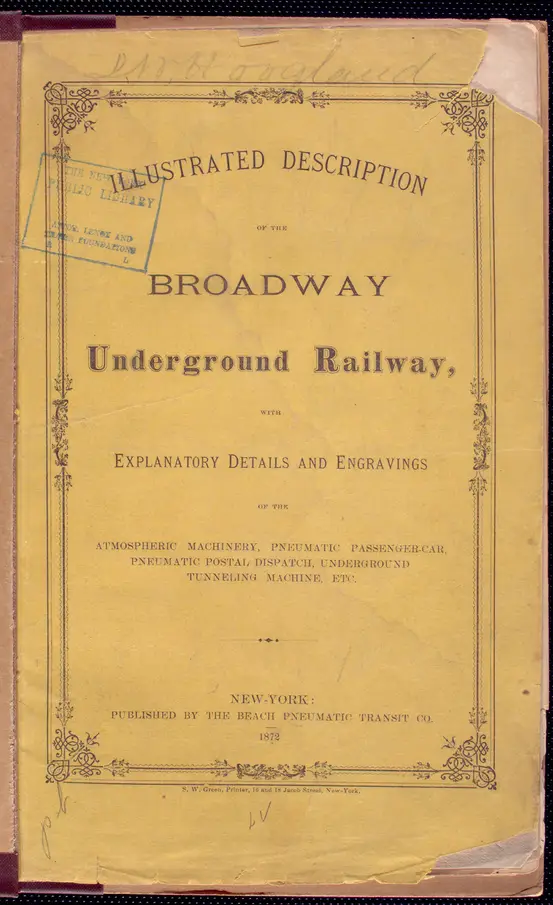
The pneumatic tube train stands as a reminder that history contains roads not taken—and roads deliberately covered over. Not every lost technology was inferior. Some were simply incompatible with the industrial logic that won.
The Cult of Forward Motion
Progress has a branding problem. We’re told it only moves in one direction, that every abandoned technology was naïve, unsafe, or inferior, and that whatever replaced it was obviously better. That story is comforting—and often false. History shows a repeated pattern of elegant systems quietly discarded, not because they failed, but because they didn’t align with the economic gravity of their time.
Take airships. Early rigid airships weren’t toys; they were quiet, fuel-efficient, long-range platforms capable of hovering, landing almost anywhere, and transporting cargo with minimal infrastructure. Their demise is usually pinned on spectacular accidents, but that explanation skips context. Fixed-wing aircraft required massive runways, fuel supply chains, and industrial-scale manufacturing. Airships didn’t. One path centralized power and capital. The other didn’t scale profit as neatly.
This is the recurring sleight of hand. Technologies that reduce dependency, noise, fuel burn, or infrastructure tend to be labeled “dead ends,” while louder, faster, more resource-intensive systems are crowned inevitable. In the name of progress, we often take one step forward in speed or spectacle and two steps back in resilience, sustainability, and optionality.
What gets lost isn’t just the machine—it’s the imagination that built it. And once that imagination is buried, future generations assume the past was simpler, cruder, and less capable than it actually was. That assumption keeps the loop running.
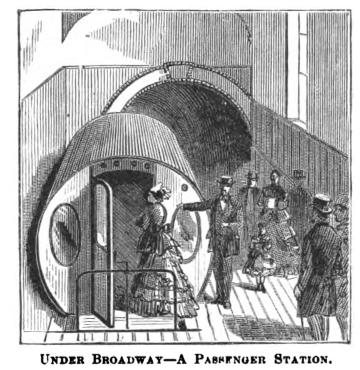
Crystal Palace Pneumatic Railway (1864 experimental line) — overview of an early pneumatic passenger railway prototype in London. Crystal Palace pneumatic railway
Beach Pneumatic Transit (NYC demonstration subway) — early pneumatic subway project in New York City. Beach Pneumatic Transit
Centralized vs decentralized infrastructure networks (arXiv): analysis of when infrastructure tends toward centralized or distributed forms. Centralized vs Decentralized Infrastructure Networks (arXiv)
Pneumatic tube railway history overview — general historic timeline and descriptions of pneumatic tube rail systems from various sources. History of pneumatic tube railways (pneumatic.tube)

A quick overview of the topics covered in this article.
Latest articles

The Cognitive Rent Economy: How Every App Is Leasing Your Attention Back to You
You don’t lose your attention anymore. You lease it. Modern platforms don’t steal focus. They monetize it, slice it into intervals, and return it [read more...]

AI Is an Opinionated Mirror: What Artificial Intelligence Thinks Consciousness Is
Artificial intelligence thinks it sees us clearly. It does not. It is staring into a funhouse mirror we built out of math, bias, hunger [read more...]

The Age of the Aeronauts: Early Ballon flights
Humans have always wanted to rise above the ground and watch the world shrink beneath them without paying a boarding fee or following traffic [read more...]

Free Energy from the Ether – from Egypt to Tesla
Humans have always chased power from the invisible. From the temples of Egypt to Tesla’s lab in Colorado, inventors sought energy not trapped in [read more...]

The Philosophy of Fake Reality: When Simulation Theory Meets Neuroscience
What if reality isn’t breaking down—but revealing its compression algorithm? Neuroscience doesn’t prove we live in a simulation, but does it show the brain [read more...]
Blast from the Past: Exploring War Tubas – The Sound Locators of Yesteryears
When it comes to innovation in warfare, we often think of advanced technologies like radar, drones, and stealth bombers. However, there was a time [read more...]
Pneumatic Tube Trains – a Lost Antiquitech
Before electrified rails and billion-dollar transit fantasies, cities flirted with a quieter idea: sealed tunnels, air pressure, and human cargo. Pneumatic tube trains weren’t [read more...]
Tartaria and the Soft Reset: The Case for a Quiet Historical Overwrite
Civilizations don’t always collapse with explosions and monuments toppling. Sometimes they dissolve through paperwork, renamed concepts, and smoother stories. Tartaria isn’t a lost empire [read more...]

“A problem cannot be solved by the same consciousness that created it.” – Albert Einstein
“A problem cannot be solved by the same consciousness that created it.” - Albert Einstein

Tartaria: What the Maps Remember
History likes to pretend it has perfect recall, but old maps keep whispering otherwise. Somewhere between the ink stains and the borderlines, a ghost [read more...]