
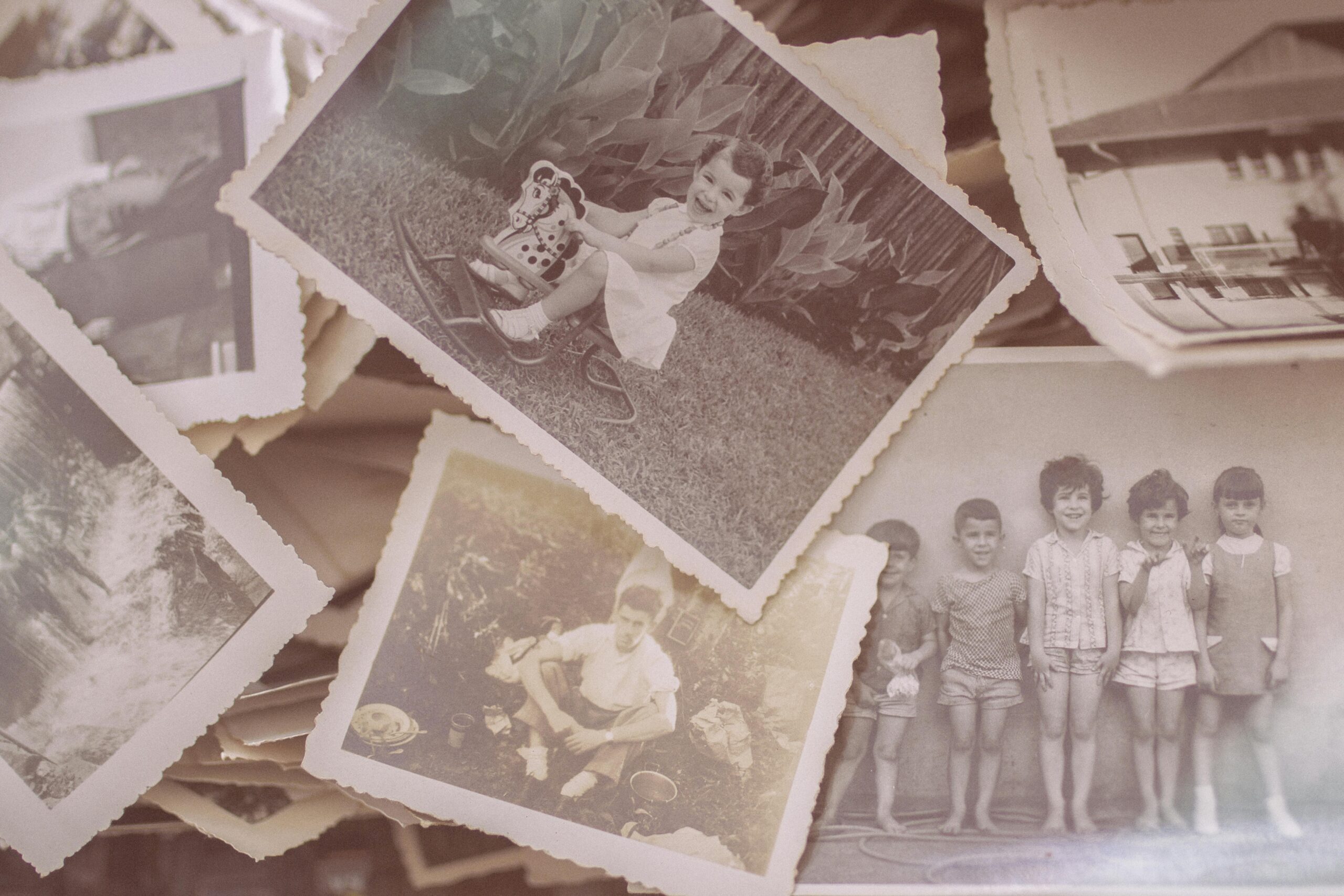
Your Memory is a Narrative Not Fact
How your brain rewrites the past: it just does. You think you remember your past? Cute. Your brain isn’t a filing cabinet—it’s a messy novelist with a flair for drama, constantly revising chapters you didn’t even know were drafts. Welcome to the unreliable history of you.
The Brain Doesn’t Record, It Rewrites
Memories aren’t stored; they’re remixed. Your brain grabs bits of sensory input, emotion, gossip, and bias, slaps them together, and calls it “truth.” Every recall, every narrative, is a director’s cut with fancy transitions, deleted scenes, and a soundtrack you didn’t pick. Confidence is guaranteed; accuracy is optional.
The best part? Each recollection overwrites the last. That memory of your disastrous high school poetry reading? It’s probably more romanticized—or grotesquely exaggerated—than the reality. Neurons chuckle as you swear you remember everything exactly as it happened.
Memory isn’t truth—it’s a highlight reel narrated by a slightly tipsy storyteller. #Neurodope #Memory #TruthOrFiction share this

Your internal ghostwriter leads you unconsciously into different directions.
Mood Is the Ghostwriter You Never Hired
Your emotions aren’t passengers—they’re co-authors. Happy today? That breakup looks like a quirky subplot. Stressed? Suddenly, the lunch you spilled in 2012 is a full-blown tragedy. Memory bends to fit the narrator, not the timeline.
This is why nostalgia feels like a warm hug and regret feels like a slap in the dark. The brain tweaks events to make the story make sense to the present “you,” even if the past had zero chill. It’s editing without permission, a rewrite that keeps you sane—or at least deluded.
Your mood isn’t just in your head—it ghostwrites your entire past. #Neurodope #Memory #Perspective share this
Eyewitness Memory: A Comedy of Errors
Eyewitness accounts are basically the brain’s greatest trolling trick. Two people see the same moment and return with completely different “facts,” both delivered with the confidence of a TED talk. The brain fills gaps with assumptions, clichés, and whatever makes sense socially. Truth? Optional. Conviction? Mandatory.

Its all about perspective on a narrative leash
Courts treat eyewitnesses like gospel, but neurons know the truth: your brain is a sloppy historian, proof that certainty is not the same as correctness. Next time someone swears they “saw it happen exactly like that,” smile politely—they’re narrating their own hallucination.
Eyewitness memory: confidently wrong, spectacularly unreliable. #Neurodope #MemoryFails #Neuroscience share this

One event, completely different recollections.
Nostalgia: The Museum Curated by Your Bias
Nostalgia is the brain’s PR department. It softens the rough edges, cranks up the warm lighting, and adds a triumphant score to your otherwise mediocre history. It’s less a record of what happened and more a personal myth sold back to you.
Meanwhile, the bad stuff? The embarrassments, awkwardness, heartbreak—they get amplified into cautionary tales, horror shorts starring a younger you. Your past is a curated exhibit, complete with selective edits and heavy narrative bias. It’s comforting, it’s convenient, and it’s mostly fiction – not fact.
Nostalgia: polishing your personal myth while exaggerating the tragedy of your mistakes. #Neurodope #MemoryBias #Nostalgia share this
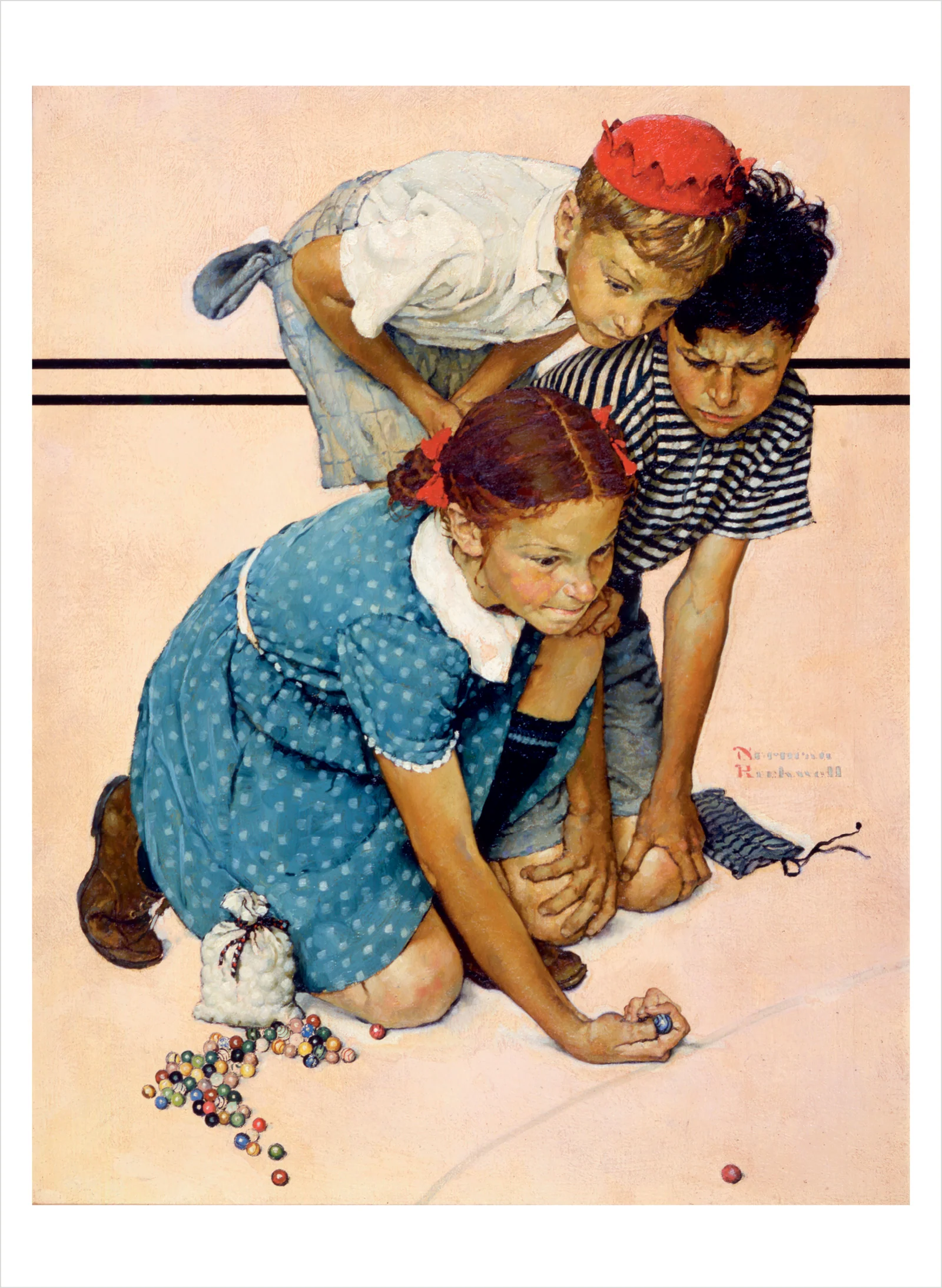
Norman Rockwell was the master of nostalgic illustration
Readings
Memory is not a static object; it is a dynamic, reconstructive process shaped by neurons, emotions, and social context. Social context? What happened that day before your “weird dream you had”? For readers who want to explore further:
Schacter, Daniel L. Searching for Memory: The Brain, the Mind, and the Past. Basic Books, 1996.
Loftus, Elizabeth F. Eyewitness Testimony. Harvard University Press, 1979.
Roediger, Henry L., and Kathleen B. McDermott. “Creating False Memories: Remembering Words Not Presented in Lists.” Journal of Experimental Psychology: Learning, Memory, and Cognition, 1995.
Pillemer, David B. Momentous Events, Vivid Memories. Harvard University Press, 1998.
A quick overview of the topics covered in this article.
Latest articles
The Cognitive Rent Economy: How Every App Is Leasing Your Attention Back to You
You don’t lose your attention anymore. You lease it. Modern platforms don’t steal focus. They monetize it, slice it into intervals, and return it [read more...]
AI Is an Opinionated Mirror: What Artificial Intelligence Thinks Consciousness Is
Artificial intelligence thinks it sees us clearly. It does not. It is staring into a funhouse mirror we built out of math, bias, hunger [read more...]

The Age of the Aeronauts: Early Ballon flights
Humans have always wanted to rise above the ground and watch the world shrink beneath them without paying a boarding fee or following traffic [read more...]

Free Energy from the Ether – from Egypt to Tesla
Humans have always chased power from the invisible. From the temples of Egypt to Tesla’s lab in Colorado, inventors sought energy not trapped in [read more...]
The Philosophy of Fake Reality: When Simulation Theory Meets Neuroscience
What if reality isn’t breaking down—but revealing its compression algorithm? Neuroscience doesn’t prove we live in a simulation, but does it show the brain [read more...]
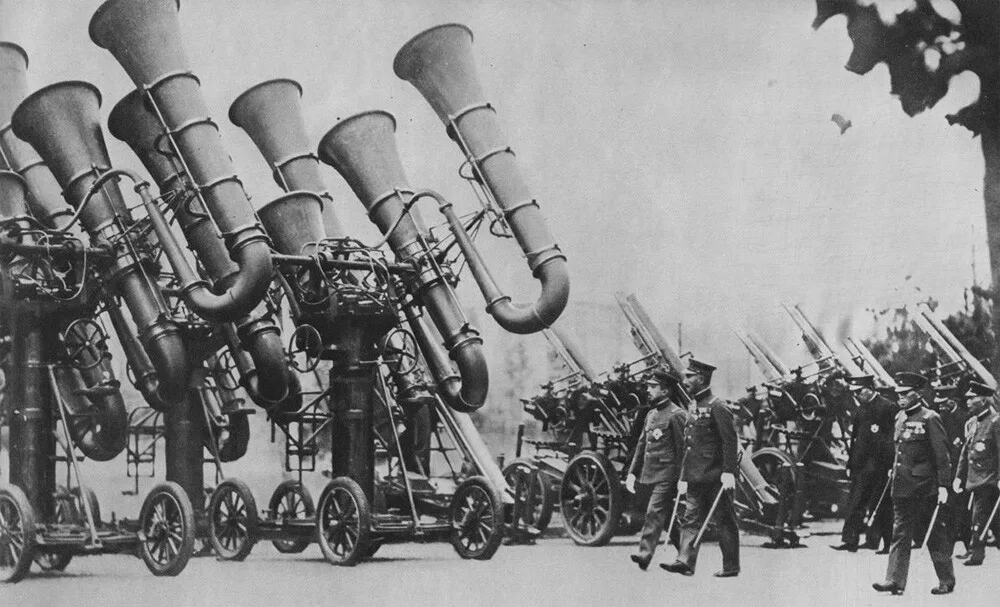
Blast from the Past: Exploring War Tubas – The Sound Locators of Yesteryears
When it comes to innovation in warfare, we often think of advanced technologies like radar, drones, and stealth bombers. However, there was a time [read more...]
Pneumatic Tube Trains – a Lost Antiquitech
Before electrified rails and billion-dollar transit fantasies, cities flirted with a quieter idea: sealed tunnels, air pressure, and human cargo. Pneumatic tube trains weren’t [read more...]

Tartaria and the Soft Reset: The Case for a Quiet Historical Overwrite
Civilizations don’t always collapse with explosions and monuments toppling. Sometimes they dissolve through paperwork, renamed concepts, and smoother stories. Tartaria isn’t a lost empire [read more...]

“A problem cannot be solved by the same consciousness that created it.” – Albert Einstein
“A problem cannot be solved by the same consciousness that created it.” - Albert Einstein
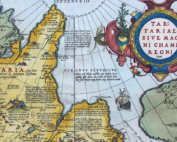
Tartaria: What the Maps Remember
History likes to pretend it has perfect recall, but old maps keep whispering otherwise. Somewhere between the ink stains and the borderlines, a ghost [read more...]