

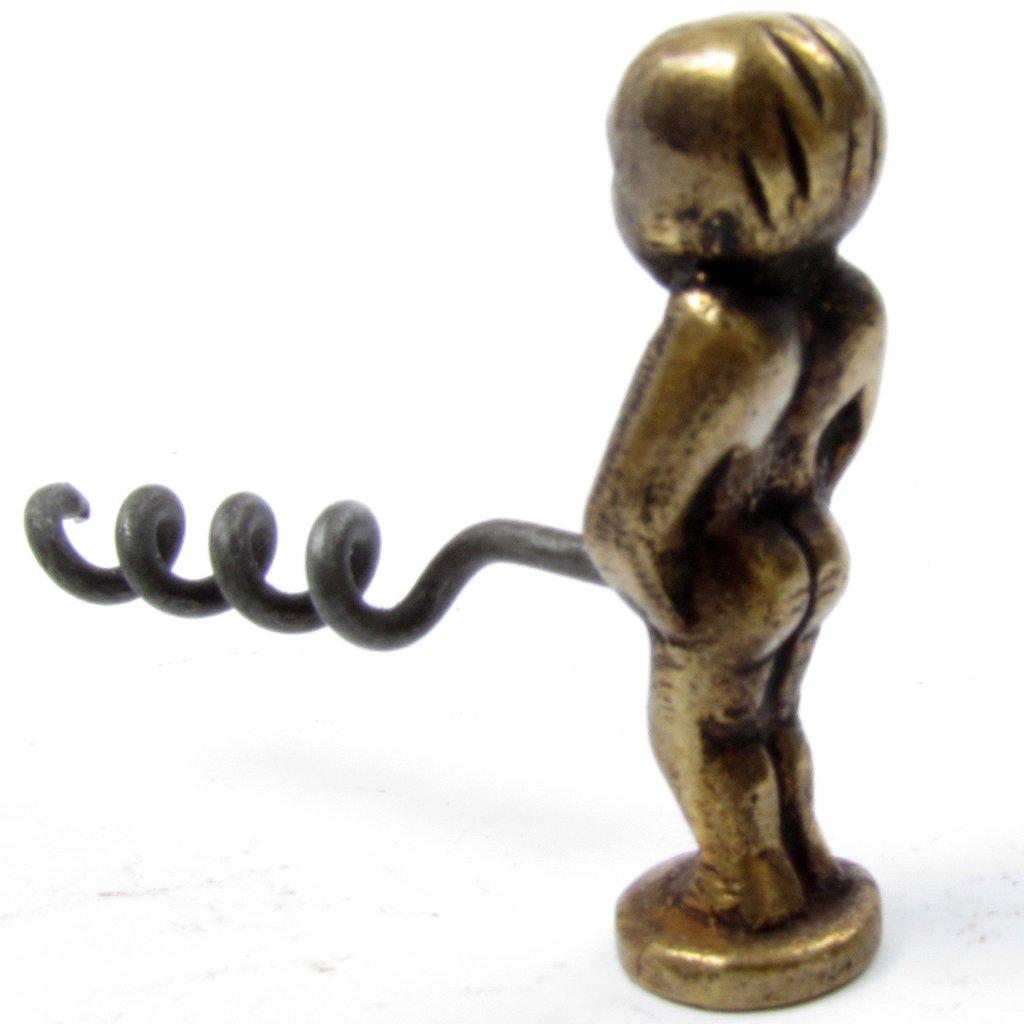
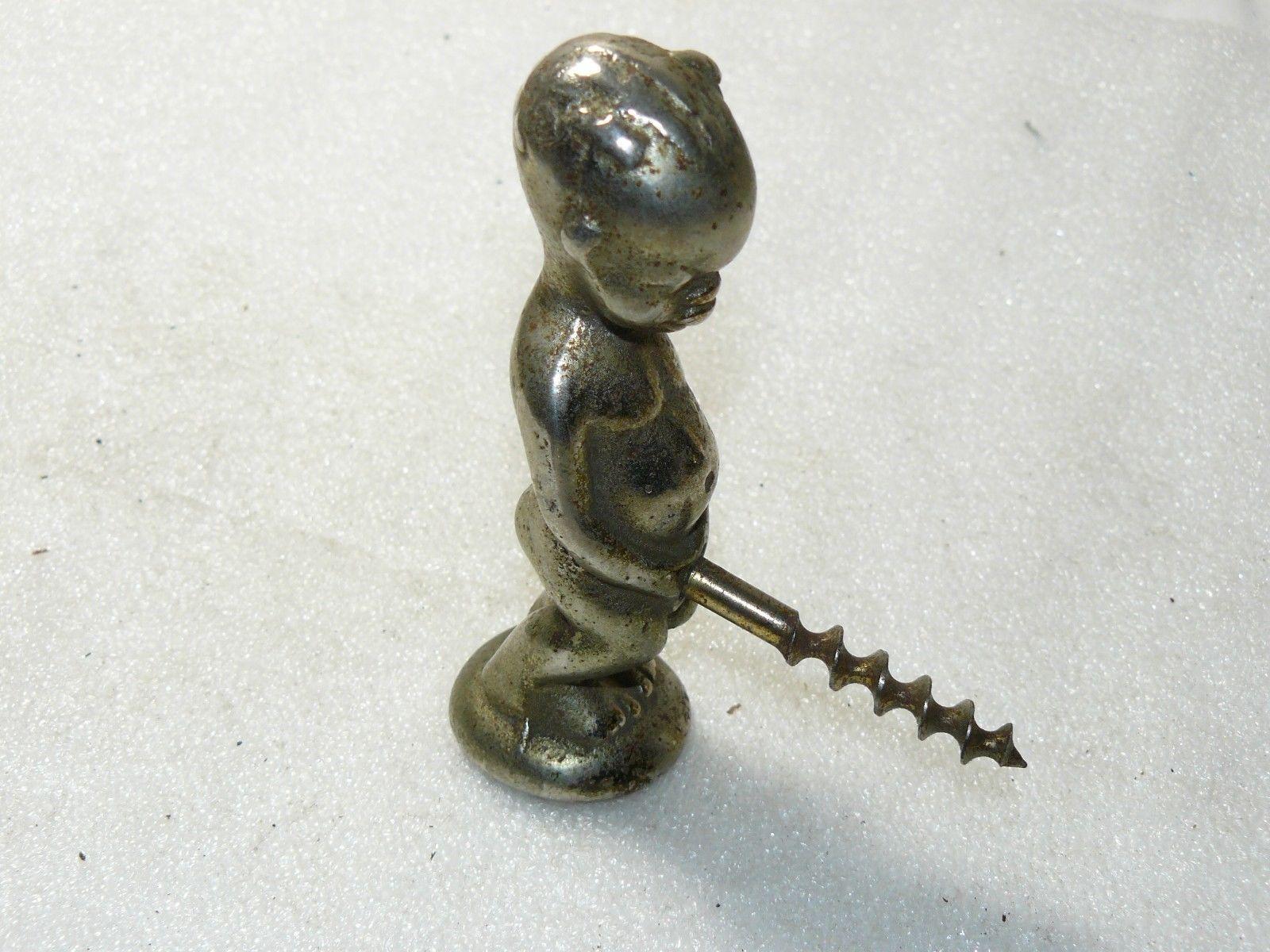
The “Boy Pissing Corkscrew” originates from a 16th Century Renaissance Painting
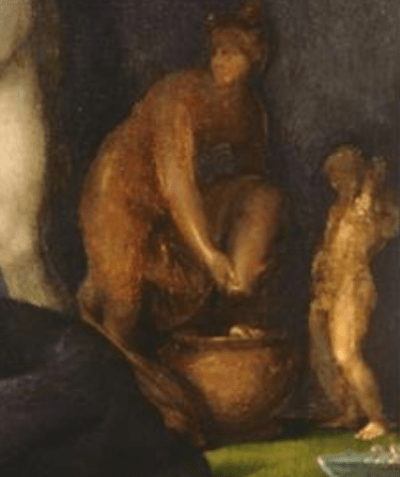
Once you see it, you can’t unsee it: a hazy hint of adolescent humour in the background of Andrea Odoni (1527), among the stand-out paintings on display at the National Gallery in London in an engrossing new exhibition devoted to the pioneering portraits of the 16th-Century Italian artist Lorenzo Lotto. Just behind the sitter’s left elbow, lurking in the shadows of the work’s upper right-hand corner, the portrayal of a pair of bronze statuettes has been staged to create a crude comic subplot within the broader drama of the oblong canvas.
The “Boy Pissing Corkscrew” originates from a 16th Century Renaissance Painting
The larger of these two works-within-a-work is an antique sculpture of a bathing Venus, seen washing her leg. The Roman goddess of beauty and love has turned her head to one side, seemingly oblivious of the presence of a naked Hercules, who has sidled up to her unawares.
The “Boy Pissing Corkscrew” originates from a 16th Century Renaissance Painting
Wielding a shoulder-slung club with one hand while guiding an eternal flow of urine with his other, the god of strength and war, stumbling drunk, is overcome by nature’s call. He thrusts his pelvis forward towards Venus and appears to be filling the very basin in which she is now and forever bathing.
AND NOW A COLLECTION OF OUR FAMOUS BOY PISSING CORKSCREWS:


Ref: BBC
A quick overview of the topics covered in this article.

How do ya like my little magazine? Neurodope Magazine is a sardonic, science-meets-philosophy publication that explores the strange, the curious, and the mind-bending corners of reality with wit, skepticism, and insight.
If this kind of brain static hits your frequency, subscribe for articles to your inbox. I try to look deeper into things and write about them: commentary on society, science, and space.. After all, there's a whole lot of unknown unknowns out there.. and I'm curious to the ideas surrounding them. Thanks for reading! - Chip
Latest articles
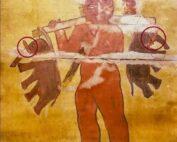
The Giants of the Ancients Maybe Weren’t So Ancient
Man’s been flexing stories on stone long before the alphabet could crawl. Four thousand years ago, someone with a steady hand painted a red-skinned [read more...]

Scientists Give Up and Join Philosophers as a Result of Magic Mushrooms
In recent years, scientists have come to realize that the more they learn about the human brain, the more they realize they don't know [read more...]

Scientists Squander Knowledge from Various Disciplines in Desperate Hopes to Build Cyborgs
The "Human Brain Project - Objective: Understanding the human brain is one of the greatest challenges facing 21st century science. If we can rise [read more...]