
Space Tourism: A Billionaire Party Above the Sky
A Neurodope Magazine look at commercial spaceflight, billionaire ego, and societal priorities in the new space race. Jeff Bezos, Elon Musk, Richard Branson—are these ventures about progress or just self-promotion and marketing stunts? Who’s funding what, and what does it all mean?
Billionaires in Low Orbit
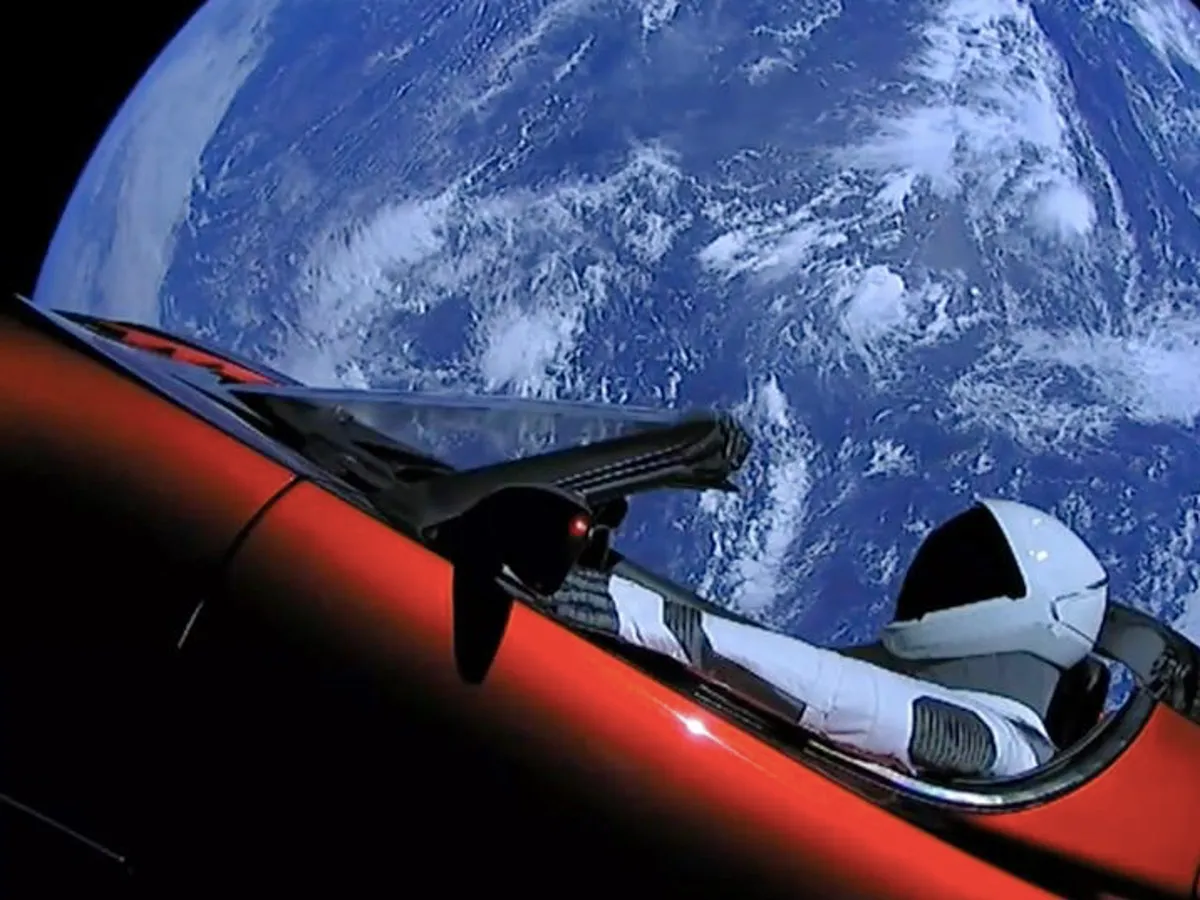
Forget the moon. Forget Mars. Forget, for a moment, the actual science of getting there. We’re in the era of billionaire joyrides, where a Tesla floats in orbit not because it’s engineering genius but because a man with too much money and a camera decided to make a spectacle. Space tourism is here, and the sky isn’t the limit—it’s the ultimate influencer stage.
Space tourism: because nothing says progress like a floating car and a billionaire selfie. share this
The Private Space Race
Jeff Bezos calls it Blue Origin, but some cynics call it “Blue Ego.” Musk has SpaceX, and yes, the car in orbit looked cool on Instagram, but ask yourself: was it a leap for humanity, or the ultimate billboard for billionaires to flex their portfolios? Richard Branson pops up with Virgin Galactic, promising a joyride just under the Kármán line, the symbolic “edge of space” at 100 km above Earth. Meanwhile, we cheer, tweet, and share clips of rockets lifting off like it’s a new Super Bowl halftime show.
Blue Origin? More like Blue Ego. Jeff Bezos in orbit, the ultimate flex. share this
Beyond the Kármán Line
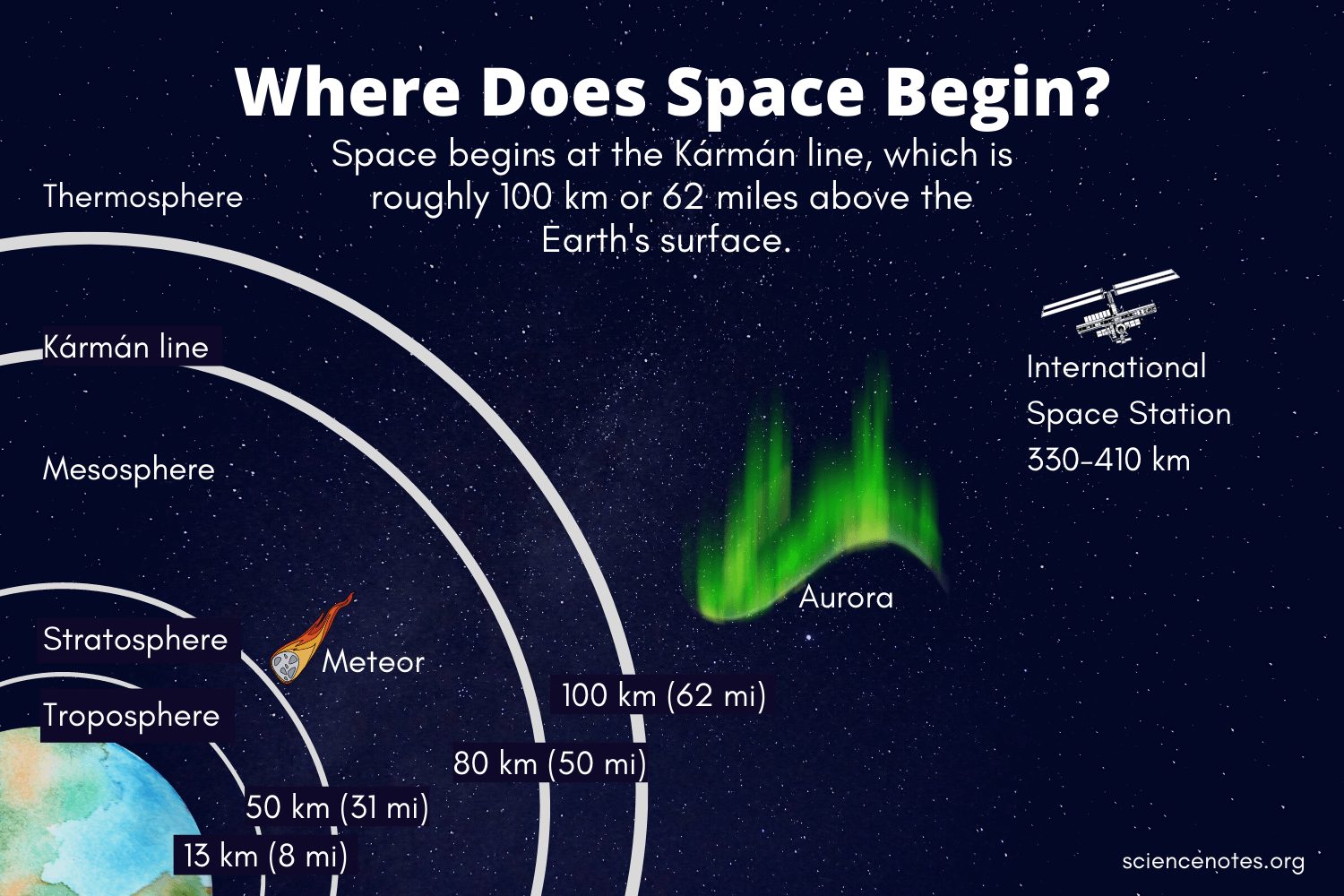
Crossing the Kármán line—62 miles above sea level—is a technical feat, yet the public narrative glosses over the risk. Re-entry, radiation, and orbital debris are inconvenient truths. But why let science complicate the billionaire joyride? The line between adventure and advertisement blurs, leaving us to admire while quietly questioning priorities.
Private commercial space programs are multiplying, and the backers are wealthy enough to make even governments seem like startups in comparison. Every launch is a PR spectacle, a billion-dollar ad campaign cloaked in innovation. Space tourism raises fundamental questions: who benefits, who watches, and who profits? It’s not science fiction—it’s a billionaire’s social media fantasy brought to life, and we’re the audience applauding from the digital cheap seats.
Kármán line or PR line? Space is now a billion-dollar billboard. share this
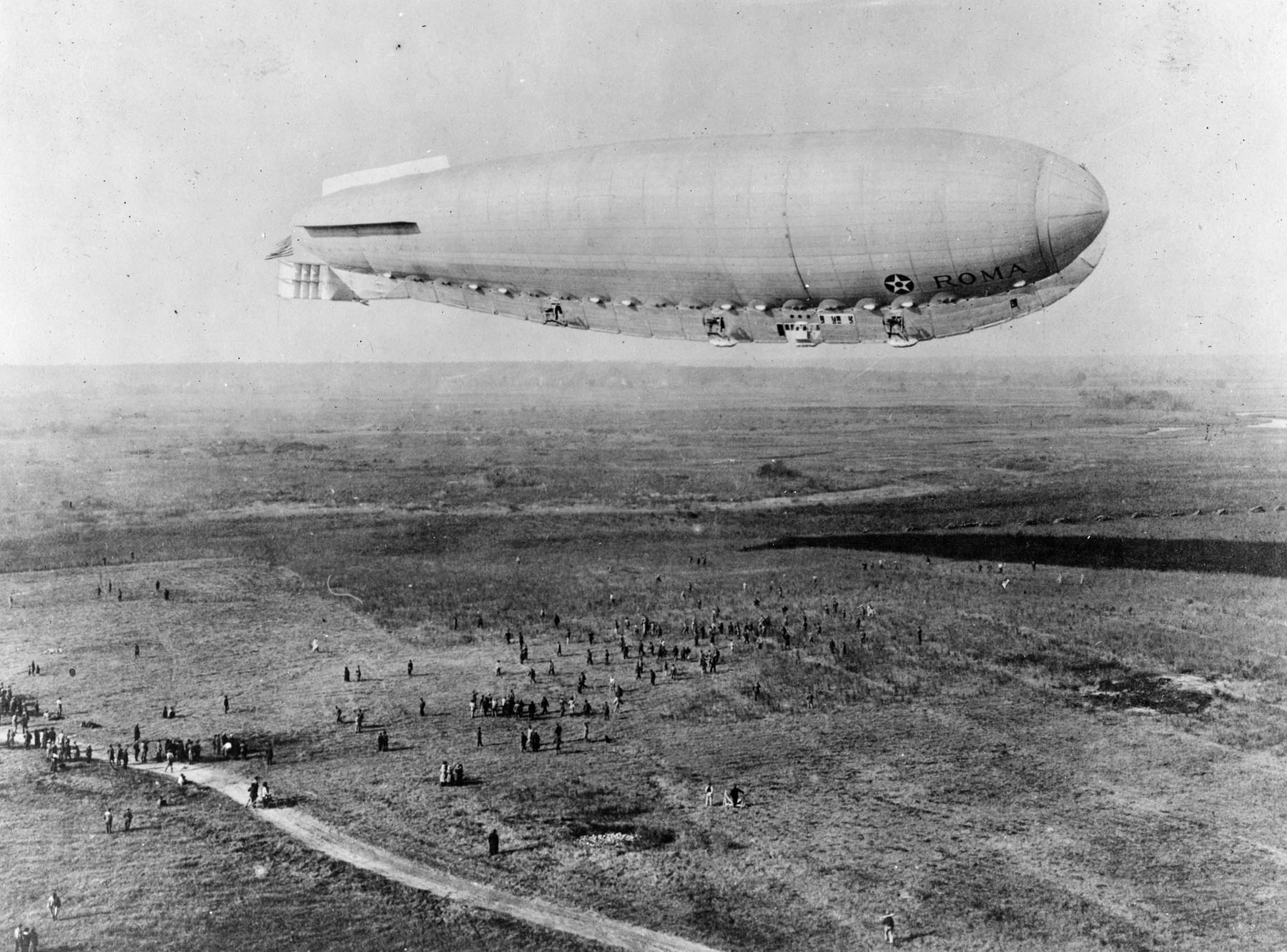
The Roma makes its first flight in the United States at Langley Field, Va., on Nov. 15, 1921. (U.S. Air Force photo)
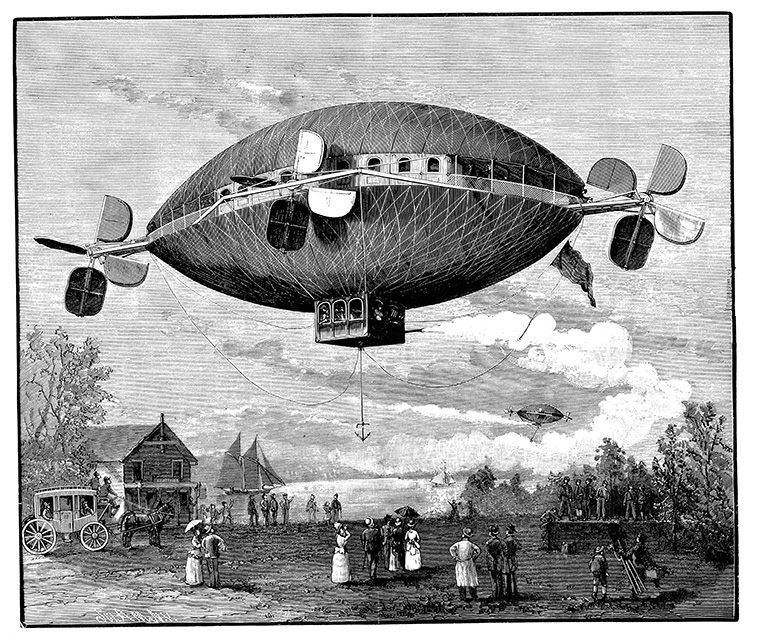
Before rockets were marketed as billionaire toys, humanity had dirigibles and zeppelins. In the late 1800s and early 1900s, airships were a booming commercial industry, carrying passengers, mail, and cargo across Europe and America. They were the original private aviation hype—luxury travel for the wealthy and novelty for the public. People once cheered at the sight of these floating leviathans, much like we cheer today when a billionaire car drifts above Earth. The technology was advanced for its time, but accidents and economic realities eventually grounded airships as mass transport.
A century ago, pioneers risked airships and early aircraft for science and transport. Today, rockets carry wallets and camera crews instead of instruments. History reminds us: innovation without perspective is just fireworks.
Space travel may someday democratize, but for now, it’s a billionaire’s cocktail with Earth in the background.
Yet they left a cultural imprint: a fascination with high-tech spectacle, private wealth, and the thrill of seeing the sky as a playground. Modern space tourism is, in many ways, a direct cultural heir to the airship industry—high-risk, high-visibility, ego-driven, and primarily about spectacle rather than mass accessibility. Just as few could afford an airship ticket, today only the ultra-wealthy can afford orbit. History whispers: the sky may be vast, but humans will always look up with the most conspicuous passengers.
Harwood, William. The Airships: A History of the Early 20th Century Dirigibles. New York: Dover, 1965.
Robinson, Douglas H. “Airships and Public Imagination, 1880–1930.” Journal of Aeronautical History, 2010.
NASA. “Kármán Line: Defining the Edge of Space.” https://www.nasa.gov
BBC News. “Tesla in Space: Elon Musk’s Marketing Orbit.” https://www.bbc.com/news
“Blue Origin, Virgin Galactic, and the Commercial Space Race,” Space.com [https://www.space.com/commercial-spaceflight]
“Kármán Line: Definition and Significance,” NASA [https://www.nasa.gov/topics/technology/features/karman-line.html]

A quick overview of the topics covered in this article.
Latest articles

The Cognitive Rent Economy: How Every App Is Leasing Your Attention Back to You
You don’t lose your attention anymore. You lease it. Modern platforms don’t steal focus. They monetize it, slice it into intervals, and return it [read more...]

AI Is an Opinionated Mirror: What Artificial Intelligence Thinks Consciousness Is
Artificial intelligence thinks it sees us clearly. It does not. It is staring into a funhouse mirror we built out of math, bias, hunger [read more...]

The Age of the Aeronauts: Early Ballon flights
Humans have always wanted to rise above the ground and watch the world shrink beneath them without paying a boarding fee or following traffic [read more...]

Free Energy from the Ether – from Egypt to Tesla
Humans have always chased power from the invisible. From the temples of Egypt to Tesla’s lab in Colorado, inventors sought energy not trapped in [read more...]

The Philosophy of Fake Reality: When Simulation Theory Meets Neuroscience
What if reality isn’t breaking down—but revealing its compression algorithm? Neuroscience doesn’t prove we live in a simulation, but does it show the brain [read more...]
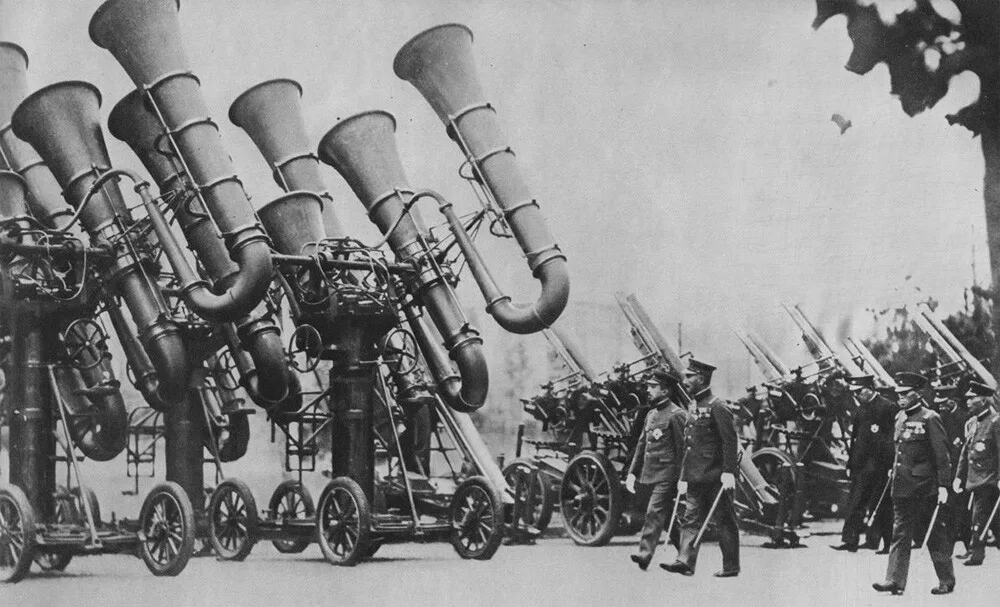
Blast from the Past: Exploring War Tubas – The Sound Locators of Yesteryears
When it comes to innovation in warfare, we often think of advanced technologies like radar, drones, and stealth bombers. However, there was a time [read more...]
Pneumatic Tube Trains – a Lost Antiquitech
Before electrified rails and billion-dollar transit fantasies, cities flirted with a quieter idea: sealed tunnels, air pressure, and human cargo. Pneumatic tube trains weren’t [read more...]
Tartaria and the Soft Reset: The Case for a Quiet Historical Overwrite
Civilizations don’t always collapse with explosions and monuments toppling. Sometimes they dissolve through paperwork, renamed concepts, and smoother stories. Tartaria isn’t a lost empire [read more...]

“A problem cannot be solved by the same consciousness that created it.” – Albert Einstein
“A problem cannot be solved by the same consciousness that created it.” - Albert Einstein
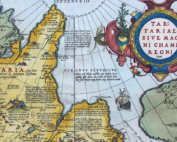
Tartaria: What the Maps Remember
History likes to pretend it has perfect recall, but old maps keep whispering otherwise. Somewhere between the ink stains and the borderlines, a ghost [read more...]