
Head Transplants: Creepy Chinese Mice Experiments
Chinese doctor is doing head transplants in mice: A tiny black mouse gets a new head, and the science world collectively recoils. China’s Harbin Medical University is pushing head transplants to the limits, testing survival, resilience, and the ethics of grafting brains onto new bodies—one unlucky mouse at a time.
Head Swaps at the Edge of Science
In Harbin, China, researchers have been literally swapping heads on mice. Dr. Xiaoping Ren and his team report a small black mouse breathing through a freshly attached brown head, twitching its new body, and even opening its eyes for the first time in hours. Each operation is a tightrope walk between anatomy and biology, a dance on the fine line between life and immediate failure.

The experiment, ongoing since July 2013, has involved nearly a thousand mice. The goal: push the survival window past the current record of one day. While critics scream ethics, the team documents techniques that could, in theory, scale to more complex mammals. Mouse-headed mice may sound like a science fair nightmare, but in the lab, it’s high-stakes experimentation with a keen eye on physiology and neurovascular integration.
Science is rewriting the rules of life. Head transplants in mice inch toward monkeys and maybe humans. Ethical horror or breakthrough? #Neurodope #Bioethics share this
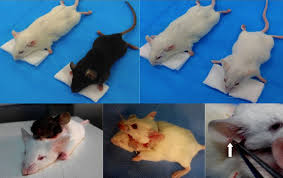
It’s alive!! (for hours)
The Surgical Ballet of a Head Transplant
Ten hours hunched over an operating table is not unusual for Dr. Ren. The precision required to connect spinal cords, blood vessels, and airways is astounding—one slip and the tiny mouse dies instantly. For the team, each twitch, each breath, each blink is a victory of engineering over nature, even if it lasts only minutes or hours.
The operations test more than surgical skill—they probe survival strategies, anesthesia limitations, and immune responses in ways conventional studies never dared. For mobile users following the research, imagine seeing millimeter-wide spinal nerves fused like electrical wires, pulsating under a microscope as a creature struggles to reconcile two nervous systems. It’s awe, horror, and neuroscience rolled into one.

What the?
Mouse heads, monkey dreams. Harbin scientists push life to its limits, blending biology and bravado. #Neurodope #ScienceGoneWild share this
From Mice to Monkeys: The Next Frontier
Dr. Ren plans to bring these techniques to primates, aiming for a head transplant that can survive autonomously, even if briefly. The jump from rodent to primate is not trivial—immune rejection, spinal integration, and motor coordination multiply in complexity.

The mouse itself enters a new dimension
For the public, the idea triggers instinctive unease. Yet the researchers argue that these experiments are critical stepping stones, mapping the unknowns of transplant biology. Every fleeting minute of survival teaches something profound about circulation, neurology, and the potential—and peril—of extreme surgical intervention.
Next stop: monkeys. Head transplant research tests life itself. Are we ready for what comes after? #Neurodope #BioFrontier share this
Ethical Shockwaves and the Human Question
Even as survival improves, the experiments spark profound moral dilemmas. Are we peering at life as a puzzle to solve, or tampering with beings who can feel and suffer? The microscope doesn’t answer that—it only magnifies the biological spectacle.
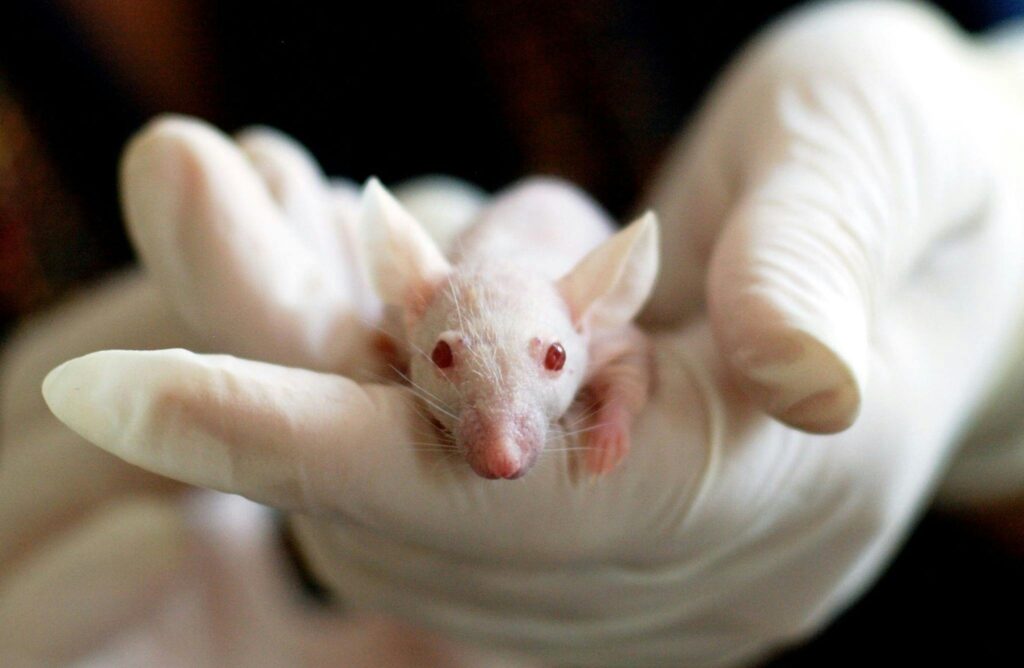
Get me outta here! Oh wait, you just did-technically.
Yet in some sense, the work is unavoidably mesmerizing. It forces reflection on what counts as self, body, and identity. While the unlucky mice endure brief lives with swapped heads, humans are left to wrestle with questions of consciousness, dignity, and the ethical limits of science. For those who made it this far, congratulations—you’ve glimpsed the edge of life itself.
Unlucky mice, ambitious surgeons, ethical chaos. Head transplants are science’s wild frontier. #Neurodope #Bioethics share this

Neurodope Science: Where curiosity sparks, chaos reigns, and discoveries come alive.
Since the July 2013 operation, he and his team at Harbin Medical University have done operations on nearly 1,000 more mice, testing various ways to help them survive longer than their record so far of one day after the surgery. A peer-reviewed international journal, CNS Neuroscience & Therapeutics, published the team’s work in December.
Head transplants, at the extreme frontier of medicine, are inching toward reality. Dr. Ren plans to turn his surgical skills to monkeys this summer, hoping to create the first head-transplanted primate that can live and breathe on its own, at least for a little while.
A quick overview of the topics covered in this article.
Latest articles

“A problem cannot be solved by the same consciousness that created it.” – Albert Einstein
“A problem cannot be solved by the same consciousness that created it.” - Albert Einstein

“All truth passes through three stages. First, it is ridiculed. Second, it is violently opposed. Third, it is accepted as being self-evident.” – Arthur Schopenhauer
"All truth passes through three stages. First, it is ridiculed. Second, it is violently opposed. Third, it is accepted as being self-evident." - [read more...]

“The truth is not for all men, but only for those who seek it.” – Ayn Rand
"The truth is not for all men, but only for those who seek it." - Ayn Rand