
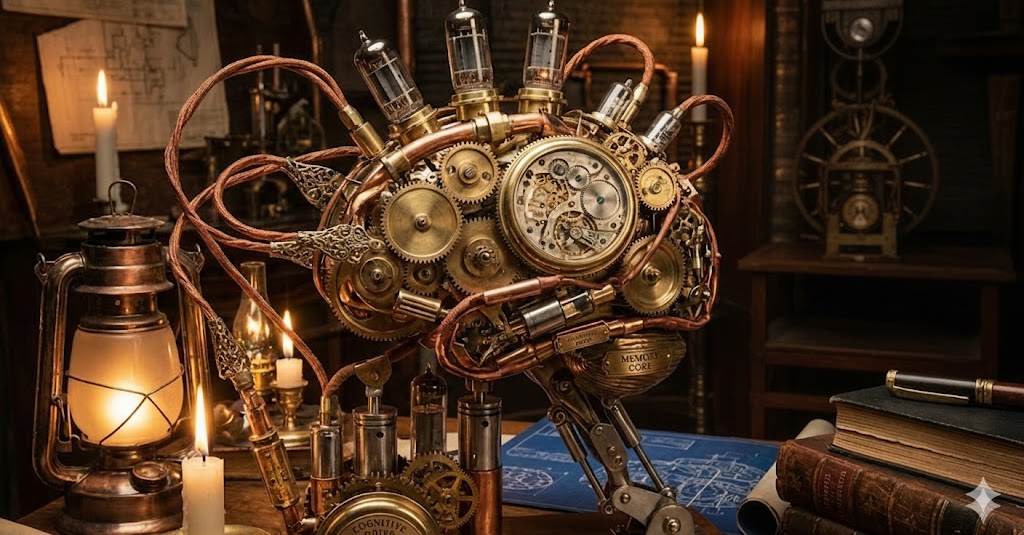
The Philosophy of Fake Reality: When Simulation Theory Meets Neuroscience
[addtoany]
What if reality isn’t breaking down—but revealing its compression algorithm? Neuroscience doesn’t prove we live in a simulation, but does it show the brain already behaves like one?
The Brain as a Prediction Engine
Neuroscience won’t abandoned the idea that the brain passively records reality: filing away memories like a file cabinet. But perhaps as well, it operates as a prediction engine, constantly generating models of the world and updating them when errors appear. This framework, often called predictive processing or the Bayesian brain model, suggests perception is less about seeing and more about guessing—then correcting.
Under this view, what you experience as “reality” is the brain’s best hypothesis given limited data. Sensory input merely nudges the model rather than defining it outright. The brain doesn’t ask “what is out there?”—it asks “what is most likely happening?” That distinction matters when simulation theory enters the room.
Your brain doesn’t perceive reality — it predicts it, then edits the error. #brainscience #neuroscience #fakereality #simulationtheory share this
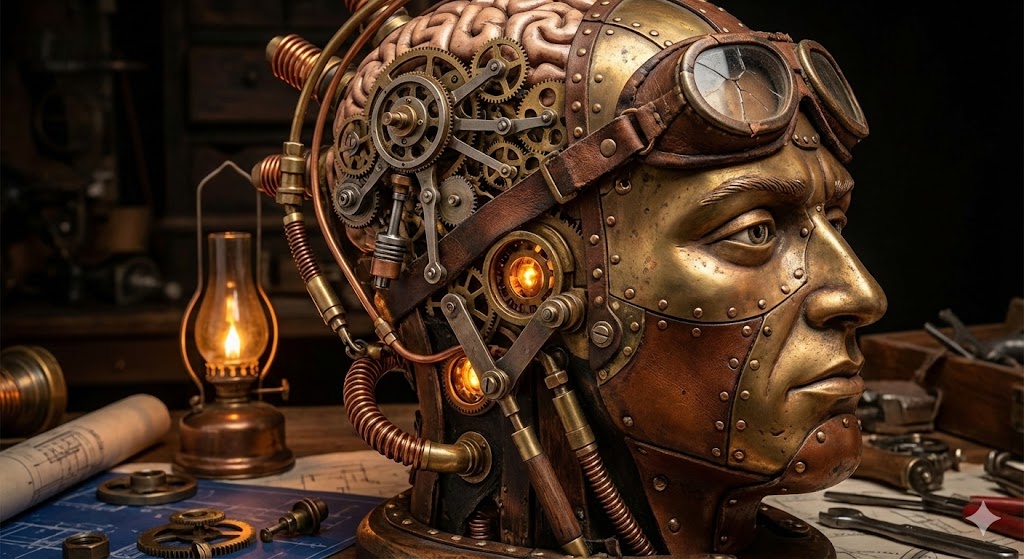
Thomas was a thinker, although a stoic one
Hallucinations Are Not Bugs
Hallucinations aren’t glitches; they’re overconfident predictions. In conditions like schizophrenia, Parkinson’s disease, or even during psychedelic states, the brain weights its internal model more heavily than incoming data. The result isn’t chaos—it’s coherence without consensus.
This matters because hallucinations demonstrate that reality can feel utterly real while being internally generated. No external simulator required. If your brain can fabricate convincing worlds during dreams, psychosis, or sensory deprivation, the philosophical shock of simulation theory loses some of its mystique.
Hallucinations prove reality can feel real even when it’s internally generated. #hallucinations #consciousness #brainmodels #neurophilosophy share this

Philosophy and neuroscience intersect in the question of whether reality is constructed, filtered, or fundamentally steam powered.
Simulation Theory Loses Its God Complex
Simulation theory often smuggles theology back in through a USB port: hidden architects, cosmic programmers, omniscient observers. Neuroscience offers a less dramatic alternative. Reality doesn’t need to be fake—it just needs to be filtered.
The brain aggressively compresses information, discarding most of what exists in favor of what matters for survival. What you experience isn’t the world—it’s a low-resolution survival interface. In that sense, we already live inside a simulation, but it’s one evolved inside the skull, not rendered by a distant server farm.
We already live in a simulation — it’s just evolved, not engineered. #simulationtheory #evolution #brainscience #realityfilter share this
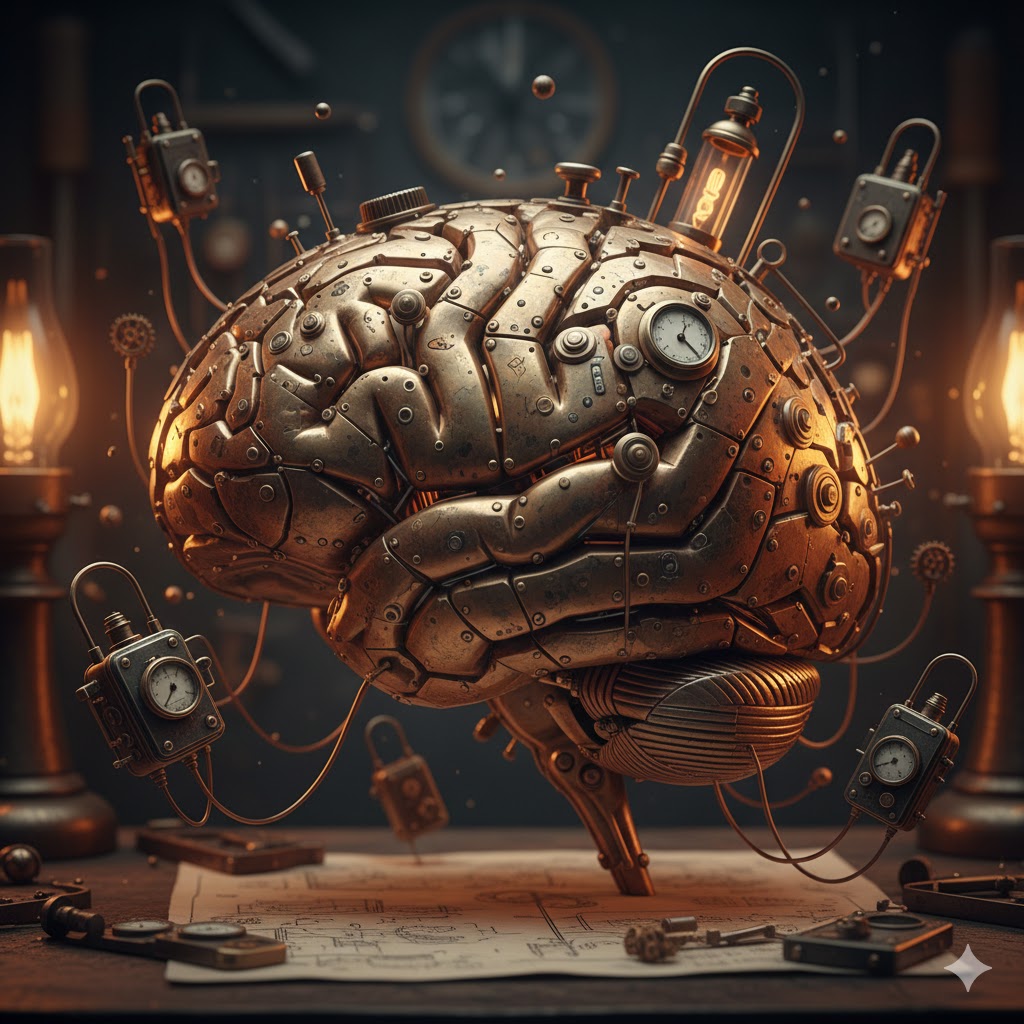
Perhaps the brain compresses vast amounts of information into simplified models optimized for pressurized survival.
Skepticism as Cognitive Self-Defense
Neurodope skepticism doesn’t dismiss simulation theory—it downsizes it. The question isn’t whether reality is fake, but how much interpretation stands between you and whatever’s out there. Neuroscience suggests the gap is large, elastic, and mostly invisible.
If reality feels unstable lately, it may not be because the universe is glitching. It may be because the brain is doing what it has always done: patching meaning onto noise and calling it truth. No simulation required. Just neurons, guesses, and a fragile sense of certainty.
Reality feels unstable because meaning is always a best guess. #skepticism #consciousness #neurodope #truthmodels share this
[addtoany]
A quick overview of the topics covered in this article.
Latest articles
The Cognitive Rent Economy: How Every App Is Leasing Your Attention Back to You
You don’t lose your attention anymore. You lease it. Modern platforms don’t steal focus. They monetize it, slice it into intervals, and return it [read more...]

AI Is an Opinionated Mirror: What Artificial Intelligence Thinks Consciousness Is
Artificial intelligence thinks it sees us clearly. It does not. It is staring into a funhouse mirror we built out of math, bias, hunger [read more...]

The Age of the Aeronauts: Early Ballon flights
Humans have always wanted to rise above the ground and watch the world shrink beneath them without paying a boarding fee or following traffic [read more...]

Free Energy from the Ether – from Egypt to Tesla
Humans have always chased power from the invisible. From the temples of Egypt to Tesla’s lab in Colorado, inventors sought energy not trapped in [read more...]

The Philosophy of Fake Reality: When Simulation Theory Meets Neuroscience
What if reality isn’t breaking down—but revealing its compression algorithm? Neuroscience doesn’t prove we live in a simulation, but does it show the brain [read more...]
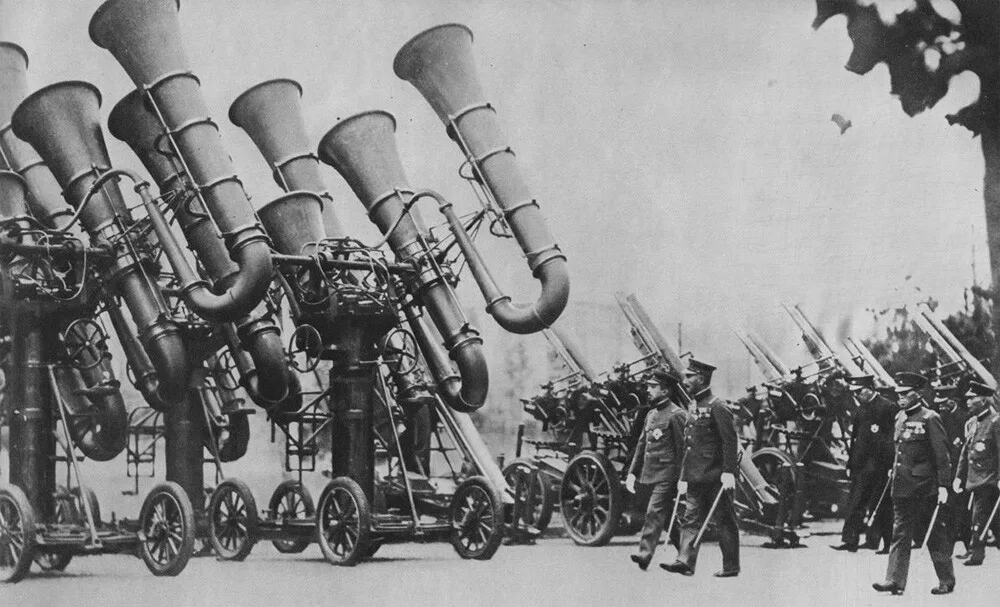
Blast from the Past: Exploring War Tubas – The Sound Locators of Yesteryears
When it comes to innovation in warfare, we often think of advanced technologies like radar, drones, and stealth bombers. However, there was a time [read more...]

Pneumatic Tube Trains – a Lost Antiquitech
Before electrified rails and billion-dollar transit fantasies, cities flirted with a quieter idea: sealed tunnels, air pressure, and human cargo. Pneumatic tube trains weren’t [read more...]

Tartaria and the Soft Reset: The Case for a Quiet Historical Overwrite
Civilizations don’t always collapse with explosions and monuments toppling. Sometimes they dissolve through paperwork, renamed concepts, and smoother stories. Tartaria isn’t a lost empire [read more...]

“A problem cannot be solved by the same consciousness that created it.” – Albert Einstein
“A problem cannot be solved by the same consciousness that created it.” - Albert Einstein

Tartaria: What the Maps Remember
History likes to pretend it has perfect recall, but old maps keep whispering otherwise. Somewhere between the ink stains and the borderlines, a ghost [read more...]


