
The Origin of Columbus Day
Columbus Day was NOT set aside to celebrate Spanish Imperialism and the conquering of Native Peoples. Let’s discuss the origin of Columbus Day. We as Americans, do not regularly celebrate such things as “a bunch of misguided Spanish explorers raping and pillaging for gold”, just as there is no holiday for the “celebrating” of the holocaust of Jewish people during WW2. I mean, get real..Right? Stay with me, because some of the conversations I’m hearing are surreal, so here’s a little back story:
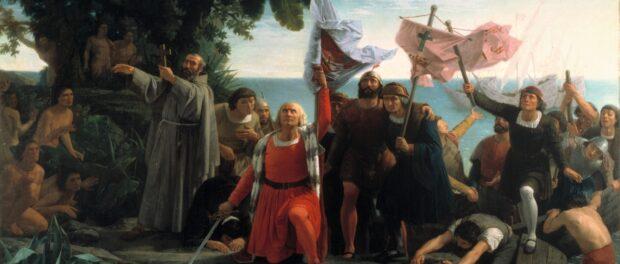
Columbus Day was founded as an Italian American recognition day, to celebrate the heritage and contributions that Italians have made in America.
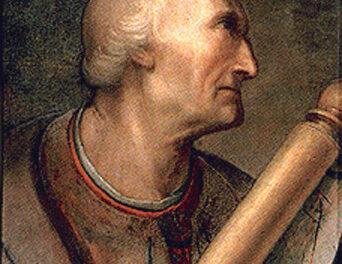 As a side note, America was named after Amerigo Vespucci, NOT Columbus. So when people mention “Columbus discovered America, please feel free to remind them that they live in America, not Columbia.
Here is a little history of the conception of the intention to recognize the Italian American:
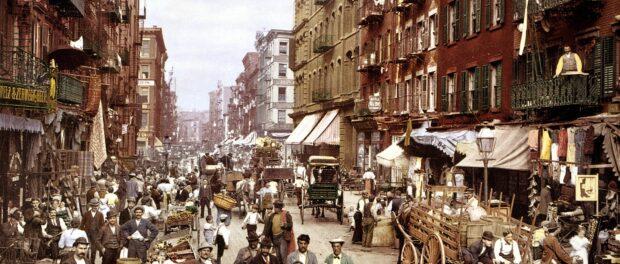 The Italians that immigrated from Italy in the 1800’s were highly prejudiced against here in “New England” and were treated as second class citizens, just as the Irish were mistreated when they immigrated from Ireland during the potato famine. This happened in New York, Boston, Philidelphia, Chicago, and many other cities that were growing up out of the woods and fields at that time. Finding jobs and overcoming discrimination were only compounded by the language barriers and the lack of opportunities provided to immigrants.

It was a consensus that America was a “new start” for downtrodden immigrants, (it still is) and so in order to get the official recognition that Italians needed, to be honored as an integral part of the fabric of this country, the Italians needed a big name to push through the idea to the politicians who would come to vote, and to finally recognize the Italian efforts of the laborers, fruit vendors, barbers, butchers, bakers, waiters, warehousemen, longshoremen, and any other “dirty” job that others wouldn’t take, all which played an integral part of creating the strength of this Country.
The politicians knew the anti-Italian sentiment in the country, and needed a big name to trump the prejudice that befell the Italian Americans, so they chose Columbus. This person, who sailed for the Spanish Crown, was actually Italian. And so this could show the anti-Italian public in America that the Italians were part of major history to this world.

Columbus Day is Pro-Immigrant
To many second and third generation Italian Americans, creating a “holiday” would be an opportunity to provide a fresh assessment as to the contributions of the Italian Americans. They overcame discrimination, bigotry, and unfairness and proved loyal and valuable to the American fabric.
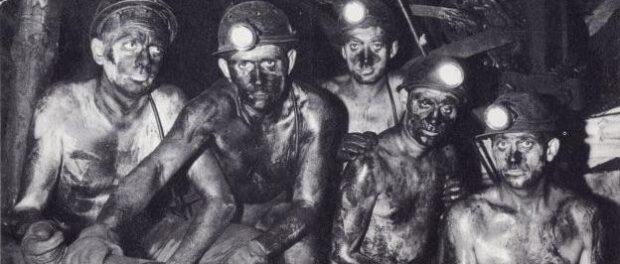

Celebrating the ‘contributions of immigrants’ is NOT an exclusive American Holiday experience…This day is actually celebrated in many other countries.
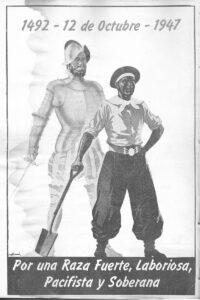 The day, known as “The Day of the Races“ (races meaning ethnicities, not competitive boat races) is a celebration of ethnic diversity, and recognized in Argentina, Columbia (from which got their name from Columbus) Venezuela, Costa Rica, and many islands in the Caribbean.
It is held to cherish the blending of cultures and a celebration of diversity of people’s when East met West, and the old world mixed with the new world.
Columbus had a big part in that, and that is why “The Day of the Races” is celebrated during this time of the Calendar, which coincides with Columbus Day.
The Spanish speaking peoples of many countries hold this concept in high regard and are very proud of their heritage.
Having a named holiday, one that talks about the Old World influence on the founding of these new lands: “The Day of the Races” means “a celebration of the meeting and mixing of races”
The video below “Why Celebrate Día de la Raza?” offers a reflection on the meaning and evolution of this date in Latin America.
Origins of Día de la Raza: October 12 commemorates Christopher Columbus’s arrival in the Americas in 1492, an event that marked the beginning of contact between Europe and the Americas. (casarosada.gob.ar)
Evolution of the term: The name “Día de la Raza” was proposed in 1913 by Spanish minister Faustino Rodríguez-San Pedro to unify the celebration in Spain and Ibero-America. (humanidades.com)
Contemporary reinterpretations: Various countries have changed the name and focus of the celebration:
Argentina: “Day of Respect for Cultural Diversity”
Venezuela: “Day of Indigenous Resistance”
Chile: “Day of the Encounter of Two Worlds”
Peru: “Day of Indigenous Peoples and Intercultural Dialogue”
United States: “Columbus Day” or “Indigenous Peoples’ Day”

So, getting back to our conundrum in America, having an officially recognized holiday in America meant that the Italians would have a time to appreciate their heritage and celebrate the influence that Italian Americans had in America.
The Italians are very significant to settlement of the cities of this country during the 1800s and early 1900s, overcoming unfairness and injustice as immigrants, when America became less rural with more populations going towards the Cities at the beginning of the Industrial Age.
The intention at conception of the celebration was to honor immigrants and their impact on the Americas
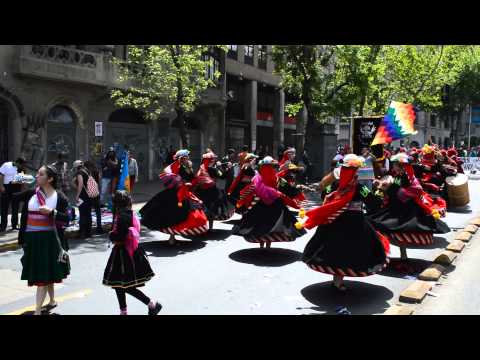
Now to the people who have arguments without solutions, I say to you:
Let’s create 2 new holidays: 1 for the Italians and 1 for the Native Americans, leaving the South American Continental holiday “The Day of the Races” as it is: a celebration of the diversity of peoples.

We will have 3 different holidays for 3 different purposes, and no one could argue about the intention behind them, and no one could “re-write history” in order to further their cause. Also, no one can complain that their peoples are being left out, or disrespected.
The basis for all celebrations can be equally understood, equally positive, and therefore, the celebrations can continue.
Let me know what you think.
If you like this post, please share it, but don’t forget to celebrate Italian American’s today!

A quick overview of the topics covered in this article.
- Columbus Day was founded as an Italian American recognition day, to celebrate the heritage and contributions that Italians have made in America.
- Here is a little history of the conception of the intention to recognize the Italian American:
- Columbus Day is Pro-Immigrant
- Celebrating the ‘contributions of immigrants’ is NOT an exclusive American Holiday experience…This day is actually celebrated in many other countries.
- The intention at conception of the celebration was to honor immigrants and their impact on the Americas
Latest articles

The Cognitive Rent Economy: How Every App Is Leasing Your Attention Back to You
You don’t lose your attention anymore. You lease it. Modern platforms don’t steal focus. They monetize it, slice it into intervals, and return it [read more...]

AI Is an Opinionated Mirror: What Artificial Intelligence Thinks Consciousness Is
Artificial intelligence thinks it sees us clearly. It does not. It is staring into a funhouse mirror we built out of math, bias, hunger [read more...]

The Age of the Aeronauts: Early Ballon flights
Humans have always wanted to rise above the ground and watch the world shrink beneath them without paying a boarding fee or following traffic [read more...]

Free Energy from the Ether – from Egypt to Tesla
Humans have always chased power from the invisible. From the temples of Egypt to Tesla’s lab in Colorado, inventors sought energy not trapped in [read more...]

The Philosophy of Fake Reality: When Simulation Theory Meets Neuroscience
What if reality isn’t breaking down—but revealing its compression algorithm? Neuroscience doesn’t prove we live in a simulation, but does it show the brain [read more...]
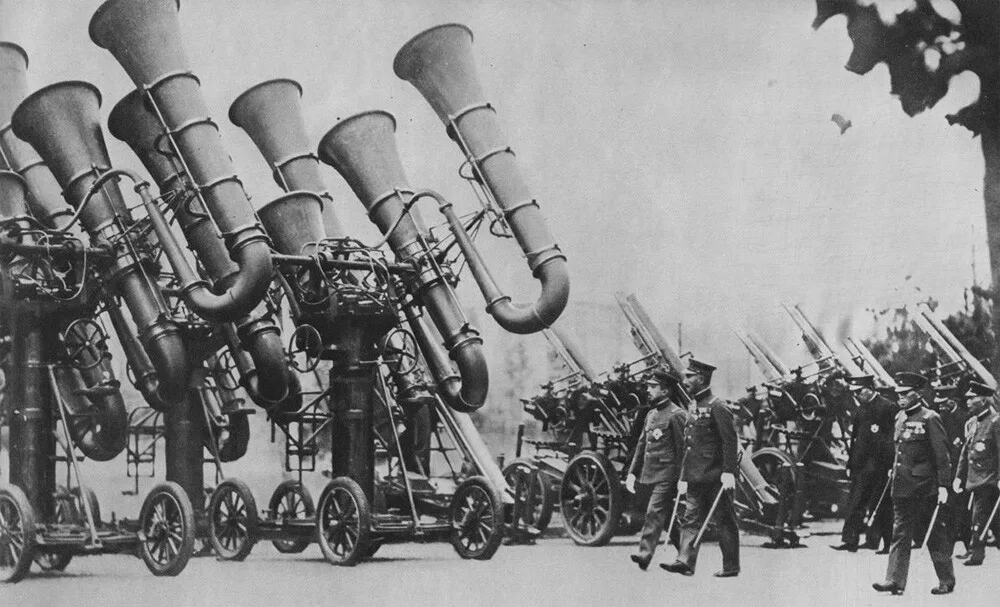
Blast from the Past: Exploring War Tubas – The Sound Locators of Yesteryears
When it comes to innovation in warfare, we often think of advanced technologies like radar, drones, and stealth bombers. However, there was a time [read more...]
Pneumatic Tube Trains – a Lost Antiquitech
Before electrified rails and billion-dollar transit fantasies, cities flirted with a quieter idea: sealed tunnels, air pressure, and human cargo. Pneumatic tube trains weren’t [read more...]
Tartaria and the Soft Reset: The Case for a Quiet Historical Overwrite
Civilizations don’t always collapse with explosions and monuments toppling. Sometimes they dissolve through paperwork, renamed concepts, and smoother stories. Tartaria isn’t a lost empire [read more...]

“A problem cannot be solved by the same consciousness that created it.” – Albert Einstein
“A problem cannot be solved by the same consciousness that created it.” - Albert Einstein
Tartaria: What the Maps Remember
History likes to pretend it has perfect recall, but old maps keep whispering otherwise. Somewhere between the ink stains and the borderlines, a ghost [read more...]