

Scientists have Really “Scientificky” Names for Everything Including “Space Bubbles”
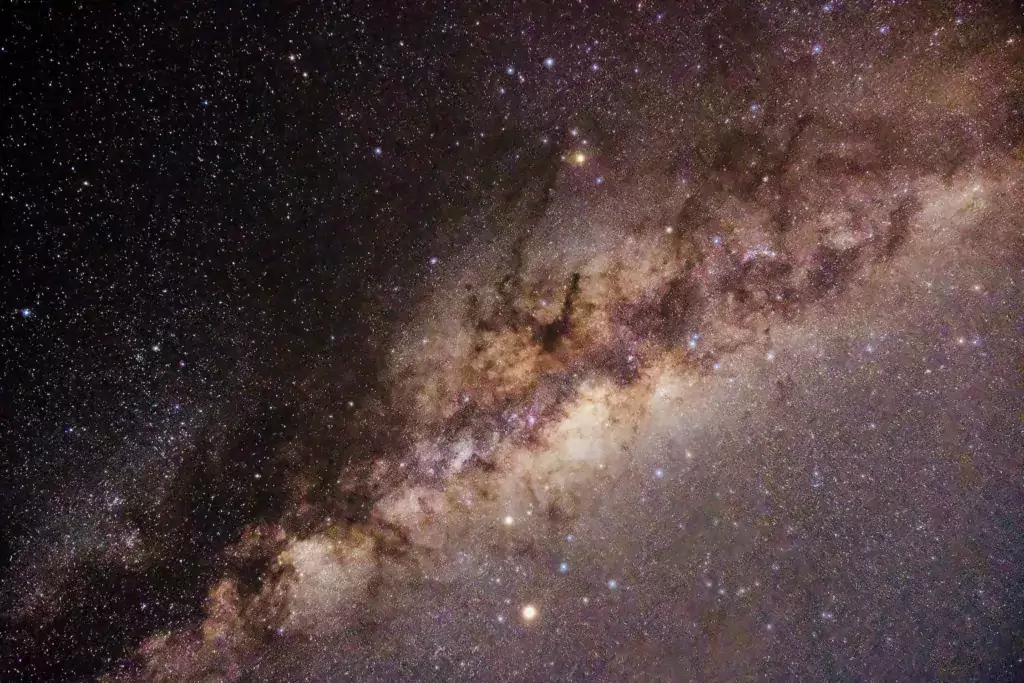
Space bubbles: the epic gas clouds enveloping our galaxy. So, picture this: a cosmic soap-bubble floating silently around the heart of the Milky Way. Except it isn’t so dainty—it spans tens of thousands of light-years, filled with super-thin yet intensely energetic gas, blown outwards from the galaxy’s core into the surrounding halo.
In the lingo of the cosmic explorers at The Ohio State University and their collaborators, it’s one of the “galactic bubbles.” Here is one of the clearest glimpses into the mysterious realm of the halo gas, or the Circumgalactic Medium (CGM).
What are the bubbles?
The bubbles in question were discovered by the eROSITA X-ray telescope and are now officially dubbed the eROSITA bubbles. They appear as giant lobes of X-ray emitting gas—arching above and below the Milky Way’s central disk, reaching up to roughly 36,000 light-years in height. Space These lobes mirror the earlier-known Fermi Bubbles (discovered by the Fermi γ-ray telescope in 2010), but they’re larger and more energetic in the X-ray domain. OSU News+3arXiv+3Space+3
Calling them “space bubbles” may sound whimsical—but it’s surprisingly it sticks. These structures are literally bubbles of hot gas (“hot” by galactic standards) expanding into the halo: bubbles carved into the gas that surrounds our galaxy.
Why do they matter?
Understanding these bubbles gives astronomers a window into how galaxies evolve. The CGM — the diffuse gas halo around a galaxy — plays a critical role in how galaxies grow by accreting gas, how they shut down star formation, and how energy from the galaxy’s center gets pumped outward. The eROSITA bubbles in particular serve as massive “laboratories” for feedback: how energetic processes influence the halo. AZoQuantum+1
Think of it: the galaxy’s centre is launching this gaseous outflow or bubble, which then interacts with the CGM. By studying it we learn not just what is happening, but how and why.
The OSU team’s key findings
Led by lead author Anjali Gupta (formerly at Ohio State, now at Columbus State Community College), the team dove into 230 archival observations taken by the Suzaku satellite between 2005 and 2014. arXiv+1 They compared regions inside the bubble shells to regions outside (in the halo) and came away with several surprising results:
-
Temperature parity: The gas inside the bubble shells was basically the same temperature as the surrounding halo gas—contrary to earlier assumptions that the bubbles would be significantly hotter from shock heating. arXiv+1
-
Density, not heat, makes the brightness: The shells aren’t brighter because they’re hotter, but because they’re denser—essentially more compressed gas volume. arXiv+1
-
Chemical clues to origin: The abundance ratios of elements like neon-to-oxygen and magnesium-to-oxygen in the shells are “non-solar” (different from the usual interstellar medium), pointing toward a stellar-feedback origin (i.e., intense star-forming episodes) rather than strictly a black-hole jet origin. arXiv+1
In short: the OSU-led study says that these bubbles weren’t just simple adiabatic shock-blasts punching out from a supermassive black hole; they might instead be sculpted by star-forming and stellar-wind feedback at the galaxy’s center.
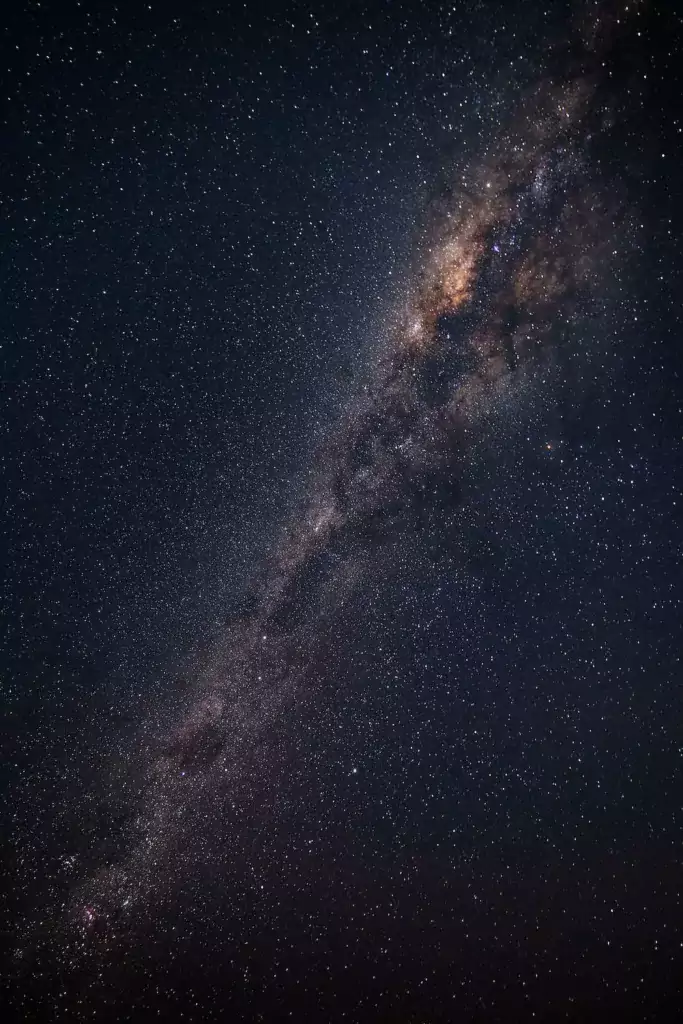
the circumgalactic medium
What this means for how our galaxy works
These are not static gas blobs. They’re dynamic: growing, expanding, shaping the surrounding medium. Because the shells are denser rather than hotter, basically compression of existing halo gas, not just heating it up. In astrophysics, that matters: if you heat up a gas, you change the thermodynamics; if you compress a gas, you change the density—and thus how it radiates (X-rays scale roughly with density²).
When you tie this back to galaxy evolution:
-
If the galaxy center triggers a massive outflow, it contributes to “feedback” which can regulate star formation.
-
The CGM is affected by that feedback: how much gas is present, how it’s distributed, how it cools or heats.
-
Knowing that temperature doesn’t change much but density does means the physical models of how energy is transferred need to be revised.
So… what launched the bubble?
Good question. Astronomers have debated whether the bubbles came from:
-
The supermassive black hole at the Milky Way’s heart (Sagittarius A*) launching a jet or outburst. Department of Physics+1
-
Or a massive epoch of star formation—the so-called “nuclear starburst” scenario—pushing gas out via stellar winds and supernovae.
The chemical evidence from the OSU team leans toward the star-formation scenario. But it’s not definitive; the community is still discussing. For example, some other recent work argues for tidal disruption events (stars destroyed by the black hole) as a driver. arXiv
What’s next?
The OSU team and others plan to:
-
Use new missions and data (X-ray telescopes, possibly improved sensitivity) to better constrain the properties of these bubbles—density, temperature, structure. Tech Explorist+1
-
Develop novel analysis methods to tease apart the CGM and the bubble shells more precisely, possibly disentangling overlapping gas structures.
-
Apply the knowledge learned to other galaxies: if our Milky Way has these bubbles, do other similar galaxies have them too? What does that say about universality of feedback processes? (Early work suggests yes, but faint for external galaxies.) arXiv
The big picture
Surrounding our ordinary spiral galaxy is a colossal pair of gas bubbles. They’re not casual atmospheric puffs—they’re the aftermath of monumental events in the centre of our galaxy. They ripple out into the halo, they compress galactic gas, they carry the echoes of star formation (and maybe black hole drama). They invite us to listen to our galaxy’s heartbeat.
When you look up at the Milky Way tonight, remember: there’s more than just stars and dust. There’s giant bubbles of hot gas rising thousands of light-years above and below, shaping the invisible terrain of our galactic home. They are proof that the Milky Way is a living, breathing system—cosmic airflow, cosmic feedback, cosmic grandeur.
So next time someone dismisses space science as “just abstract”—you can tell them: “Bro, our galaxy blew gas bubbles.” And they are massive.
A quick overview of the topics covered in this article.
Latest articles

“There is no place in a fanatic’s head where reason can enter.” – Napoleon Bonaparte
"There is no place in a fanatic's head where reason can enter." - Napoleon Bonaparte
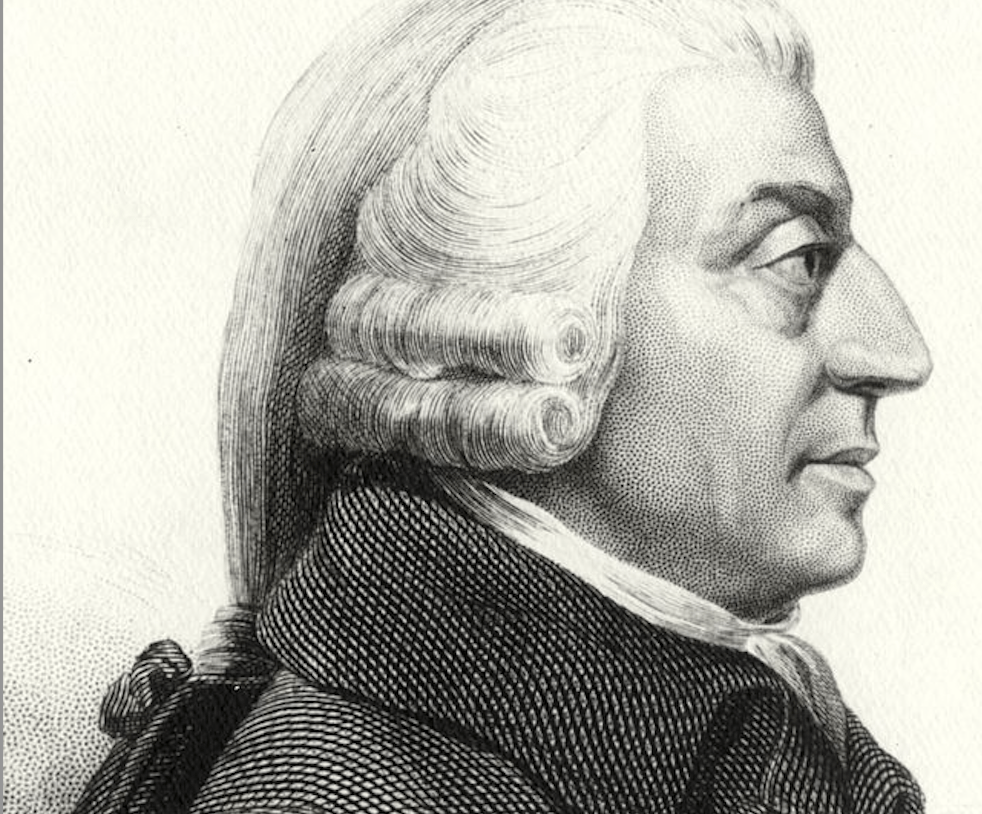
“Science is the great antidote to the poison of enthusiasm and superstition.” – Adam Smith
"Science is the great antidote to the poison of enthusiasm and superstition." - Adam Smith

“In a time of deceit telling the truth is a revolutionary act.” – George Orwell
"In a time of deceit telling the truth is a revolutionary act." - George Orwell