Good Grief Charlie Brown: Holy Ghosts of Holiday TV
Somewhere between the static hum of an old RCA television and the hollow scroll of a modern phone feed, Charlie Brown is still trying to kick that football. His struggle—eternal, humble, almost divine in its futility—sits quietly in the background of American consciousness. The Peanuts gang, with their simple lines and deep souls, managed to carry entire generations through lessons of friendship, disappointment, faith, and failure. They didn’t scream it at us, didn’t moralize through algorithms or brand deals; they just showed up every year with a pumpkin, a Christmas tree, and a blanket full of existential wisdom.
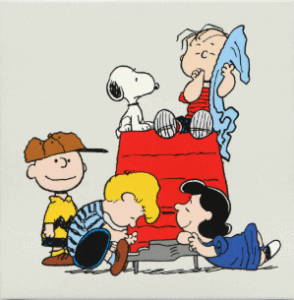
Charles Schulz drew something elemental: a morality play disguised as a comic strip, theology wrapped in a Snoopy dance. Each character carried an archetype—Charlie, the broken optimist; Lucy, the manipulative truth-teller; Linus, the philosopher with faith in the face of cynicism; Schroeder, the pure artist; and Snoopy, the absurd dreamer detached from human suffering. Together they formed an ecosystem of personality and flaw that somehow mirrored all of us. It wasn’t about being good or bad; it was about being human in pencil strokes and silence.

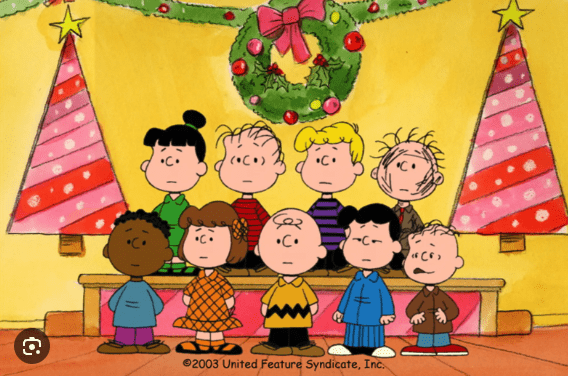
Then came the holiday specials—the holy days of analog childhood. “It’s the Great Pumpkin, Charlie Brown,” “A Charlie Brown Christmas,” “Be My Valentine, Charlie Brown”—each one a ritual of shared attention. Whole families gathered, bowls of popcorn sweating under lamplight, to watch animated kids struggle with questions adults had long forgotten how to ask. These weren’t just shows; they were communal mirrors. The flicker of that special on television was the campfire of the 20th century, the warmth that told you the year was cycling again, that life had rhythm and recurrence, that maybe things could still be meaningful.
Now, streaming turned time into soup. The concept of “specials” feels quaint, irrelevant in a world where everything is permanently available and nothing is special at all. You don’t wait for the pumpkin anymore; you scroll past it. You can watch Linus deliver his speech about the true meaning of Christmas any day you want—and that’s precisely why you probably won’t. When wonder becomes on-demand, it evaporates.
Cartoons like Cave Paintings of the Past
In a strange way, the Peanuts specials are becoming like cave paintings. Relics of a culture that once gathered around shared stories instead of personalized feeds. Each broadcast was a message on the wall: “We were here. We felt this. We hoped.” And like the people who painted bison on stone to honor the hunt, we once animated beagles and kids to honor growing up and losing softly.
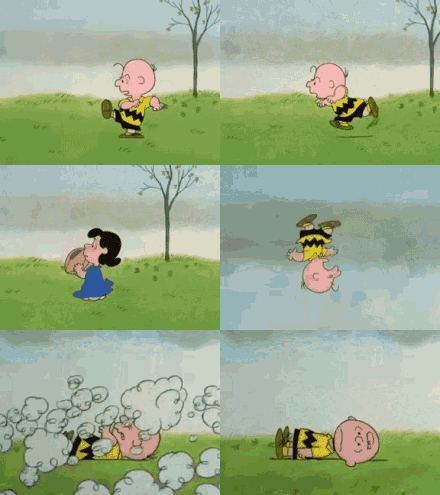
Maybe someday, a future archaeologist will stumble on a dusty hard drive or a forgotten VHS and see Charlie Brown missing that football again. They’ll recognize it instantly—not as primitive art, but as sacred pattern. Because all of us, deep down, have been that round-headed kid reaching for something just out of reach, still believing next time might be different.
Latest articles
The Cognitive Rent Economy: How Every App Is Leasing Your Attention Back to You
You don’t lose your attention anymore. You lease it. Modern platforms don’t steal focus. They monetize it, slice it into intervals, and return it [read more...]

AI Is an Opinionated Mirror: What Artificial Intelligence Thinks Consciousness Is
Artificial intelligence thinks it sees us clearly. It does not. It is staring into a funhouse mirror we built out of math, bias, hunger [read more...]

The Age of the Aeronauts: Early Ballon flights
Humans have always wanted to rise above the ground and watch the world shrink beneath them without paying a boarding fee or following traffic [read more...]
Free Energy from the Ether – from Egypt to Tesla
Humans have always chased power from the invisible. From the temples of Egypt to Tesla’s lab in Colorado, inventors sought energy not trapped in [read more...]
The Philosophy of Fake Reality: When Simulation Theory Meets Neuroscience
What if reality isn’t breaking down—but revealing its compression algorithm? Neuroscience doesn’t prove we live in a simulation, but does it show the brain [read more...]
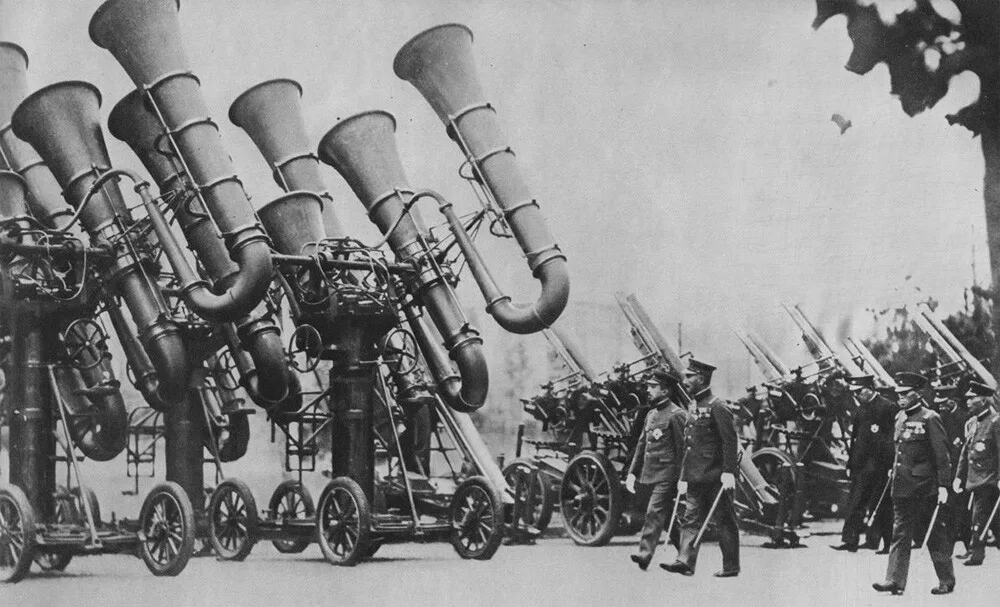
Blast from the Past: Exploring War Tubas – The Sound Locators of Yesteryears
When it comes to innovation in warfare, we often think of advanced technologies like radar, drones, and stealth bombers. However, there was a time [read more...]
Pneumatic Tube Trains – a Lost Antiquitech
Before electrified rails and billion-dollar transit fantasies, cities flirted with a quieter idea: sealed tunnels, air pressure, and human cargo. Pneumatic tube trains weren’t [read more...]

Tartaria and the Soft Reset: The Case for a Quiet Historical Overwrite
Civilizations don’t always collapse with explosions and monuments toppling. Sometimes they dissolve through paperwork, renamed concepts, and smoother stories. Tartaria isn’t a lost empire [read more...]

“A problem cannot be solved by the same consciousness that created it.” – Albert Einstein
“A problem cannot be solved by the same consciousness that created it.” - Albert Einstein

Tartaria: What the Maps Remember
History likes to pretend it has perfect recall, but old maps keep whispering otherwise. Somewhere between the ink stains and the borderlines, a ghost [read more...]