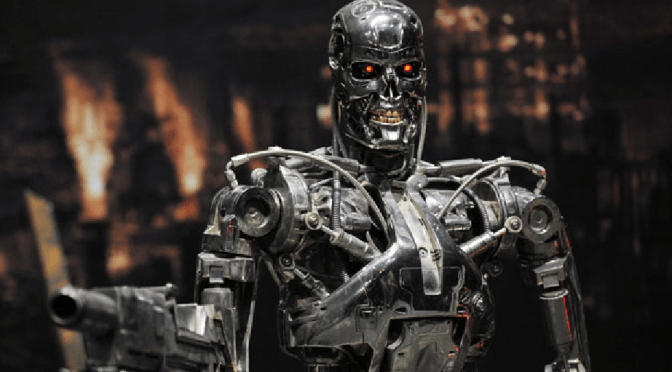
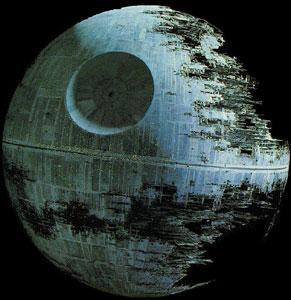
Weird 3I/ATLAS Comet Behaves Like a Death Star
[addtoany]
Some comets glide harmlessly through space. Then there’s 3I/ATLAS—a cosmic misfit acting less like a snowball and more like a sci-fi villain. It doesn’t orbit politely. It lurks, flares, and evaporates physics textbooks on sight. NASA’s calling it weird. We’re calling it uncomfortably sentient.
The Cosmic Party Crasher
Discovered in 2019, 3I/ATLAS didn’t just stroll into our solar system—it barged in from interstellar space like a drunk guest with bad intentions. Its trajectory, brightness, and behavior make no sense. One minute it’s fading, the next it’s glowing with enough energy to make physicists chew their pens. The thing refuses to follow the script, as though it’s aware it’s being watched. Comet 3I/ATLAS: when the universe decides to improvise. Share on X
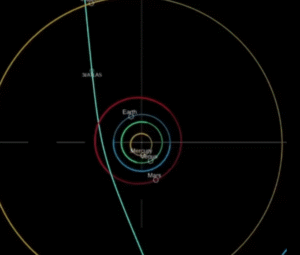
Somewhere, a physicist just whispered, “Please don’t explode.”
Death Star Vibes and Existential Side-Eyes
This isn’t your grandfather’s comet. Instead of shedding debris like a normal iceball, 3I/ATLAS keeps producing weird energy bursts—like it’s charging something. Scientists blame volatile compounds and outgassing. Conspiracy theorists blame… well, aliens. Either way, it’s a reminder that space is not the calm, black silence we imagine—it’s chaos with a good PR team. Space isn’t empty—it’s just full of drama queens with tails. Share on X
When your space snowball decides it wants main character energy.
When Physics Starts Looking Nervous
The weirdest part? Its brightness patterns suggest internal processes we can’t fully model. Some astrophysicists think it might be fragmenting; others think it’s playing dead to confuse us. Whatever it’s doing, 3I/ATLAS breaks every comfortable rule about how interstellar visitors behave. It’s not a Death Star, technically—but if it starts humming, we’re leaving the galaxy. Comet 3I/ATLAS: because physics needed a midlife crisis. Share on X
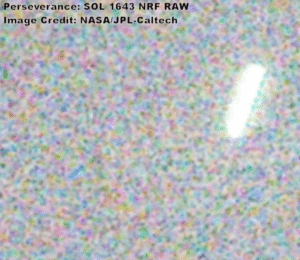
NASA’s official response: “We’re watching it, but nervously.”
[addtoany]

A quick overview of the topics covered in this article.
Latest articles
The Cognitive Rent Economy: How Every App Is Leasing Your Attention Back to You
You don’t lose your attention anymore. You lease it. Modern platforms don’t steal focus. They monetize it, slice it into intervals, and return it [read more...]

AI Is an Opinionated Mirror: What Artificial Intelligence Thinks Consciousness Is
Artificial intelligence thinks it sees us clearly. It does not. It is staring into a funhouse mirror we built out of math, bias, hunger [read more...]

The Age of the Aeronauts: Early Ballon flights
Humans have always wanted to rise above the ground and watch the world shrink beneath them without paying a boarding fee or following traffic [read more...]

Free Energy from the Ether – from Egypt to Tesla
Humans have always chased power from the invisible. From the temples of Egypt to Tesla’s lab in Colorado, inventors sought energy not trapped in [read more...]

The Philosophy of Fake Reality: When Simulation Theory Meets Neuroscience
What if reality isn’t breaking down—but revealing its compression algorithm? Neuroscience doesn’t prove we live in a simulation, but does it show the brain [read more...]
Blast from the Past: Exploring War Tubas – The Sound Locators of Yesteryears
When it comes to innovation in warfare, we often think of advanced technologies like radar, drones, and stealth bombers. However, there was a time [read more...]

Pneumatic Tube Trains – a Lost Antiquitech
Before electrified rails and billion-dollar transit fantasies, cities flirted with a quieter idea: sealed tunnels, air pressure, and human cargo. Pneumatic tube trains weren’t [read more...]

Tartaria and the Soft Reset: The Case for a Quiet Historical Overwrite
Civilizations don’t always collapse with explosions and monuments toppling. Sometimes they dissolve through paperwork, renamed concepts, and smoother stories. Tartaria isn’t a lost empire [read more...]

“A problem cannot be solved by the same consciousness that created it.” – Albert Einstein
“A problem cannot be solved by the same consciousness that created it.” - Albert Einstein
Tartaria: What the Maps Remember
History likes to pretend it has perfect recall, but old maps keep whispering otherwise. Somewhere between the ink stains and the borderlines, a ghost [read more...]