

What is Catatonic Schizophrenia?
[addtoany]
The predominant clinical features seen in the catatonic subtype of schizophrenia involve disturbances in a person’s movement. Affected people may exhibit a dramatic reduction in activity, to the point that voluntary movement stops, as in catatonic stupor. Alternatively, activity can dramatically increase, a state known as catatonic excitement.
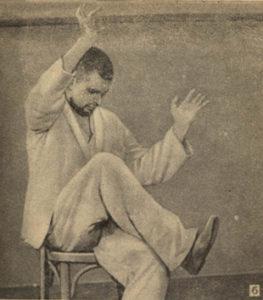
Catatonic Schizophrenic
Other disturbances of movement can be present with this subtype. Actions that appear relatively purposeless but are repetitively performed, also known as stereotypic behavior, may occur, often to the exclusion of involvement in any productive activity.

Catatonic Schizophrenic
Some people get stuck in a body like it’s suddenly leased to a universe that forgot to pay the rent. They resist being moved, holding a pose exactly as someone else sets it, sometimes for what feels like forever. Psychiatrists call it waxy flexibility, but the name doesn’t capture the weird tension in it: these bodies can push back with surprising strength, all while looking awkward, uncomfortable, almost statuesque in their defiance. It’s a kind of stubbornness that isn’t willful, exactly—it’s more like physics meeting psychology in a room with no exit.
And it doesn’t stop at posture. Limbs twist into angles that make you blink twice, faces contort like they’re auditioning for some silent, bizarre theater. Observers might mistake the display for tardive dyskinesia, another disorder with twitchy, repetitive movements—but the vibe here is different. This isn’t random; it’s deliberate in its own alien rhythm, a choreography that seems to obey rules we don’t yet understand.
Then there’s the echo: words and gestures bouncing back like thrown stones. Echolalia, repeating someone else’s speech like a parrot possessed, or echopraxia, mimicking movements with eerie precision. Seen in Tourette’s too, sure, but in catatonia, it has a different edge—less comic, more unsettling, like the body itself is a conduit for some other logic. Immobility, mimicry, contorted postures—all stitched together in a human form that feels almost like a living mirror of chaos, and yet, stubbornly, unyielding.
How Is Catatonic Schizophrenic Diagnosed?
The general criteria for a diagnosis of schizophrenia must be satisfied. Temporary and isolated catatonic symptoms may occur in the context of any other subtype of schizophrenia, but for a diagnosis of catatonic schizophrenia one or more of the following behaviors should dominate the clinical picture: a. stupor (marked decrease in reactivity to the environment and in spontaneous movements and activity) or mutism;
b. excitement (apparently purposeless motor activity, not influenced by external stimuli);
c. posturing (voluntary assumption and maintenance of inappropriate or bizarre postures);
d. negativism (an apparently motiveless resistance to all instructions or attempts to be moved, or movement in the opposite direction); e. rigidity (maintenance of a rigid posture against efforts to be moved); f. waxy flexibility (maintenance of limbs and body in externally imposed positions)
Interviewer: “What’s wrong with you?”
Patient: “I tell the truth”
Ref: psychcentral.com
[addtoany]

A quick overview of the topics covered in this article.
Latest articles

The Cognitive Rent Economy: How Every App Is Leasing Your Attention Back to You
You don’t lose your attention anymore. You lease it. Modern platforms don’t steal focus. They monetize it, slice it into intervals, and return it [read more...]

AI Is an Opinionated Mirror: What Artificial Intelligence Thinks Consciousness Is
Artificial intelligence thinks it sees us clearly. It does not. It is staring into a funhouse mirror we built out of math, bias, hunger [read more...]

The Age of the Aeronauts: Early Ballon flights
Humans have always wanted to rise above the ground and watch the world shrink beneath them without paying a boarding fee or following traffic [read more...]

Free Energy from the Ether – from Egypt to Tesla
Humans have always chased power from the invisible. From the temples of Egypt to Tesla’s lab in Colorado, inventors sought energy not trapped in [read more...]

The Philosophy of Fake Reality: When Simulation Theory Meets Neuroscience
What if reality isn’t breaking down—but revealing its compression algorithm? Neuroscience doesn’t prove we live in a simulation, but does it show the brain [read more...]
Blast from the Past: Exploring War Tubas – The Sound Locators of Yesteryears
When it comes to innovation in warfare, we often think of advanced technologies like radar, drones, and stealth bombers. However, there was a time [read more...]

Pneumatic Tube Trains – a Lost Antiquitech
Before electrified rails and billion-dollar transit fantasies, cities flirted with a quieter idea: sealed tunnels, air pressure, and human cargo. Pneumatic tube trains weren’t [read more...]

Tartaria and the Soft Reset: The Case for a Quiet Historical Overwrite
Civilizations don’t always collapse with explosions and monuments toppling. Sometimes they dissolve through paperwork, renamed concepts, and smoother stories. Tartaria isn’t a lost empire [read more...]

“A problem cannot be solved by the same consciousness that created it.” – Albert Einstein
“A problem cannot be solved by the same consciousness that created it.” - Albert Einstein

Tartaria: What the Maps Remember
History likes to pretend it has perfect recall, but old maps keep whispering otherwise. Somewhere between the ink stains and the borderlines, a ghost [read more...]


