
Michelangelo Hid Anatomy of Brain in the Sistine Chapel
[addtoany]
Michelangelo’s art is more than divine inspiration—it’s a playground for the mind. Recent analysis suggests he concealed the human brain in the depiction of God, in the Sistine Chapel – a merging of anatomy with spirituality, genius, and a dash of Renaissance mischief.
Anatomy Meets Divinity
Michelangelo diagrams the Brain in the Sistine Chapel: Human Brain Is Depicted in Image of God

In the panel showing the Separation of Light from Darkness, a careful eye reveals a striking resemblance to the human brainstem hidden in God’s neck. Michelangelo wasn’t just painting angels and divine acts; he was encoding sophisticated anatomical knowledge into his frescoes. The depiction is precise, down to ventral details, suggesting a deliberate choice rather than artistic accident.
The more you study the light and shadow, the “rolled-up” beard, and the slight differences in illumination compared to the rest of the painting, the more it seems that the master was sending a message: observe closely, reality and genius are layered.
Michelangelo hid the human brain in the depiction of God. Divine anatomy or subtle genius? Either way, art just leveled up. #Neurodope #ArtScience #HiddenGenius share this

Evidence in Plain Sight
Michelangelo’s life was immersed in anatomy. Cadaver dissections and careful study of human form allowed him to merge spiritual and scientific observation seamlessly. By embedding the brain, he acknowledged humanity’s most complex organ alongside divinity, creating a secret dialogue between God and the viewer.
Discrepancies previously noted in God’s neck—such as unexpected light sources and a seemingly disproportionate beard—now take on new meaning. They’re not mistakes. They’re intentional anatomical signals. The subtle cues direct our attention to hidden complexity.
Creation of Adam wasn’t enough. God gets a brain cameo too. Anatomy class meets divine inspiration. #Neurodope #SistineSecrets #MindAndArt share this

Symbolism and Significance
Embedding the brain in an iconographically critical panel isn’t just technical showmanship. It’s a statement about human consciousness and divine creation. Michelangelo knew the brain’s symbolic weight and paired it with God performing the first act of creation, elevating intellect to a sacred act.
By carefully placing the brain motif above the altar, he ensured that viewers weren’t just looking up—they were contemplating the connection between thought, divinity, and life itself. Every brushstroke whispers that humanity and divinity are intertwined through the mind.
Michelangelo: artist, anatomist, master of hidden details. Your brain might just be staring at God every time you look up. #Neurodope #BrainInArt #RenaissanceRevealed share this

The Renaissance Trickster
Michelangelo’s genius lies in layered communication. From afar, you see a divine scene. Up close, you see meticulous anatomy. He challenges viewers: question what you see, seek hidden truths, appreciate the blend of science and spirit.
This revelation reframes the Sistine Chapel as a living dialogue between mind and matter, art and anatomy. It reminds us that human curiosity and divine inspiration are not separate forces but collaborative muses.
[addtoany]
A quick overview of the topics covered in this article.
Latest articles
The Cognitive Rent Economy: How Every App Is Leasing Your Attention Back to You
You don’t lose your attention anymore. You lease it. Modern platforms don’t steal focus. They monetize it, slice it into intervals, and return it [read more...]

AI Is an Opinionated Mirror: What Artificial Intelligence Thinks Consciousness Is
Artificial intelligence thinks it sees us clearly. It does not. It is staring into a funhouse mirror we built out of math, bias, hunger [read more...]

The Age of the Aeronauts: Early Ballon flights
Humans have always wanted to rise above the ground and watch the world shrink beneath them without paying a boarding fee or following traffic [read more...]
Free Energy from the Ether – from Egypt to Tesla
Humans have always chased power from the invisible. From the temples of Egypt to Tesla’s lab in Colorado, inventors sought energy not trapped in [read more...]
The Philosophy of Fake Reality: When Simulation Theory Meets Neuroscience
What if reality isn’t breaking down—but revealing its compression algorithm? Neuroscience doesn’t prove we live in a simulation, but does it show the brain [read more...]
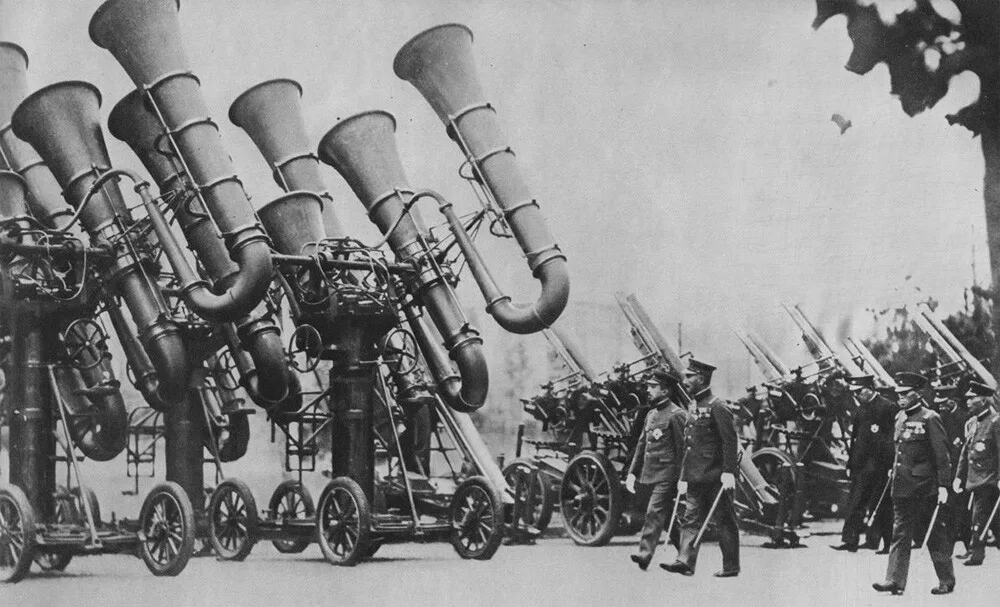
Blast from the Past: Exploring War Tubas – The Sound Locators of Yesteryears
When it comes to innovation in warfare, we often think of advanced technologies like radar, drones, and stealth bombers. However, there was a time [read more...]
Pneumatic Tube Trains – a Lost Antiquitech
Before electrified rails and billion-dollar transit fantasies, cities flirted with a quieter idea: sealed tunnels, air pressure, and human cargo. Pneumatic tube trains weren’t [read more...]

Tartaria and the Soft Reset: The Case for a Quiet Historical Overwrite
Civilizations don’t always collapse with explosions and monuments toppling. Sometimes they dissolve through paperwork, renamed concepts, and smoother stories. Tartaria isn’t a lost empire [read more...]

“A problem cannot be solved by the same consciousness that created it.” – Albert Einstein
“A problem cannot be solved by the same consciousness that created it.” - Albert Einstein
Tartaria: What the Maps Remember
History likes to pretend it has perfect recall, but old maps keep whispering otherwise. Somewhere between the ink stains and the borderlines, a ghost [read more...]