
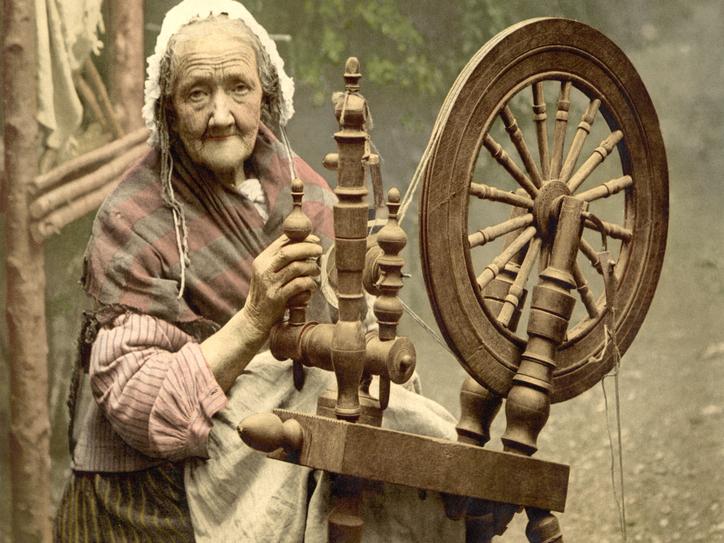
That Old Maid was a “Spinster” – a simple Legal Term
If we didn’t have enough examples of how words change meaning according to the climate of society as time changes, here’s another: spinster. Today the word has somewhat of a derogatory meaning, however, the word was simply a legal term, used on legal documents that described marital status.
The term “spinster” has a long and complex history that dates back to medieval times. Originally, the term referred to women who spun thread or yarn for a living. However, in the 17th century, the term began to be used as a legal term to describe unmarried women who were past the age of marriage.
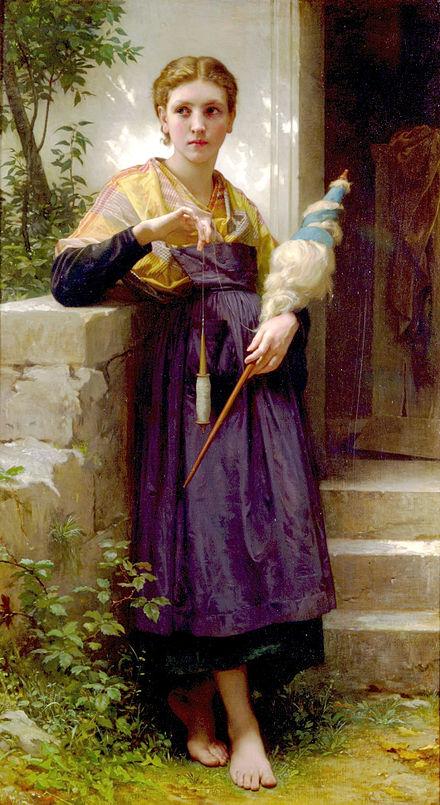 In England, the term “spinster” was used on legal documents to describe women who were unmarried and financially independent. This was important because at the time, women who were married were considered to be the property of their husbands, and had no legal rights of their own. Unmarried women, on the other hand, had the right to own property and make contracts in their own name.
During the industrial age, the term “spinster” took on a new meaning. Women who were unmarried and working in factories were often referred to as “spinsters,” regardless of whether or not they actually spun thread. This was partly because factory work was seen as being similar to the work of a spinner, and partly because unmarried women were seen as being more likely to work outside the home.
Today, the term “spinster” has come to have a somewhat derogatory meaning. It is often used to describe women who are unmarried and past a certain age, and is sometimes used to suggest that such women are undesirable or unwanted. This usage is seen by many as being unfair and sexist, as it reinforces the idea that a woman’s worth is tied to her marital status.
So, let’s Change the Meaning of a Word Once Again
 In recent years, there have been efforts to reclaim the term “spinster” and give it a more positive connotation. Some feminists have argued that the term can be used to describe women who are independent, self-sufficient, and unafraid to live life on their own terms.
Others have suggested that the term can be used to describe women who are dedicated to their work or hobbies, and who prioritize their own goals and aspirations over traditional ideas of femininity.
Overall, the history of the term “spinster” is a complex and fascinating one. From its origins as a legal term to its usage in the industrial age and beyond, the term has evolved over time to reflect changing attitudes towards women and their place in society. While the term has taken on a somewhat negative connotation in modern times, there are those who argue that it can be reclaimed and used in a more positive and empowering way.

A quick overview of the topics covered in this article.
Latest articles

The Cognitive Rent Economy: How Every App Is Leasing Your Attention Back to You
You don’t lose your attention anymore. You lease it. Modern platforms don’t steal focus. They monetize it, slice it into intervals, and return it [read more...]
AI Is an Opinionated Mirror: What Artificial Intelligence Thinks Consciousness Is
Artificial intelligence thinks it sees us clearly. It does not. It is staring into a funhouse mirror we built out of math, bias, hunger [read more...]

The Age of the Aeronauts: Early Ballon flights
Humans have always wanted to rise above the ground and watch the world shrink beneath them without paying a boarding fee or following traffic [read more...]

Free Energy from the Ether – from Egypt to Tesla
Humans have always chased power from the invisible. From the temples of Egypt to Tesla’s lab in Colorado, inventors sought energy not trapped in [read more...]

The Philosophy of Fake Reality: When Simulation Theory Meets Neuroscience
What if reality isn’t breaking down—but revealing its compression algorithm? Neuroscience doesn’t prove we live in a simulation, but does it show the brain [read more...]
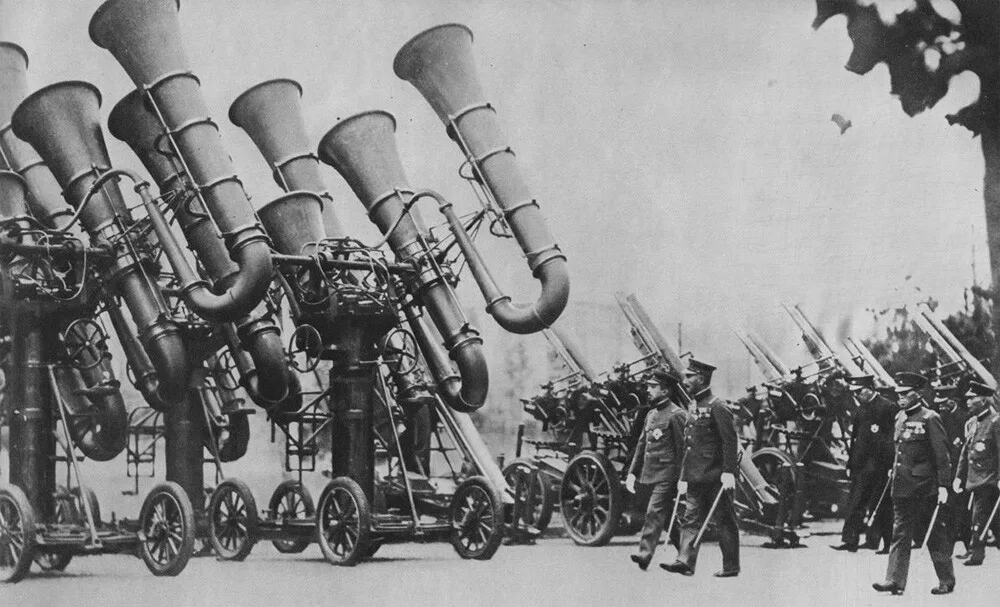
Blast from the Past: Exploring War Tubas – The Sound Locators of Yesteryears
When it comes to innovation in warfare, we often think of advanced technologies like radar, drones, and stealth bombers. However, there was a time [read more...]
Pneumatic Tube Trains – a Lost Antiquitech
Before electrified rails and billion-dollar transit fantasies, cities flirted with a quieter idea: sealed tunnels, air pressure, and human cargo. Pneumatic tube trains weren’t [read more...]

Tartaria and the Soft Reset: The Case for a Quiet Historical Overwrite
Civilizations don’t always collapse with explosions and monuments toppling. Sometimes they dissolve through paperwork, renamed concepts, and smoother stories. Tartaria isn’t a lost empire [read more...]

“A problem cannot be solved by the same consciousness that created it.” – Albert Einstein
“A problem cannot be solved by the same consciousness that created it.” - Albert Einstein
Tartaria: What the Maps Remember
History likes to pretend it has perfect recall, but old maps keep whispering otherwise. Somewhere between the ink stains and the borderlines, a ghost [read more...]