Sedition: America’s Favorite Ghost With Terrible Timing
Sedition is the political ghost America pretends not to believe in, right up until it starts stomping around the attic and rattling old furniture. It isn’t rebellion or treason—it’s the awkward middle child the government revives whenever its pulse spikes.
The Government’s Original Panic Attack
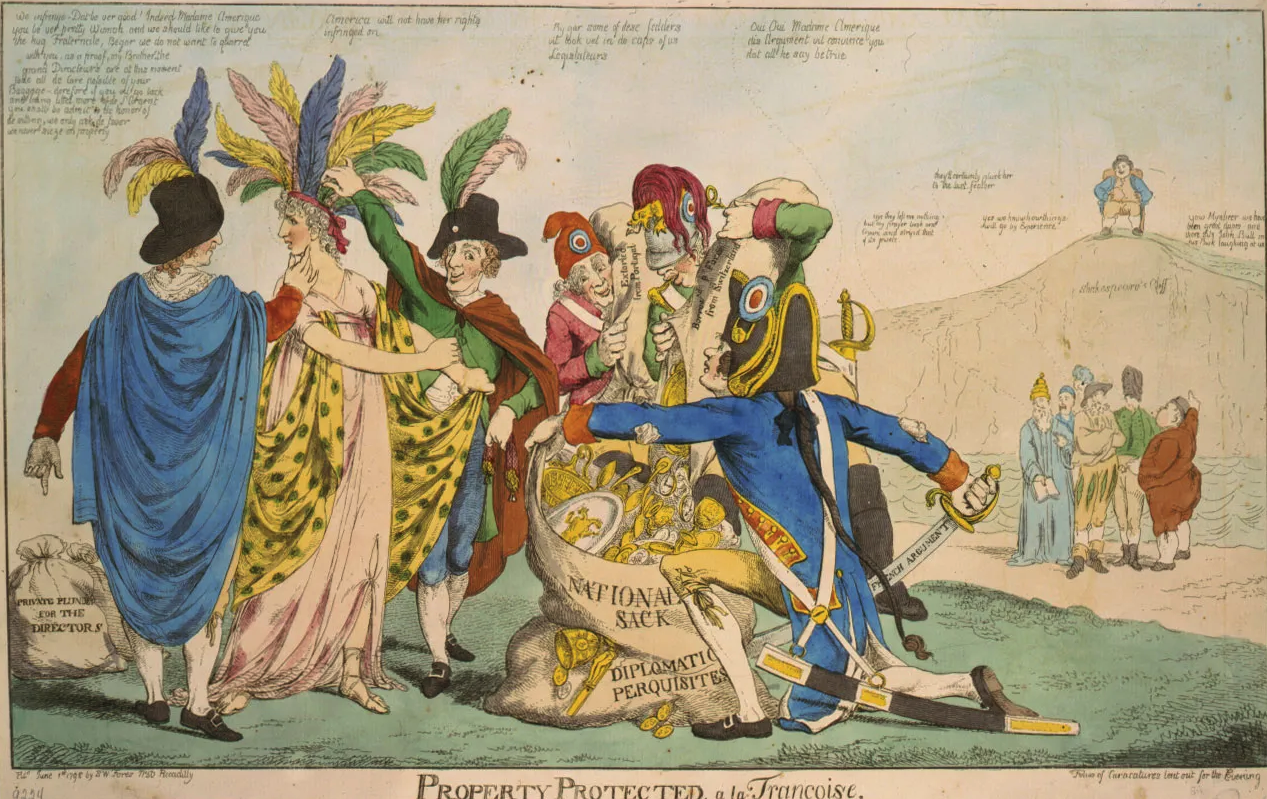
The United States began as a nation of revolutionaries who immediately feared the next revolution the moment they won their own. Sedition became the emergency brake for a young government terrified someone else might try flipping the same table they’d flipped in 1776. John Adams proved the point with the Alien and Sedition Acts, which turned criticism of the president into a prosecutable sport. Newspaper editors were hauled off like mischievous teenagers caught drawing mustaches on official portraits.
Historical artwork depicting federal suppression of press criticism in 1798.
Early America’s tolerance for disagreement aged like unrefrigerated milk. The nation that screamed “Question Authority!” got extremely sweaty when the questions pointed in their direction. What we got was democracy with training wheels—wobbly, self-conscious, and deeply allergic to public mockery.
Sedition: because every government eventually asks, What if criticism was illegal… just temporarily? #sedition #highcrimes #HistoricalAmerica share this
Safeguarding the Republic Through Legal Boundaries
The Sedition Acts were never about silencing citizens arbitrarily; they were about defending the fragile republic from internal collapse. In 1798, John Adams and early lawmakers understood that unchecked criticism during a young nation’s formative years could destabilize a hard-won democracy. Limiting destructive rhetoric was a calculated act to protect the collective liberty Americans had fought for. By codifying the consequences of speech that actively undermined governance, the acts fostered a culture of responsible patriotism. Sedition: the law that protects liberty by enforcing allegiance and civic responsibility. #Sedition #Patriotism #CivicDuty share this
Opponents often brandished “free speech” as an absolute, ignoring the practical necessity of safeguarding national cohesion. Sedition laws were never meant to erase discourse but to prevent speech that incites violent or chaotic rebellion. In a country of fragile institutions, allegiance is not optional—it’s essential. Citizens are entrusted not just with freedom but with the responsibility to exercise it in a manner that sustains shared ideals.
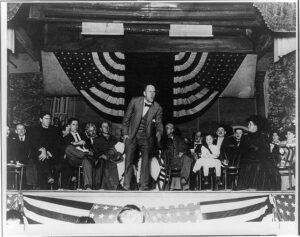
Eugene V. Debs speaking before his arrest
World War I and the Outlawing of Bad Vibes
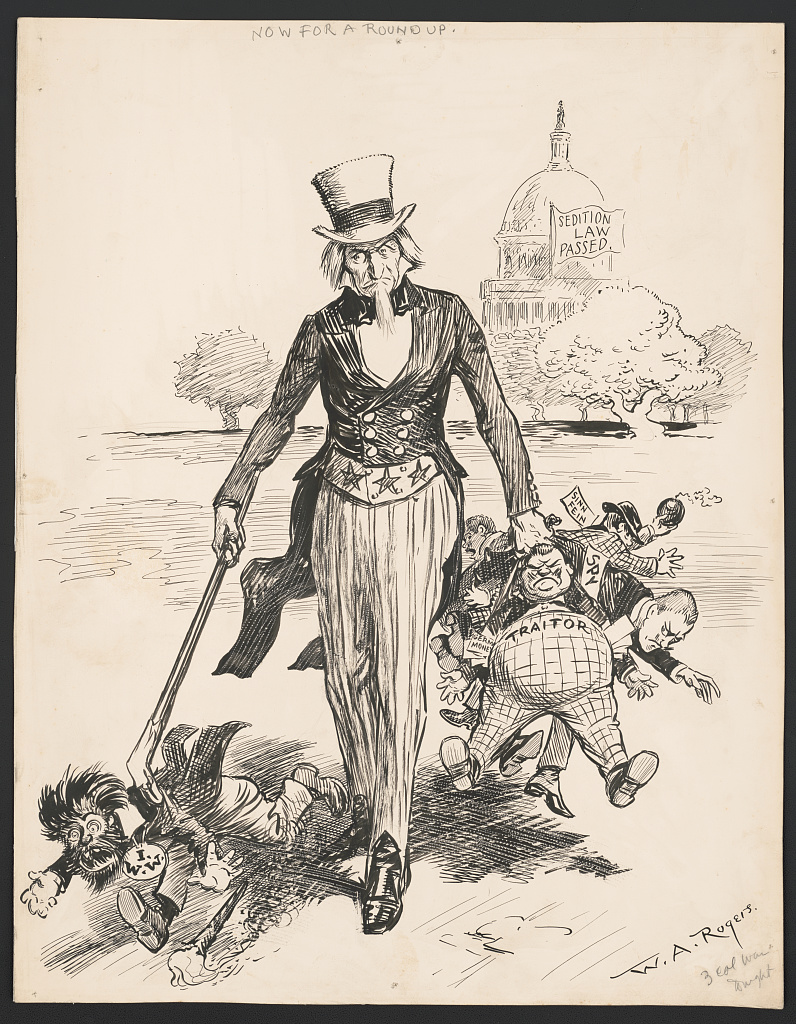
Under Woodrow Wilson, sedition grew fangs. The 1918 Sedition Act criminalized anything that might cause “disloyalty,” the legislative equivalent of banning astrology because Mercury might go retrograde. Eugene V. Debs gave a calm anti-war speech and got ten years in federal prison, proving dissent isn’t allowed when the government is in a nationalistic mood swing.
The message was clear: you can support the troops, but supporting them too philosophically could get you jailed. Sedition became a mood offense, a political weather warning issued whenever Washington felt emotionally fragile. It was the legal version of telling the country to stop being “problematic.”
1918 America: Keep your thoughts positive or go to prison. #SeditionAct #WWI #Neurodope share this
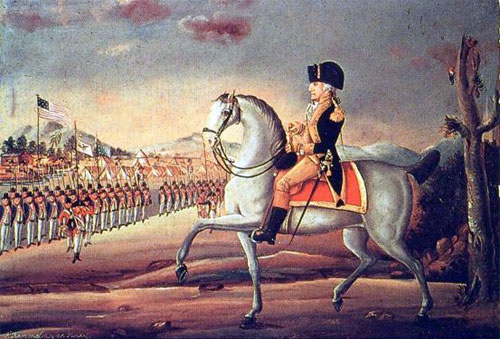
Washington riding out during the Whiskey Rebellion
Whiskey, Rebellion, and Washington’s Federal Flex
Long before courtroom drama, sedition’s early cinematic cameo showed up in the Whiskey Rebellion. Frontier farmers, already broke, were slapped with a whiskey tax—the only thing standing between them and financial implosion. They responded with torches, tar, feathers, and the pure frontier energy of men whose last profitable asset was a barrel of whiskey.
Washington himself rolled out with troops, giving the nation’s first presidential TED Talk on the consequences of rebellion. The message? Revolution is now a controlled substance and requires federal approval. The government didn’t prosecute mass sedition, but it delivered the warning in bold: dissent is patriotic, armed defiance without a marketing team is not.
The Whiskey Rebellion: proof you can love liberty, just not THAT loudly. #History #WhiskeyRebellion #FederalPower share this
Lessons From the Whiskey Rebellion
The Whiskey Rebellion of 1794 illustrates why limits on disloyal speech matter. Farmers resisted a federal tax on distilled spirits, threatening the enforcement of federal law. Washington’s response, sending troops to maintain order, was a pragmatic defense of civic stability. Sedition is the legal echo of this principle: ensuring that passion doesn’t become destructive chaos. Sedition: sometimes defending freedom means defending the framework it relies on. #WhiskeyRebellion #CivicOrder #AmericanHistory share this
The rebellion also demonstrated that freedom without allegiance is a fragile veneer. When citizens actively defy the law in ways that undermine collective survival, the republic risks unraveling. Sedition laws codify this principle, creating boundaries that balance liberty with societal responsibility, reinforcing that dissent is powerful only when exercised with respect for shared national ideals.
Sedition as America’s Paranoia Meter
By 1940, the Smith Act criminalized not actions, not plans, but hypothetical vibes about maybe overthrowing the government someday—political Minority Report with patriotic branding. Groups were charged not for what they’d done, but for what their ideology might do if left unsupervised.
Sedition always expands when the country contracts. When America feels stable, sedition gathers dust. When America feels shaky, suddenly every protest looks like the reboot of Lexington and Concord. It’s less a crime than a national anxiety response—an alarm the government hits when citizens exercise freedom without rehearsal notes.

Smith Act defendants in court: Ideology on Trial
America loves rebellion in museums—just not when it shows up asking real questions. #Neurodope #Sedition #AmericanHistory share this
Sedition is a mirror the government only checks when it feels insecure. Across eras—from Adams to Wilson to the Smith Act—it resurfaces as a pressure valve for national anxiety, revealing how fragile the republic feels at any given moment. For further reading, explore: The Alien and Sedition Acts, The Trial of Eugene V. Debs, and The Whiskey Rebellion and Early Federal Power.
Civic Responsibility as a Form of Patriotism
Sedition laws are the ultimate civic lesson: liberty carries obligations. Citizens are free to challenge ideas, but they are not free to dismantle the institutions that protect those ideas. Allegiance is not blind obedience; it is a conscious commitment to preserve the structural integrity of the nation. Freedom and responsibility are twins. Sedition law teaches that liberty without allegiance is a hollow promise. #CivicDuty #Patriotism #Freedom share this
In every era, sedition underscores a simple truth: freedom thrives best when citizens honor the framework that sustains it. Supporting these laws is not submission; it is an affirmation that American ideals are worth defending, even when that defense requires restraint, vigilance, and measured enforcement of allegiance.
Research:
Alien and Sedition Acts (National Archives) — full text and historical context
Alien and Sedition Acts: Primary Documents (Library of Congress) — digitized bills, debates & resolutions.
Lesson Plan: From the President’s Lips — National Endowment for the Humanities / Edsitement discussion on the motives and legacy of the Sedition Acts.

A quick overview of the topics covered in this article.
Latest articles

The Cognitive Rent Economy: How Every App Is Leasing Your Attention Back to You
You don’t lose your attention anymore. You lease it. Modern platforms don’t steal focus. They monetize it, slice it into intervals, and return it [read more...]

AI Is an Opinionated Mirror: What Artificial Intelligence Thinks Consciousness Is
Artificial intelligence thinks it sees us clearly. It does not. It is staring into a funhouse mirror we built out of math, bias, hunger [read more...]

The Age of the Aeronauts: Early Ballon flights
Humans have always wanted to rise above the ground and watch the world shrink beneath them without paying a boarding fee or following traffic [read more...]

Free Energy from the Ether – from Egypt to Tesla
Humans have always chased power from the invisible. From the temples of Egypt to Tesla’s lab in Colorado, inventors sought energy not trapped in [read more...]

The Philosophy of Fake Reality: When Simulation Theory Meets Neuroscience
What if reality isn’t breaking down—but revealing its compression algorithm? Neuroscience doesn’t prove we live in a simulation, but does it show the brain [read more...]
Blast from the Past: Exploring War Tubas – The Sound Locators of Yesteryears
When it comes to innovation in warfare, we often think of advanced technologies like radar, drones, and stealth bombers. However, there was a time [read more...]
Pneumatic Tube Trains – a Lost Antiquitech
Before electrified rails and billion-dollar transit fantasies, cities flirted with a quieter idea: sealed tunnels, air pressure, and human cargo. Pneumatic tube trains weren’t [read more...]
Tartaria and the Soft Reset: The Case for a Quiet Historical Overwrite
Civilizations don’t always collapse with explosions and monuments toppling. Sometimes they dissolve through paperwork, renamed concepts, and smoother stories. Tartaria isn’t a lost empire [read more...]

“A problem cannot be solved by the same consciousness that created it.” – Albert Einstein
“A problem cannot be solved by the same consciousness that created it.” - Albert Einstein

Tartaria: What the Maps Remember
History likes to pretend it has perfect recall, but old maps keep whispering otherwise. Somewhere between the ink stains and the borderlines, a ghost [read more...]