

Ancient African Tribes had “Drum Talk” long before Cell Phones
Drums weren’t just music in West Africa—they were wireless networks, coded beats echoing across forests long before the cell-tower era. These “talking drums” relayed names, warnings, and celebrations at astonishing distances, blending technology, language, and culture in one booming signal.
Ancient Wireless: Beats Across Jungle and Valley
Before the telegraph or radio reached the heart of jungle and valley, West African communities, especially in the Camaroon regions, had already developed a remarkable mode of communication: the drum. A message tapped out from one village might travel through relays of drummers, covering tens of miles in minutes, with rhythms that mimicked speech intonation.

These call-drums served roles both practical and symbolic: announcing births and deaths, summoning hunts, conveying warnings, or simply naming individuals with personalized drum-calls. The system mapped name-beats to voices, using high- and low-tones in tonal languages as a coding scheme. A modern mobile phone network it was not—but functionally, it operated in much the same way: a broadcast signal that relayed across nodes and hops.

Before smartphones there were drum-nodes. Villages used talking drums as analog wireless networks. #Neurodope #DrumTalk #PreTechComm share this
Language, Tone and Code: The Engineering Behind the Beats
In many West Africa tonal languages, meaning changes with pitch. Drummers harnessed this feature: by adjusting drum tensions or striking high vs low sides, they imitated spoken phrases. Modern acoustic studies show a high degree of correlation between drum beats and speech patterns.
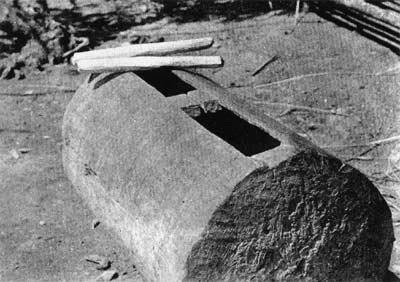
The drum becomes more than instrument—talking drums become a communication protocol. Each message begins with the recipient’s “drum-name,” followed by the sender’s, then the code-sentence. The rhythm and tone deliver the message, and the listener decodes it. The system predates binary digital codes, yet functions on the same principle: tone = symbol, rhythm = timing, relay = network.
Talking drums encoded names and messages like early radio packets – rhythm, tone, relay. #Neurodope #IndigenousTech #DrumCoding share this

Connectivity, Social Media & the Drum Network
Imagine the drum-relay system as ancient social media: a message “tagged” the chief’s drum-name, hit the network of village drummers, and broadcast to followers miles away. In modern terms it’s broadcast + relay + group chat, but powered with hollow logs and ear-to-ear trust.
Today we think of tweets and group messages. The drum-calls were the original push notifications: “White man arrives,” “Hunt begins,” “Chief dead.” Medium may change, but function remains: broadcasting social updates across a network. While the younger generation often scrolls past hundreds of ads and notifications, villagers once listened for the single beat that summoned them.
In or out of the palaver house, the drum is a convenient seat. Though the grand masters are growing scarce, it is to be hoped that the new generation will preserve the unique art of drum talk.
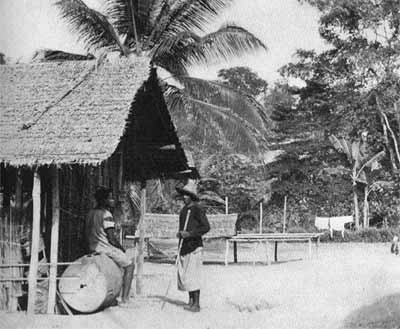
Tweets, notifications, ads—modern feeds are spam compared with the purity of a village drum-call. #Neurodope #SocialMediaOldSchool #DrumNetwork share this
The Art, the Loss, and the Legacy
Drum-call masters were engineers, poets, musicians and communicators all in one. They tuned drums like pianos, built frames that let sound carry through valleys, and knew codes that outsiders couldn’t break. Today their numbers are dwindling.
Yet the legacy remains. The talking drum lives on in Afrobeat, diaspora culture, and the metaphor of beat-networks. In an age when attention is currency, the drum-network reminds us that communication need not be digital to be global. It was analog, human-powered, and resilient—and it carried voices across forests before towers ever rose.
Analog networks of the forest: the talking drum lived what our smartphones forgot—humans behind the signal. #Neurodope #LegacyTech #DrumTalk share this
Want to play along? check out this Virtual Log Drum

A quick overview of the topics covered in this article.
Latest articles

The Cognitive Rent Economy: How Every App Is Leasing Your Attention Back to You
You don’t lose your attention anymore. You lease it. Modern platforms don’t steal focus. They monetize it, slice it into intervals, and return it [read more...]

AI Is an Opinionated Mirror: What Artificial Intelligence Thinks Consciousness Is
Artificial intelligence thinks it sees us clearly. It does not. It is staring into a funhouse mirror we built out of math, bias, hunger [read more...]

The Age of the Aeronauts: Early Ballon flights
Humans have always wanted to rise above the ground and watch the world shrink beneath them without paying a boarding fee or following traffic [read more...]

Free Energy from the Ether – from Egypt to Tesla
Humans have always chased power from the invisible. From the temples of Egypt to Tesla’s lab in Colorado, inventors sought energy not trapped in [read more...]

The Philosophy of Fake Reality: When Simulation Theory Meets Neuroscience
What if reality isn’t breaking down—but revealing its compression algorithm? Neuroscience doesn’t prove we live in a simulation, but does it show the brain [read more...]
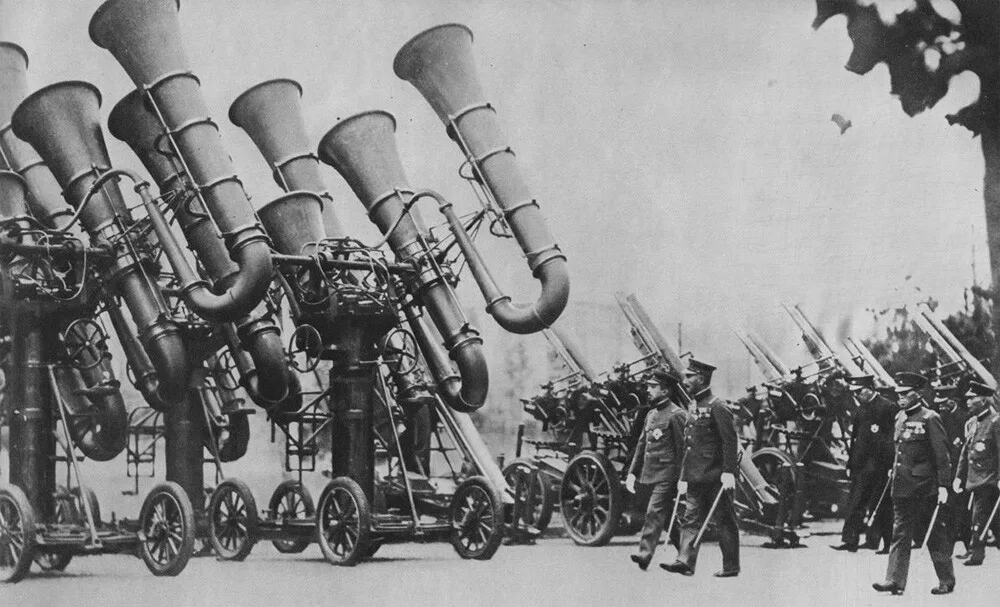
Blast from the Past: Exploring War Tubas – The Sound Locators of Yesteryears
When it comes to innovation in warfare, we often think of advanced technologies like radar, drones, and stealth bombers. However, there was a time [read more...]
Pneumatic Tube Trains – a Lost Antiquitech
Before electrified rails and billion-dollar transit fantasies, cities flirted with a quieter idea: sealed tunnels, air pressure, and human cargo. Pneumatic tube trains weren’t [read more...]

Tartaria and the Soft Reset: The Case for a Quiet Historical Overwrite
Civilizations don’t always collapse with explosions and monuments toppling. Sometimes they dissolve through paperwork, renamed concepts, and smoother stories. Tartaria isn’t a lost empire [read more...]

“A problem cannot be solved by the same consciousness that created it.” – Albert Einstein
“A problem cannot be solved by the same consciousness that created it.” - Albert Einstein
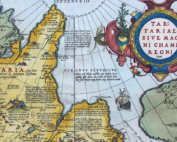
Tartaria: What the Maps Remember
History likes to pretend it has perfect recall, but old maps keep whispering otherwise. Somewhere between the ink stains and the borderlines, a ghost [read more...]


