

Addicted to Certainty: Why Our Brains Love Dogma
[addtoany]
Addiction to Certainty has been with us since the first brain learned to recognize a pattern in fire, in predators, in the seasons. Our neurons are wired to crave predictability, to seek the comfort of knowing what comes next. Ideology and dogma are not just social constructs—they are neurochemical candy for the uncertainty-averse mind. Belief systems simplify a chaotic world, turning a universe of infinite variables into a digestible narrative, neat and color-coded, for our pleasure centers to lap up. The flip side is that when life refuses to comply, stress hormones spike, anxiety mounts, and we cling harder to whatever framework promises order. Certainty becomes addictive.
The Neurobiology of Belief
Our brains are not neutral observers; they are prediction machines. The prefrontal cortex and striatum collaborate like obsessive librarians, cataloging outcomes and punishing surprises. Dopamine, that sweet signal of reward, floods the system when predictions hit the mark. Ideology—whether religious, political, or cultural—hacks this system. When someone shouts “We know the way,” your brain’s reward circuitry lights up. Resistance to doubt, skepticism, or nuance is biologically reinforced. Once entrenched, challenging these beliefs triggers a mini-withdrawal: uncertainty becomes physically uncomfortable. Add in social feedback—likes, shares, approval—and ideology becomes a behavioral drug, reinforcing itself across networks.
Your brain craves certainty more than Truth. Welcome to the addiction. #neuroscience #addictiontocertainty #brainhack share this
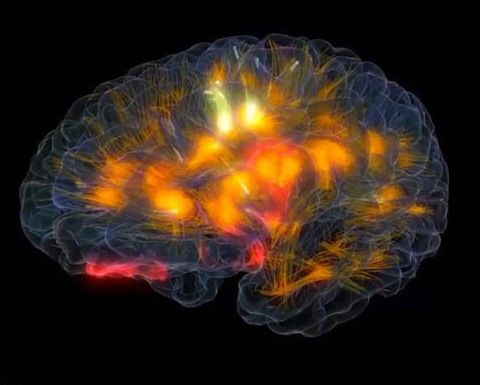
Your brain lights up when predictions come true. Ideology knows this.
Dogma as Comfort
Dogma sells safety the way a vending machine sells sugar. It doesn’t matter if it’s rational; it matters that it fills a void. Political manifestos, extreme diets, conspiracy theories—all tap into the same neural craving. The world’s chaos is reduced to clear rules: obey, categorize, repeat. The emotional relief is immediate; critical thinking becomes a chore. Social reinforcement amplifies the effect. Group identity, tribal loyalty, the instant dopamine of agreement—all converge to make certainty irresistible. Dogma becomes not just comforting but compulsory for mental stability.
Dogma is your brain’s comfort food. Just don’t choke on it. #BrainChemistry #IdeologyAddiction #Neurodope share this

Your computer feeds you rewards and your brain’s craving predictability.
Escaping the Loop
Escaping the addiction to certainty is less about learning more facts and more about tolerating ambiguity. Exposure to uncertainty, cognitive flexibility, and mindfulness can retrain prediction circuits, allowing us to sit with discomfort without latching onto rigid narratives. Curiosity, humor, and a willingness to revise beliefs are behavioral countermeasures. Social media, however, is a perfect enabler: algorithms detect your craving and serve up more predictable content, locking you deeper into loops of ideological gratification. The fight against certainty addiction is partly neurological, partly cultural, and partly ethical: can we resist the immediate reward in favor of complexity, nuance, and truth?
Uncertainty hurts, but certainty can kill curiosity. #neuroplasticity #criticalthinking #braintruths share this
Humans have long sought refuge in the familiar, but the brain’s craving for predictability can become a cage. Recognizing the neurobiology behind dogma isn’t enough; it’s the first step in learning to walk the line between comfort and intellectual freedom.
Humans are not doomed, but they are predictably flawed.
Early psychologists and cognitive neuroscientists have noted that pattern-seeking is fundamental to the human mind. The obsession with certainty is not new; it has evolved as a survival mechanism. Predictive coding models in neuroscience now explain how expectation drives perception, and how violation of these expectations triggers stress responses. Modern social media acts as an amplifier of this natural craving, using algorithmic reinforcement to trap attention and reward ideological consistency. Recognizing the biology is crucial, but only a combination of cognitive flexibility, mindfulness, and social accountability offers a path forward.
References:
[addtoany]
A quick overview of the topics covered in this article.
Latest articles

The Cognitive Rent Economy: How Every App Is Leasing Your Attention Back to You
You don’t lose your attention anymore. You lease it. Modern platforms don’t steal focus. They monetize it, slice it into intervals, and return it [read more...]

AI Is an Opinionated Mirror: What Artificial Intelligence Thinks Consciousness Is
Artificial intelligence thinks it sees us clearly. It does not. It is staring into a funhouse mirror we built out of math, bias, hunger [read more...]

The Age of the Aeronauts: Early Ballon flights
Humans have always wanted to rise above the ground and watch the world shrink beneath them without paying a boarding fee or following traffic [read more...]

Free Energy from the Ether – from Egypt to Tesla
Humans have always chased power from the invisible. From the temples of Egypt to Tesla’s lab in Colorado, inventors sought energy not trapped in [read more...]

The Philosophy of Fake Reality: When Simulation Theory Meets Neuroscience
What if reality isn’t breaking down—but revealing its compression algorithm? Neuroscience doesn’t prove we live in a simulation, but does it show the brain [read more...]
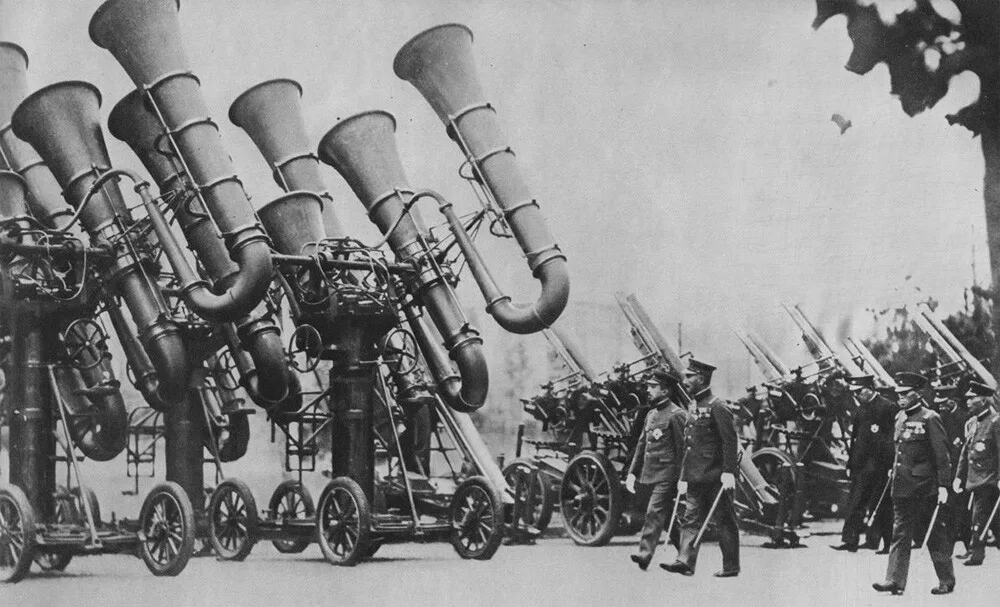
Blast from the Past: Exploring War Tubas – The Sound Locators of Yesteryears
When it comes to innovation in warfare, we often think of advanced technologies like radar, drones, and stealth bombers. However, there was a time [read more...]

Pneumatic Tube Trains – a Lost Antiquitech
Before electrified rails and billion-dollar transit fantasies, cities flirted with a quieter idea: sealed tunnels, air pressure, and human cargo. Pneumatic tube trains weren’t [read more...]

Tartaria and the Soft Reset: The Case for a Quiet Historical Overwrite
Civilizations don’t always collapse with explosions and monuments toppling. Sometimes they dissolve through paperwork, renamed concepts, and smoother stories. Tartaria isn’t a lost empire [read more...]

“A problem cannot be solved by the same consciousness that created it.” – Albert Einstein
“A problem cannot be solved by the same consciousness that created it.” - Albert Einstein

Tartaria: What the Maps Remember
History likes to pretend it has perfect recall, but old maps keep whispering otherwise. Somewhere between the ink stains and the borderlines, a ghost [read more...]