
Were the Master Renaissance Painter’s Using a Secret Trick?
Were the master’s of painting in the Renaissance Era using an optical illusion to guide them along? Is the illusion of their “mastery” just a simple trick?
History places the dawn of the Renaissance in Florence, but in Bruge and Ghent were very sophisticated new cities. The royal Court and the Church were almost as rich as they were in Florence. Both the Church and the Court commissioned paintings. Jan Van Eyck was the Court painter.
He was not a humble craftsman. He ran a large workshop with many apprentices. He was an intellectual, a theologian, and a scientist. He is described by his contemporaries as an alchemist and credited with the invention of oil painting, yet he is classified as a “primitive era” artist.
You are totally knocked out by looking at this picture below. It’s unbelievably rich in detail in every single part of it: the textures of cloth, the book with a leather wrap, the small figures in the background that are made of wood. You can see everything about the textures of the cloths, the incredible detail in the bishops staff.

Anything that is shiney is spotlighted.. the armor is polished, the gold thread in the bishop’s coat. The shines look amazing, and correct. Its almost like a photograph.
It was that photographic look, with the patterns on the clothes following the form of the body, as in this painting by Branzinno..

Giorgione is a famous Italian painter has a considerable amount of work during this time period. Here is a work showcasing the shine on the armor:

There are descriptions of entire dark rooms with a lens called a Camera Obscura… which simply means “Dark Room” With little more technology than a piece of glass, one could use the natural sunlight to project an image onto a canvas. (albeit upside down)
Could the dazzling shine on armor and cloth in Renaissance paintings be a simple trick of light and lenses? Masters or optical illusionists? #neurodope share thisClick through this gallery of descriptions of a Camera Obscura:
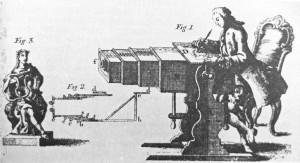
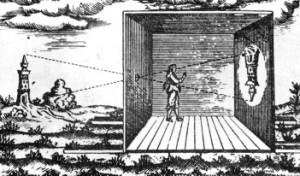
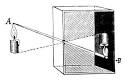
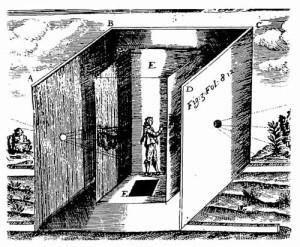
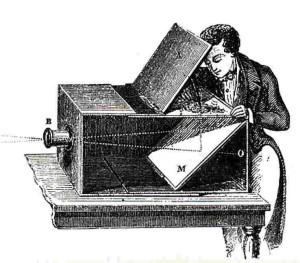
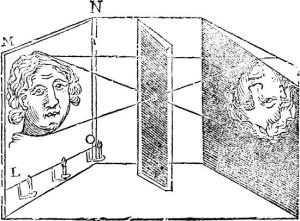

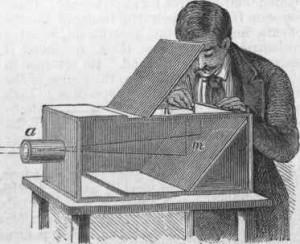

We know that many artists used the Camera Obscura. In fact, Reynolds, known as Sir Joshua Reynolds; (1723 – 1792) was an influential eighteenth-century English painter, specializing in portraits, has his Camera Obscura in the Science Museum in London.
It folds up to look like a book, perhaps to keep it a secret?
But in the paintings of Vermeer done in the 1600’s, we see the most vivid use of optics. they have a photographic look. The basket, the map, the chandelier, the basket. It is interesting that this particular room is used in many paintings, only the people and the furniture change, as if it were a stage being focussed upon by a Camera Obscura.

Are the artists merely “tracing” an image projected onto a canvas?
One point to make is that the artists themselves have creativity, talent, and skill that should not be diminished. After all, it is the artists themselves who are putting the paint brush to the canvas. But did they have a little help with the Camera Obscura?
Camera Obscura: the 'Dark Room' that may have guided the hands of history’s greatest painters, adding mystery to mastery. #neurodope share thisPerhaps it is a mystery of the Masters that should be kept a secret.

A quick overview of the topics covered in this article.
Latest articles
The Cognitive Rent Economy: How Every App Is Leasing Your Attention Back to You
You don’t lose your attention anymore. You lease it. Modern platforms don’t steal focus. They monetize it, slice it into intervals, and return it [read more...]
AI Is an Opinionated Mirror: What Artificial Intelligence Thinks Consciousness Is
Artificial intelligence thinks it sees us clearly. It does not. It is staring into a funhouse mirror we built out of math, bias, hunger [read more...]

The Age of the Aeronauts: Early Ballon flights
Humans have always wanted to rise above the ground and watch the world shrink beneath them without paying a boarding fee or following traffic [read more...]

Free Energy from the Ether – from Egypt to Tesla
Humans have always chased power from the invisible. From the temples of Egypt to Tesla’s lab in Colorado, inventors sought energy not trapped in [read more...]
The Philosophy of Fake Reality: When Simulation Theory Meets Neuroscience
What if reality isn’t breaking down—but revealing its compression algorithm? Neuroscience doesn’t prove we live in a simulation, but does it show the brain [read more...]
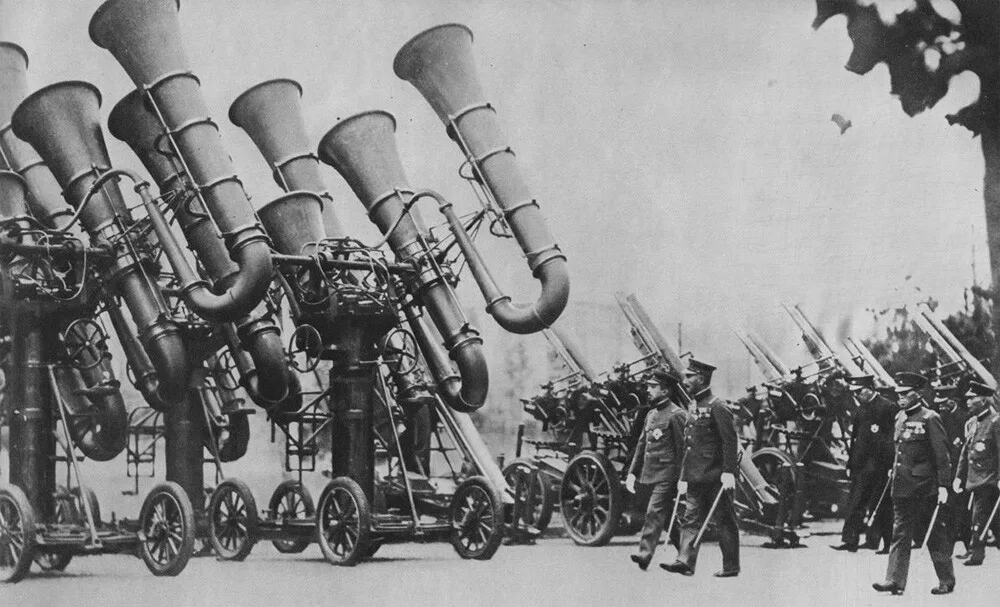
Blast from the Past: Exploring War Tubas – The Sound Locators of Yesteryears
When it comes to innovation in warfare, we often think of advanced technologies like radar, drones, and stealth bombers. However, there was a time [read more...]
Pneumatic Tube Trains – a Lost Antiquitech
Before electrified rails and billion-dollar transit fantasies, cities flirted with a quieter idea: sealed tunnels, air pressure, and human cargo. Pneumatic tube trains weren’t [read more...]
Tartaria and the Soft Reset: The Case for a Quiet Historical Overwrite
Civilizations don’t always collapse with explosions and monuments toppling. Sometimes they dissolve through paperwork, renamed concepts, and smoother stories. Tartaria isn’t a lost empire [read more...]

“A problem cannot be solved by the same consciousness that created it.” – Albert Einstein
“A problem cannot be solved by the same consciousness that created it.” - Albert Einstein
Tartaria: What the Maps Remember
History likes to pretend it has perfect recall, but old maps keep whispering otherwise. Somewhere between the ink stains and the borderlines, a ghost [read more...]