
Neurodope would like to introduce a puzzler for your mind-raking pleasure.
“You visit a remote desert island inhabited by one hundred very friendly dragons, all of whom have green eyes. They haven’t seen a human for many centuries and are very excited about your visit. They show you around their island and tell you all about their dragon way of life (dragons can talk, of course).
They seem to be quite normal, as far as dragons go, but then you find out something rather odd. They have a rule on the island that states if a dragon ever finds out that he/she has green eyes, then at precisely midnight on the day of this discovery, he/she must relinquish all dragon powers and transform into a long-tailed sparrow. However, there are no mirrors on the island, and they never talk about eye color, so the dragons have been living in blissful ignorance throughout the ages.
Upon your departure, all the dragons get together to see you off, and in a tearfulfarewell you thank them for being such hospitable dragons. Then you decide to tellthem something that they all already know (for each can see the colors of the eyes ofthe other dragons). You tell them all that at least one of them has green eyes. Then you leave, not thinking of the consequences (if any). Assuming that the dragons are (of course) infallibly logical, what happens?
If something interesting does happen, what exactly is the new information that you gave the dragons?”
This is not a trick question. There’s no guessing or lying or discussion by or between dragons. The answer does not involve Mendelian genetics, or sign language. The answer is logical, and the dragons are perfectly logical beings. And no, the answer is not “no dragon transforms.”
Good Luck!! Answer coming in another installment of Neurodope!
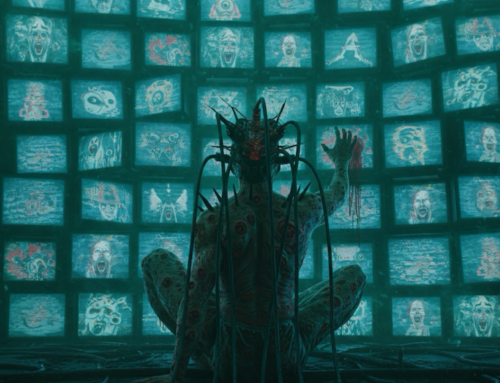
Illustration by Jim Cooke
Puzzle by Harvard Undergrad Physics

COURTESY: Jim Cox Photos
SOLUTION UPDATE:
The solution is that all 100 dragons turn into sparrows on the 100th midnight.
So how does one simplify the 100 Green-Eyed Dragons puzzle? By making it the 1 Green-Eyed Dragon Puzzle. If you tell a single green-eyed dragon that “at least one of you” has green eyes, that dragon would know instantly and unambiguously that she has green eyes. At midnight she would turn into a sparrow.
So let’s imagine 2 green-eyed dragons staring at one another, after being informed by you that at least one of them has green eyes. Each would look upon the other and, seeing a set of green eyes, think the following: “Do I have green eyes? I don’t know. But if I do not, then this other dragon, upon seeing my non-green eyes, will know instantly and unambiguously that he is the one with green eyes, and at midnight will turn into a sparrow.” Each dragon sits and waits to see what the other does. When, at midnight, neither dragon transforms into a sparrow, each one knows instantly and unambiguously that the other dragon did not leave because it, too, saw a dragon with green eyes. And so, on the second night, each transforms into a sparrow at midnight.
Let’s expand the problem to 3 green-eyed dragons. Following your announcement, each dragon thinks to itself that if it does not have green eyes, then the other two dragons will determine their eye color by the reasoning laid out in the 2 green-eyed dragon scenario presented above. In this case, all three dragons wait for the other two dragons to transform into sparrows on the second midnight. When this does not happen, each of the three dragons concludes instantly and unambiguously that it has green eyes. On the third midnight, all three transform into sparrows.
Through the process of induction, we conclude that any number of green-eyed dragons, N, will all turn into sparrows on the Nth midnight following your seemingly inconsequential observation.
This can be hard to wrap your head around at first. It’s the kind of solution that’s liable to come across as utterly impossible until you’ve convinced yourself of it by working through a few more levels of induction. Even knowing the solution, it’s easy to find yourself on, say, a six-dragon scenario thinking “I made this work for five dragons, but at six it seems to fall apart”: